
How Deep Is Ancient Rome?
There is no single depth at which ancient Rome begins. Across the city, Roman structures can appear close to the present surface or several metres below it. Their position records the different histories of the ground above them.
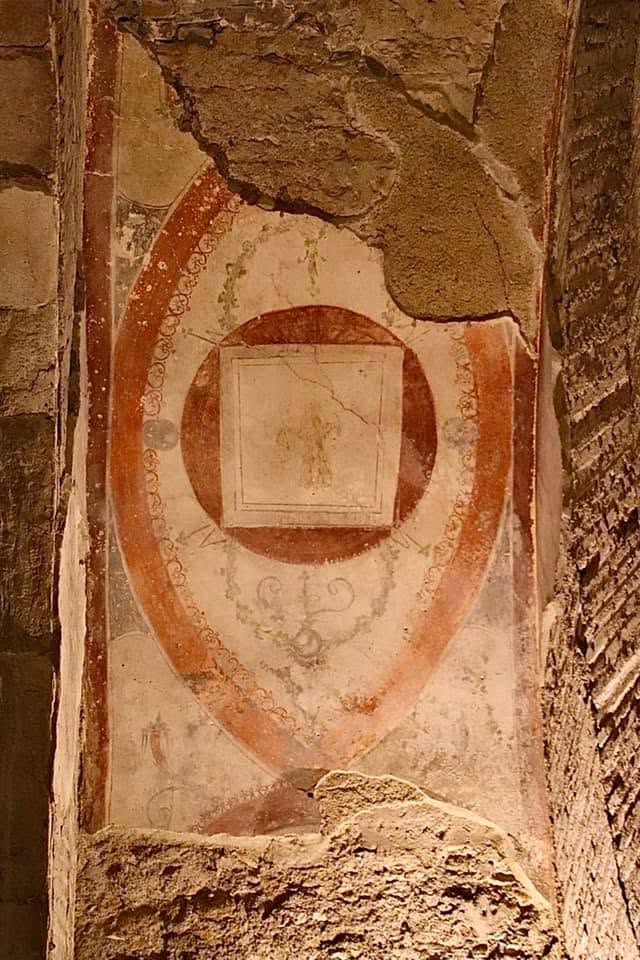 Archaeological Levels · Rome
Ancient Rome does not exist at one fixed elevation beneath the modern city.
The depth of a Roman structure depends on where it was originally built and on everything that happened at that particular location during the centuries that followed.
Topography, construction, demolition, filling, resurfacing, flooding and reuse could all alter the relationship between an ancient structure and the later ground surface.
For that reason, asking how deep ancient Rome is cannot be answered with one number.
A Roman floor two metres below a present street and another eight metres below it can both belong to the same ancient city. Their different depths tell us what happened after they were built.
There is no line beneath Rome where antiquity begins.
Ancient Rome lies beneath parts of today’s city because streets and buildings were rebuilt, raised and reused over centuries; the depth varies by place. Compare the lower levels at San Paolo alla Regola and the Roman Houses of the Caelian Hill.
Rome has hills, valleys, former low-lying areas and terrain close to the Tiber. Ancient buildings themselves were constructed at different elevations.
The centuries that followed added another variable. Some areas accumulated substantial deposits. Others changed comparatively little. Buildings were reconstructed, roads resurfaced and spaces filled.
Consequently, archaeological depth has to be understood site by site.
Before asking about depth, look at the land.
Rome was never flat.
Its ancient urban landscape developed across hills and the lower ground between them, beside the Tiber and across terrain that had already been modified by human activity.
This matters because archaeological depth is always measured in relation to the present surface.
An ancient structure originally built on relatively high terrain does not begin with the same geographical conditions as one constructed in a lower district.
Later changes can amplify those differences. The modern elevation above a Roman building is therefore the result of both natural topography and urban history.
Depth is not the same thing as age.
A deeper structure is not automatically older than every structure found above it elsewhere in Rome.
Stratigraphy works through relationships within a particular archaeological sequence. A floor beneath another floor in the same sequence may indeed represent an earlier phase, but comparing absolute depth between distant sites is different.
A Roman building on one part of the city's terrain may now stand higher than a later structure in another district.
Depth therefore becomes historically meaningful only when combined with location, construction phases and archaeological context.
How does a street end up metres above another street?
Urban surfaces are not permanent.
A road can be repaired and resurfaced. A damaged building can be demolished only partially. A room can be filled rather than cleared. Debris can be used to level an area before new construction.
Each intervention may appear modest in isolation. Across long periods of occupation, however, successive alterations can substantially change the elevation at which a district operates.
The old level remains physically present below the new one. This is how a pavement once crossed in daylight can eventually become an archaeological surface reached by descending from the modern street.
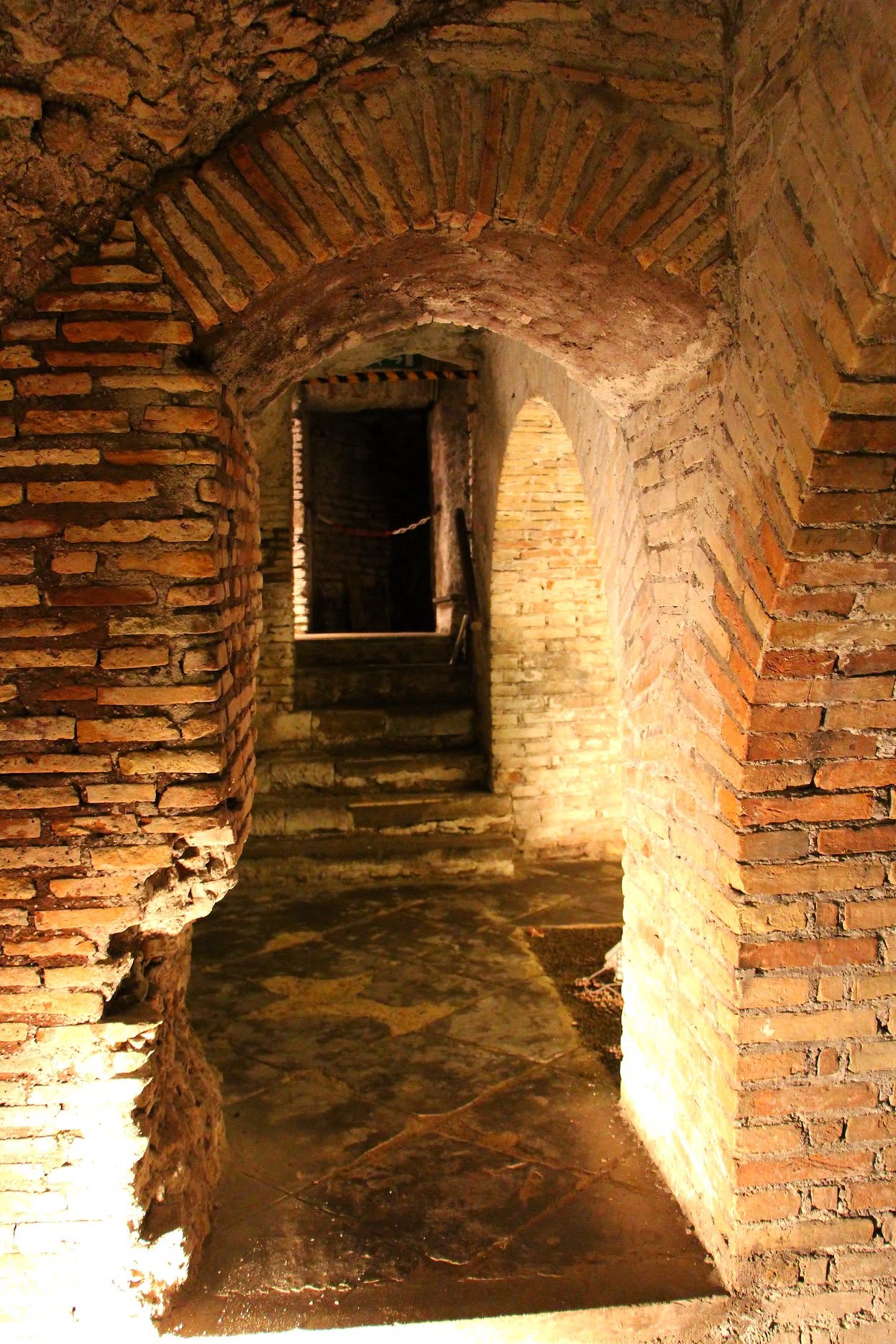 San Paolo alla Regola · Urban Stratigraphy
Eight metres can contain centuries.
At San Paolo alla Regola, archaeological structures preserve a particularly striking relationship between Roman construction and the present city.
The Roman complex developed through several storeys and phases. Its lower warehouse level now lies approximately eight metres below the present street.
That figure should not be treated as a standard depth for Rome. It is valuable precisely because it belongs to one identifiable archaeological sequence.
The distance between that Roman level and the present street records the transformation of this particular part of the city.
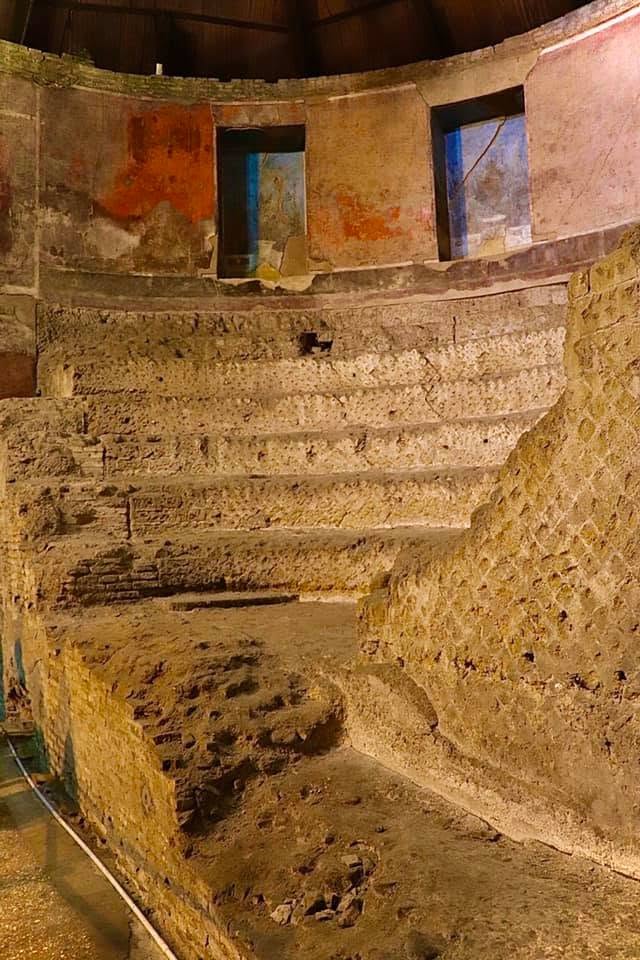 Ancient Structures · Present Elevations
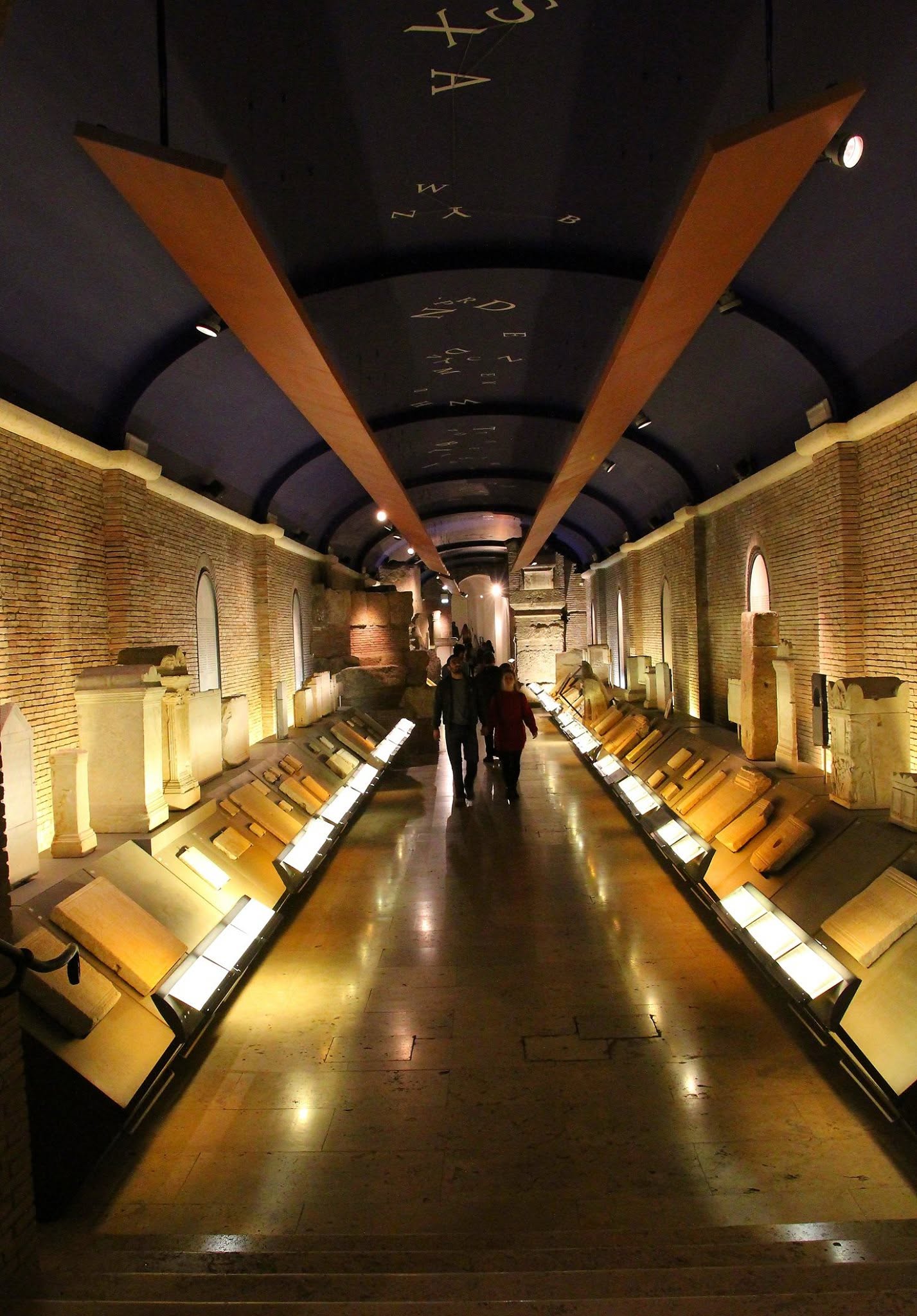 Different Places · Different Depths
The interesting question is not simply how deep?
A measurement tells us where something is. Archaeology asks how it came to be there.
Why did the surrounding elevation rise? Was the structure abandoned? Was it deliberately filled? Did another building incorporate it? Did the street outside change? Did deposits accumulate in the area?
These questions turn depth from a number into evidence.
Two metres, five metres or eight metres below the present surface are not categories of Roman archaeology. They are outcomes of different histories.
A descent can cross more than one period.
Some archaeological complexes preserve several phases vertically.
A later wall may rest on earlier masonry. A medieval structure may incorporate Roman fabric. Different floors may record successive alterations of the same space.
Descending through such a site does not necessarily mean moving neatly backward through history at a constant rate.
Instead, the surviving architecture exposes points at which different periods physically intersect.
This is one of the reasons urban stratigraphy is so valuable: the city can preserve its history not only across a map, but through vertical relationships.
How deep is ancient Rome? It depends where you stand.
There is no archaeological datum that marks a universal Roman level beneath the entire city.
Every measurement belongs to a place. And every place has its own sequence of construction, destruction, reuse, accumulation and alteration.
The varying depth of ancient Rome is therefore not an inconvenience in understanding the city. It is part of the evidence that allows us to reconstruct how Rome changed.
Read Rome vertically.
Every archaeological elevation belongs to a specific place, a specific sequence and a specific chapter in the physical history of Rome.
Return to Field Notes →Plan a private visit
Explore this subject through a private archaeological journey.
Tell us which place or question interests you and when you will be in Rome. We will check current access for your dates and, if needed, suggest a suitable alternative. Sending a request is not a confirmed booking.
Request a private archaeological journey →