
San Paolo
alla Regola
Western Campus Martius
Rome
A neighbourhood preserved in section.
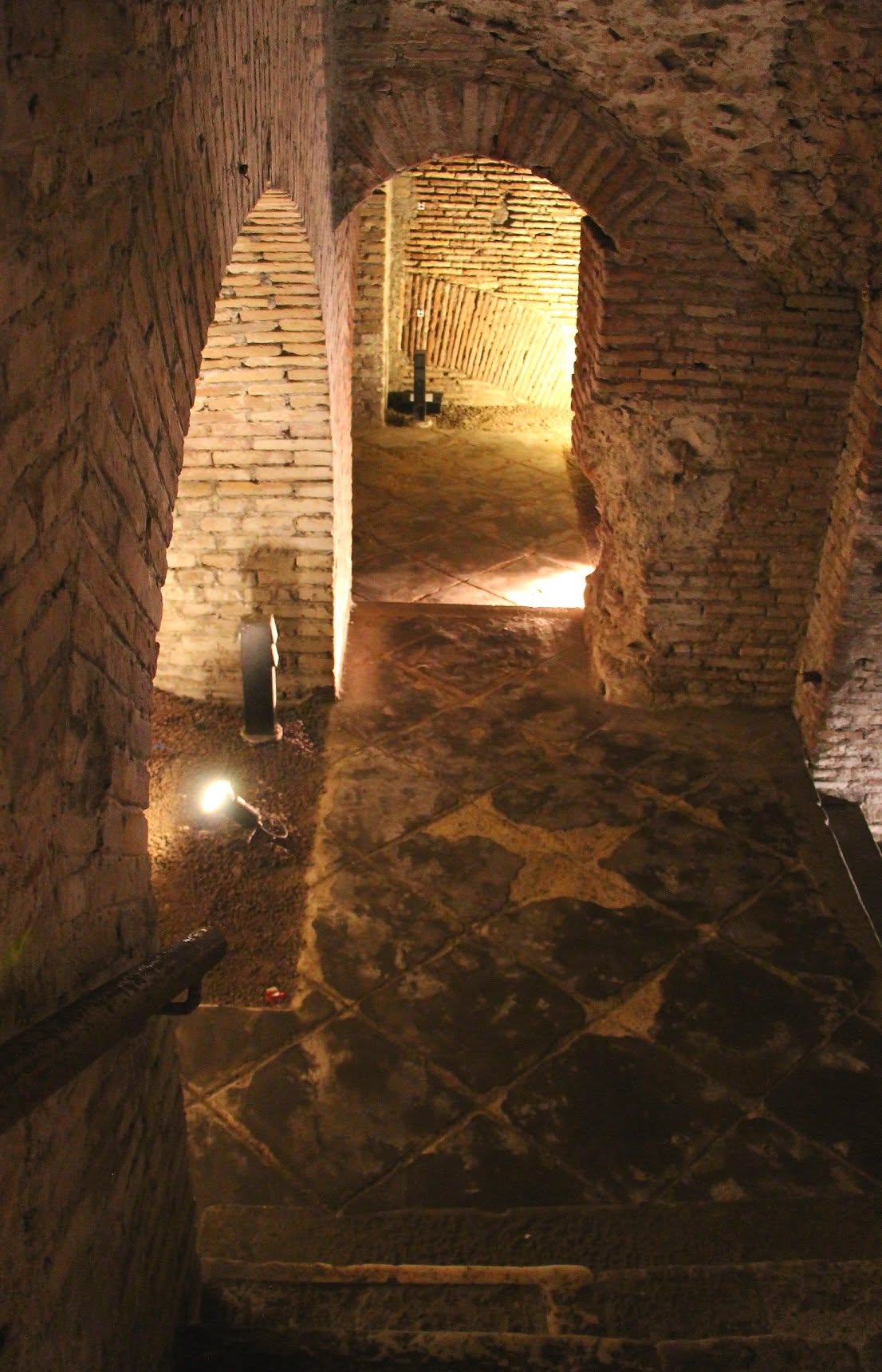
San Paolo alla Regola does not preserve a single Roman room. It preserves part of an urban sequence extending across centuries and different ground levels.
Beneath the Renaissance Palazzo Specchi survive structures whose history stretches from the late first century AD into the medieval city.
Warehouses, courtyards, later rooms, mosaics, walls and medieval interventions occupy the same architectural system. Here, urban stratigraphy can be read not as an abstract idea, but through the physical transformation of a city block.
The street moved upward.
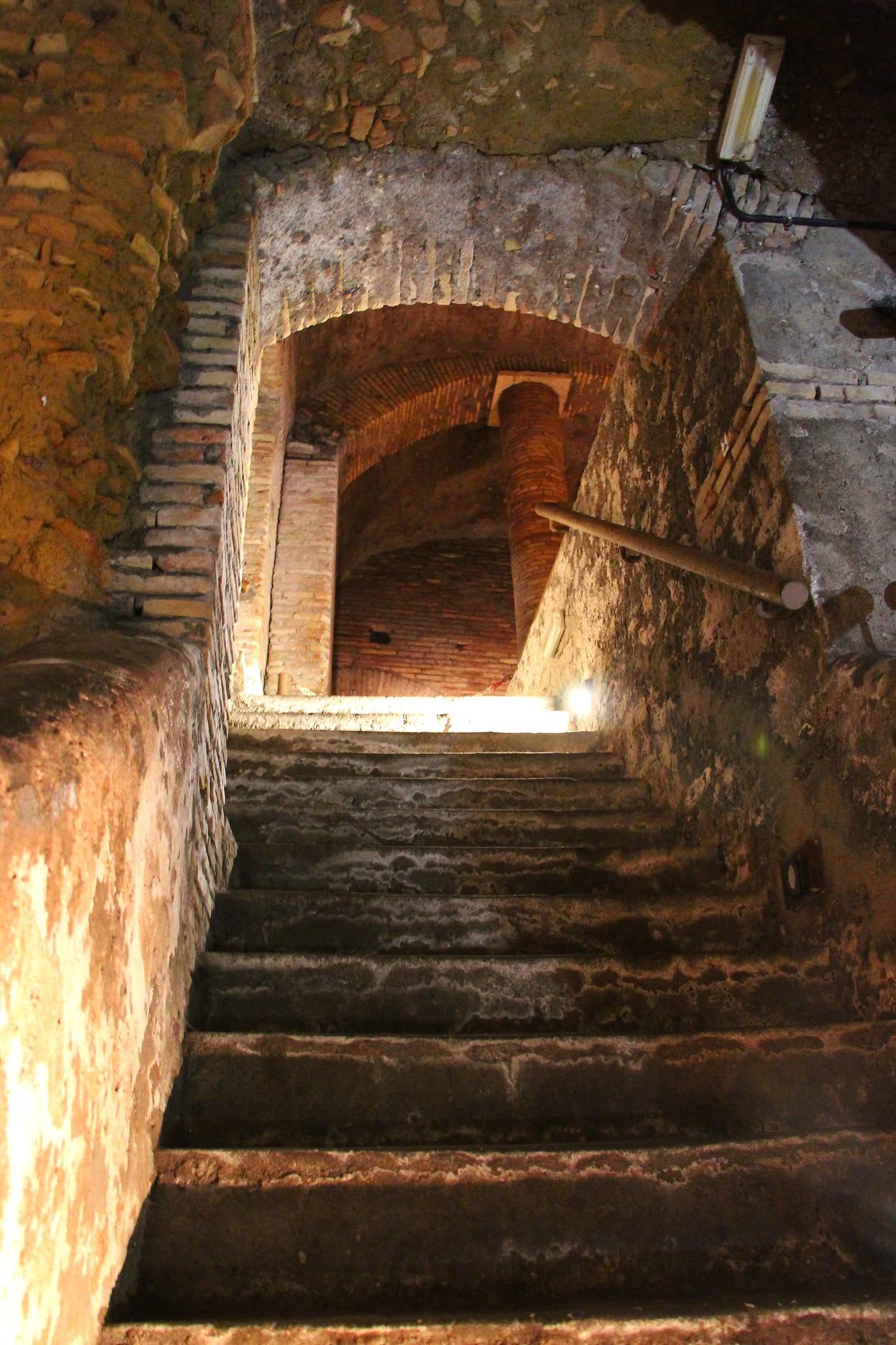
The lowest visitable Roman level lies approximately eight metres beneath the present street.
That figure belongs to this specific site. It is not a universal depth for ancient Rome.
At San Paolo alla Regola, rebuilding, structural alteration, abandonment, collapse, deposits associated with the river environment and later construction gradually changed the relationship between ancient floors and the surface of the city.
One site. Many building phases.
The archaeological value of San Paolo alla Regola lies in the relationships between its successive phases.
Rather than presenting antiquity as a frozen moment, the complex records repeated construction, adaptation, reinforcement, abandonment and reuse.
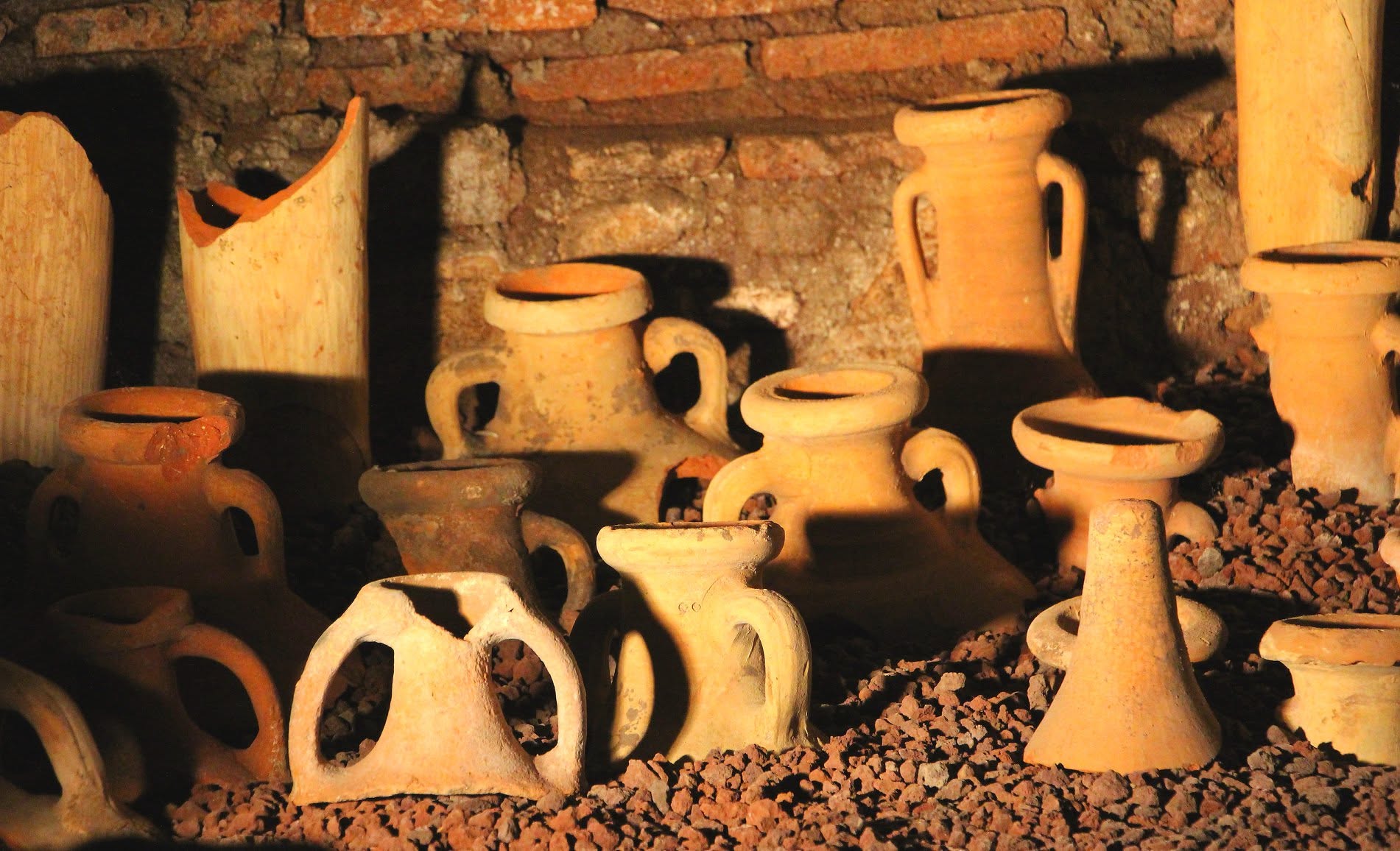
Domitianic Warehouses
Large brick-built storage spaces were constructed beside a service lane running parallel to the Tiber.
Expansion and New Uses
Additional spaces were constructed, while upper areas included rooms with black-and-white mosaics and painted decoration.
Constantinian Restructuring
Following major damage, parts of the complex were substantially reinforced and the lower level was filled in.
Abandonment and Accumulation
Progressive abandonment, collapses and deposits contributed to the changing level of the surrounding urban surface.
Medieval Construction
Ancient structures were consolidated and reused as the foundations and fabric of a newly developing neighbourhood.
Architecture across levels.
The archaeological complex preserves different types of evidence whose relationships reveal the development of the site.
Warehouses
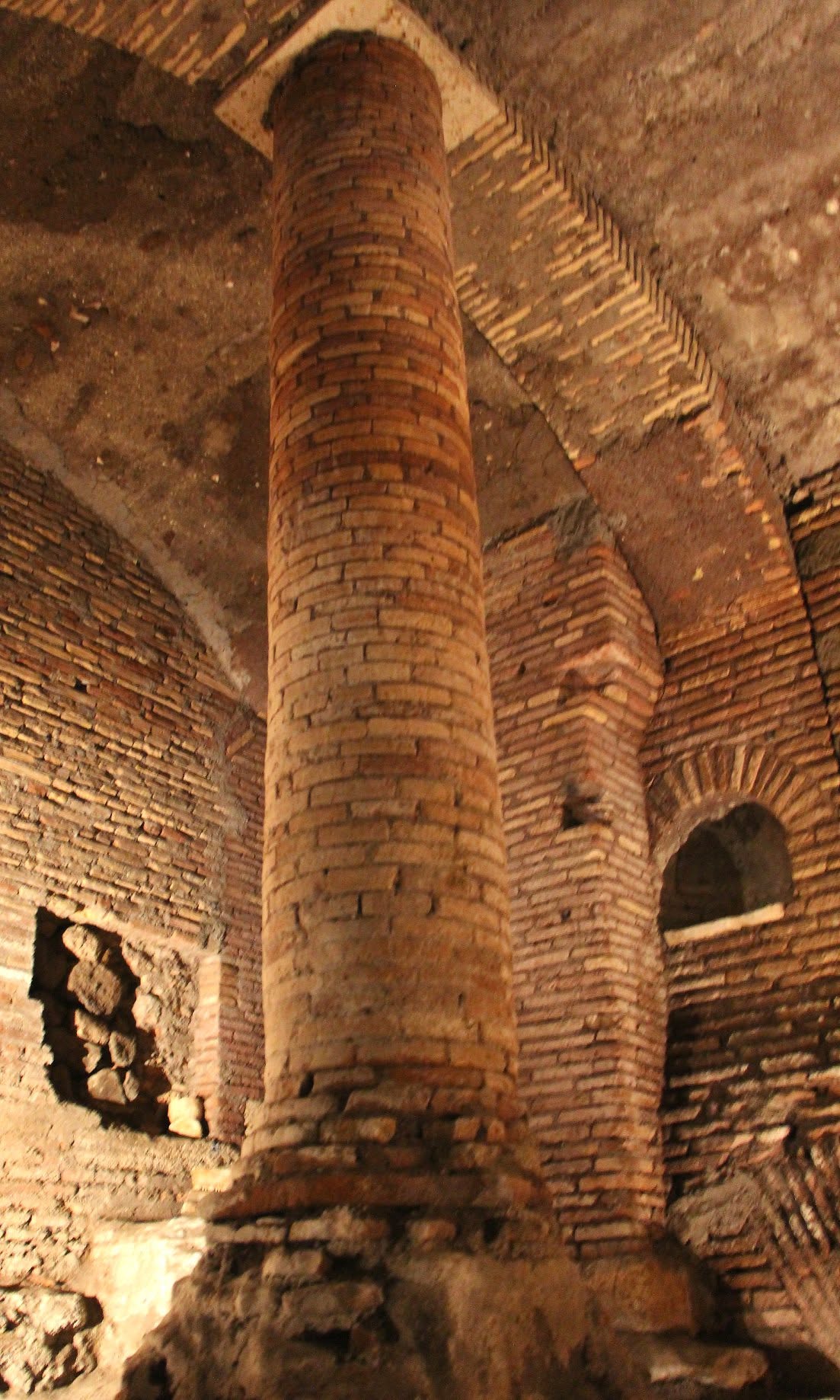
Monumental storage rooms preserve brick walls and substantial barrel-vaulted construction.
Courtyards
Earlier open spaces became part of increasingly complex architectural arrangements.
Mosaics & Paint
Surviving floors and painted surfaces document the changing character and use of the upper rooms.
Medieval Fabric
Later construction did not simply erase antiquity: in places it incorporated and transformed it.
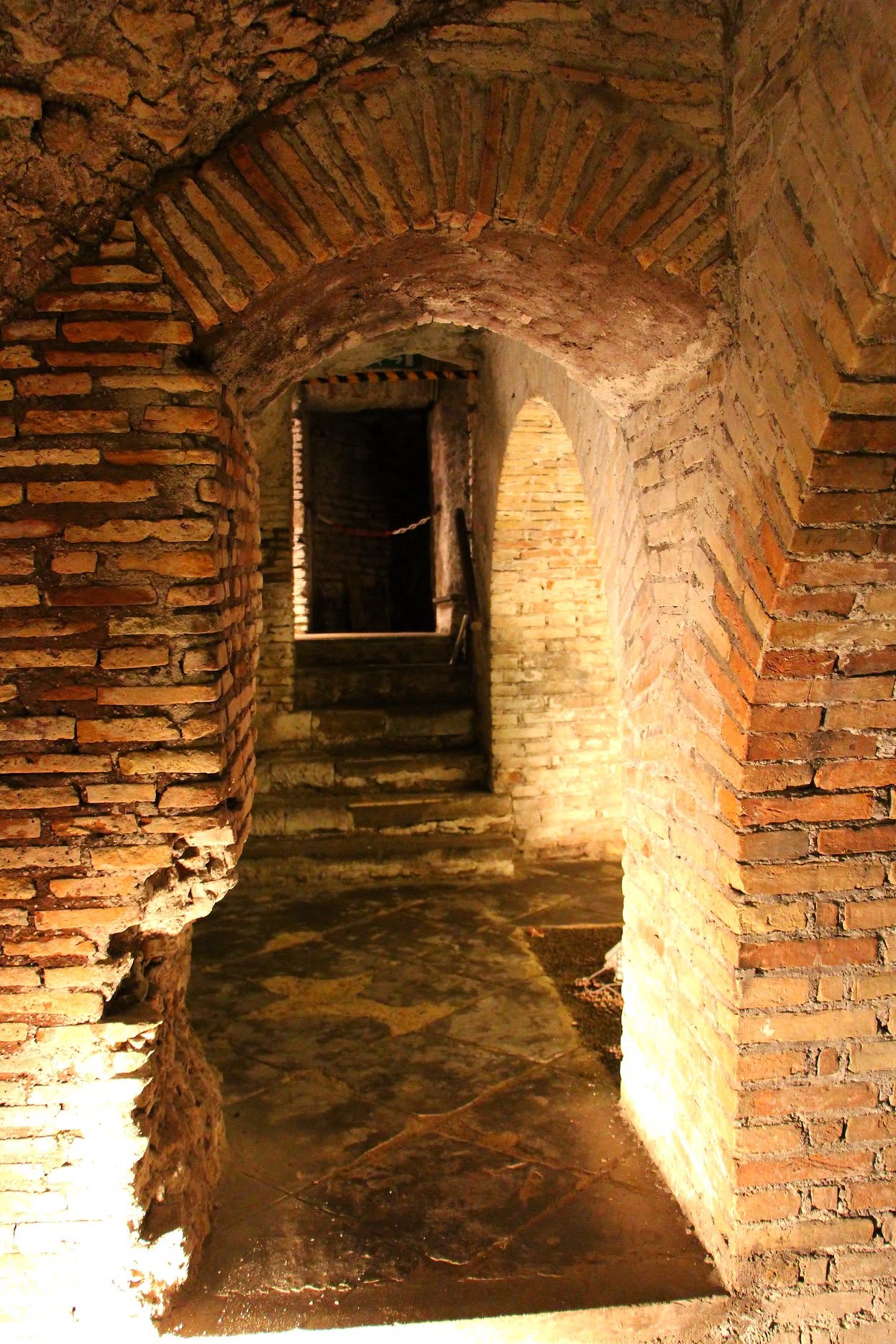
The building is the stratigraphy.
At San Paolo alla Regola, archaeology can be read vertically.
Walls survive through several historical phases. Floors cease to function as floors. Earlier rooms become foundations. Open spaces are enclosed. Doorways are blocked. New structures rise above older ones.
The archaeological sequence is therefore not simply a stack of soil deposits. Architecture itself records the changing organisation of the neighbourhood.
A city does not remain at one level.
San Paolo alla Regola helps explain why archaeological Rome can now lie metres below the modern surface.
Buildings were modified and partially abandoned. Structures collapsed. Material accumulated. The nearby river environment contributed deposits. New construction incorporated the remains of previous phases.
The result was gradual rather than instantaneous: a long physical transformation of the urban surface.
Current access is suspended.
The archaeological complex is currently listed by the Sovrintendenza Capitolina as temporarily closed to the public for works connected with the PNRR programme.
Because access conditions may change, future visits should be planned only after checking the current official information.
Explore more places below Rome.
Read Rome from the ground down.
Underground Rome designs private journeys around the archaeological city below street level, selecting places according to your interests and the access that is genuinely available at the time of your visit. Tell us your dates and group size; we’ll check access and prepare a private route proposal with a clear quote.
Request a private archaeological journeyby Rome Private Experience
Underground Rome is dedicated specifically to the archaeological city below street level.
For broader private programmes across Rome, corporate experiences and complex group arrangements, visit Rome Private Experience .