
Why Is Ancient Rome Underground?
Roman streets and buildings can now stand metres below the modern city. They did not all sink, and Rome was not buried in a single event. The explanation lies in centuries of construction, demolition, accumulation and changing ground levels.
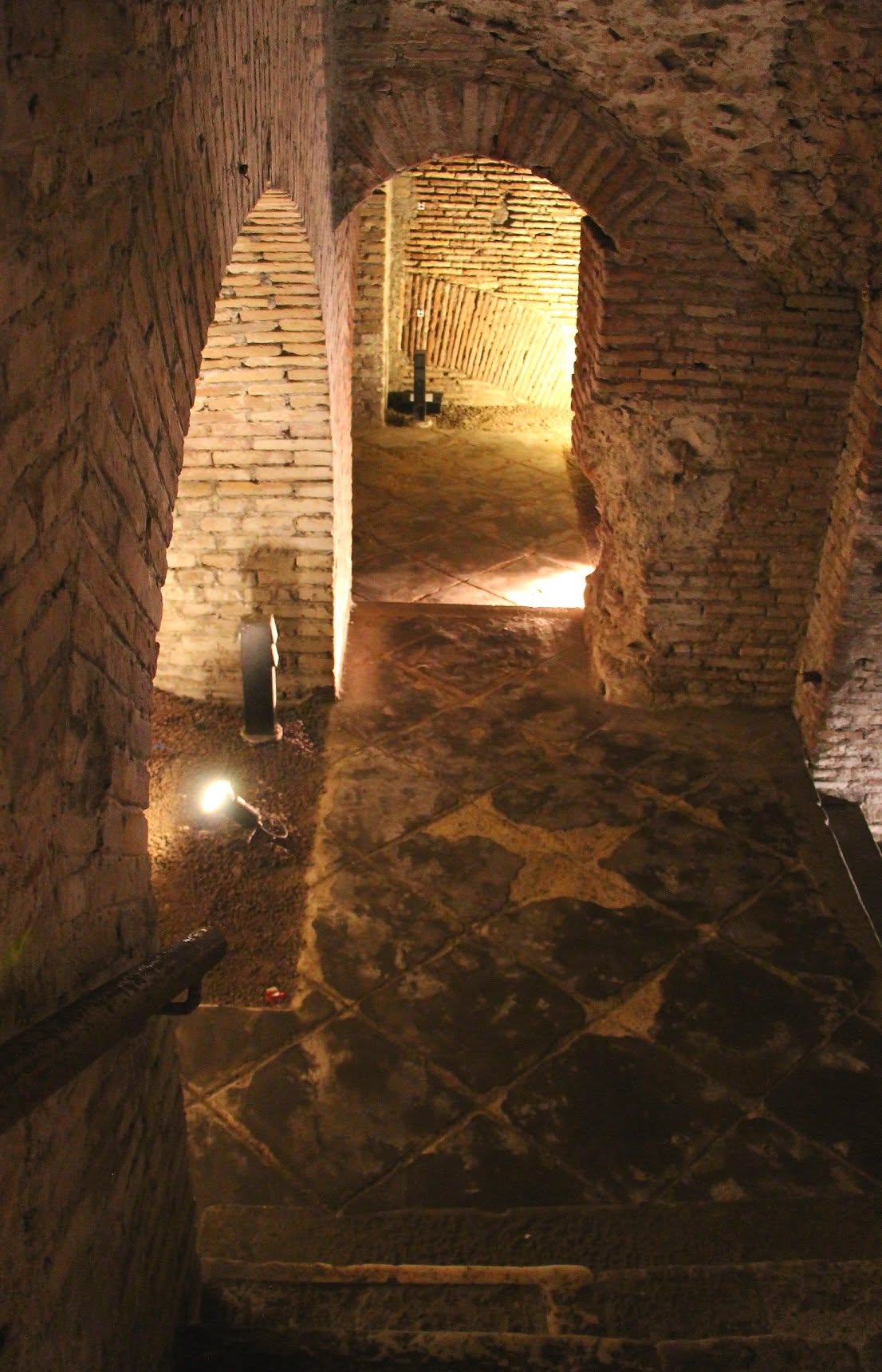 San Paolo alla Regola · Archaeological Levels
Much of ancient Rome is below today's street level because the city continued to occupy, alter and build upon the same terrain for centuries.
Old structures were abandoned or dismantled. Damaged buildings collapsed. Rooms were deliberately filled. New floors were laid at higher elevations. In low-lying districts, floods and alluvial material could add further deposits.
Later buildings were then constructed within, against or above what was already there. The result is not one uniform buried city. It is a highly variable archaeological sequence.
The important idea is not that ancient Rome simply went underground. In many places, the ground above it changed.
Rome was not covered by one great layer of earth.
It is tempting to imagine a single dramatic moment: classical Rome disappears, soil accumulates above it, and the later city begins on top.
Rome became layered as later streets and buildings rose above earlier levels through rebuilding, infill, collapse and reuse—not one citywide burial event. See the surviving layers at San Paolo alla Regola and San Clemente. Changes in elevation happened at different times, at different speeds and for different reasons. One building could be deliberately filled while another remained in use. A street could be resurfaced. A damaged structure might be dismantled and its surviving walls incorporated into later construction.
This is why two ancient remains separated by only a short distance can survive at very different elevations. There is no single archaeological horizon representing "ancient Rome" across the entire modern city.
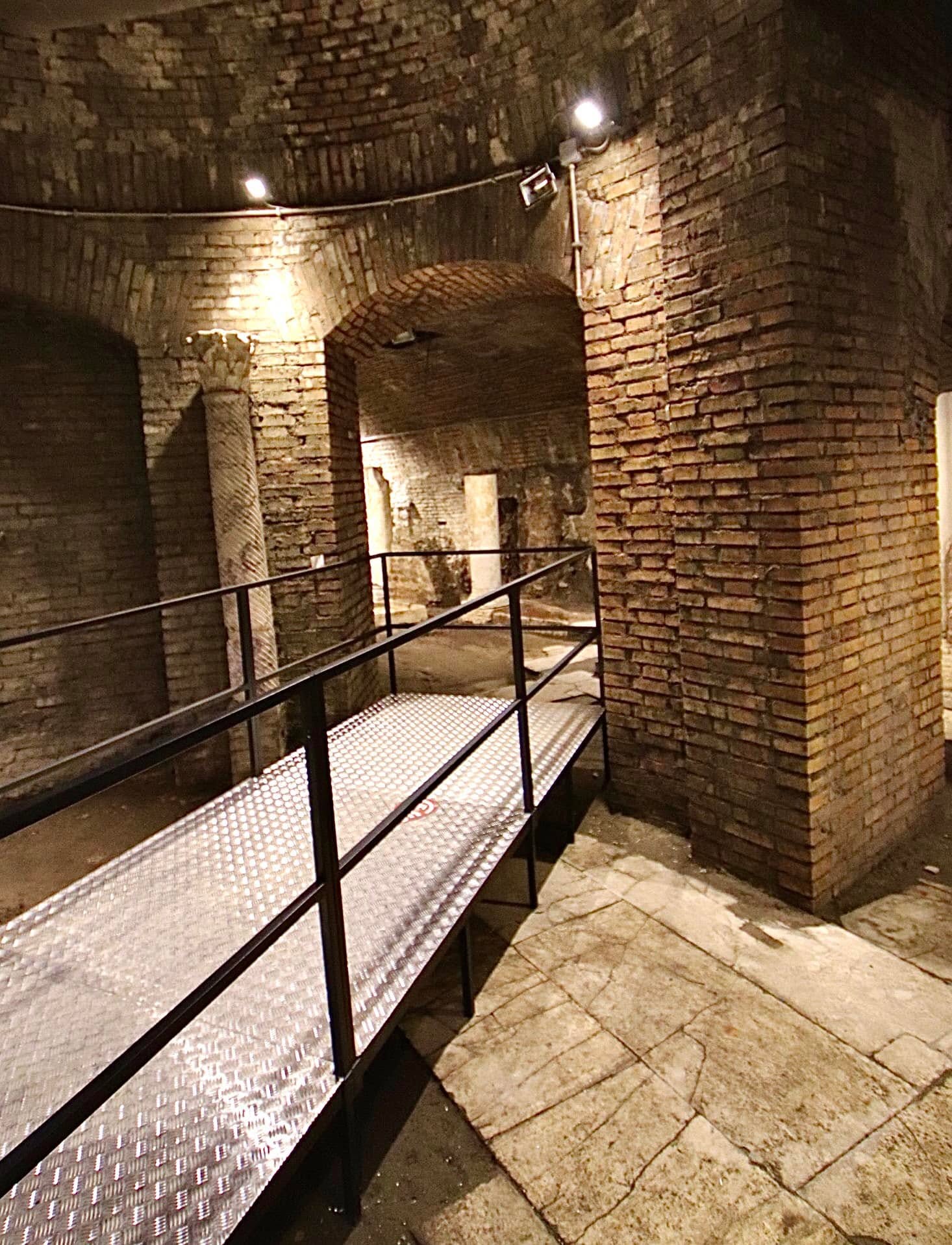 Archaeology beneath the modern city records successive
phases of construction rather than a single moment in time.
A city can rise without its buildings moving upward.
A city occupied for centuries continually produces material. Walls are demolished. Roofs collapse. Pavements are replaced. Construction debris is redistributed. Uneven areas are filled to create usable surfaces.
Sometimes it is easier to level an existing structure and build from it than to remove every part of it. Lower portions of walls may therefore survive while their former rooms become foundations, cellars or filled spaces.
The process can repeat. A floor that once stood at street level becomes a lower floor. A doorway loses its original relationship with the exterior. Windows may end up facing soil or later masonry.
Archaeologists read these changes through walls, floor surfaces, blocked openings, fills and the physical relationships between one construction phase and another.
Urban history was also shaped by water.
Rome developed beside a river, and several parts of the ancient city occupied low ground affected repeatedly by flooding.
In such areas, alluvial deposits could contribute to changes in elevation alongside the material generated by human occupation and construction.
The effect was not identical everywhere. Rome's hills, valleys, river plain and built-up districts each developed differently. This local variation is one reason why the depth of archaeological remains cannot be reduced to a single measurement.
Earlier buildings did not always disappear.
Survival below ground does not necessarily mean abandonment followed by complete burial. Roman structures could remain useful long after their original function had ended.
Walls could support later buildings. Existing rooms could become storage areas. Foundations could be strengthened and reused. Older spaces could be subdivided or incorporated into an entirely different architectural arrangement.
The distinction matters. What now appears to us as an archaeological level may once have remained physically connected to the living city through several phases of adaptation.
Rome therefore developed not simply by replacing one city with another, but often by modifying the material already present.
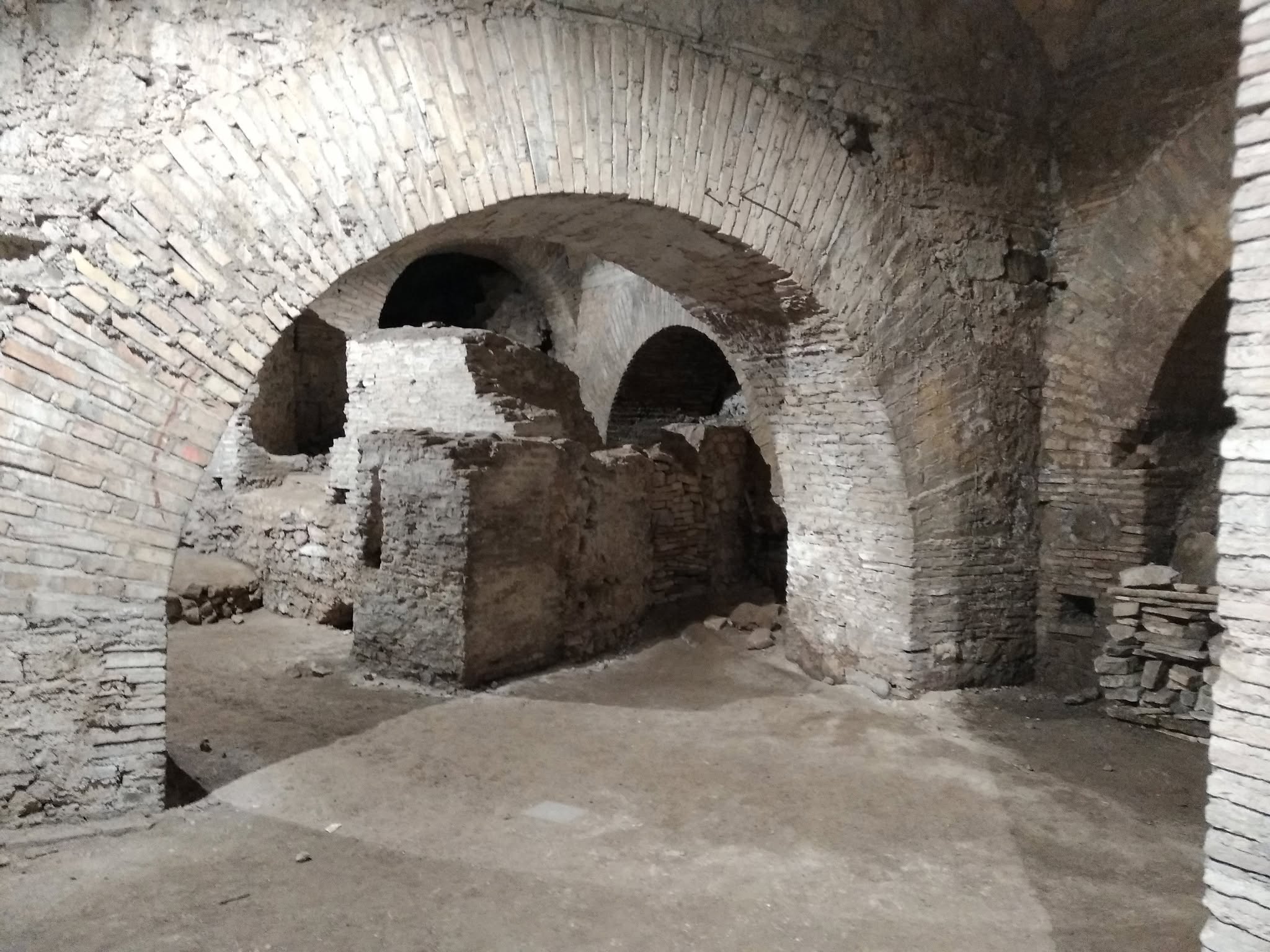 Earlier Structures
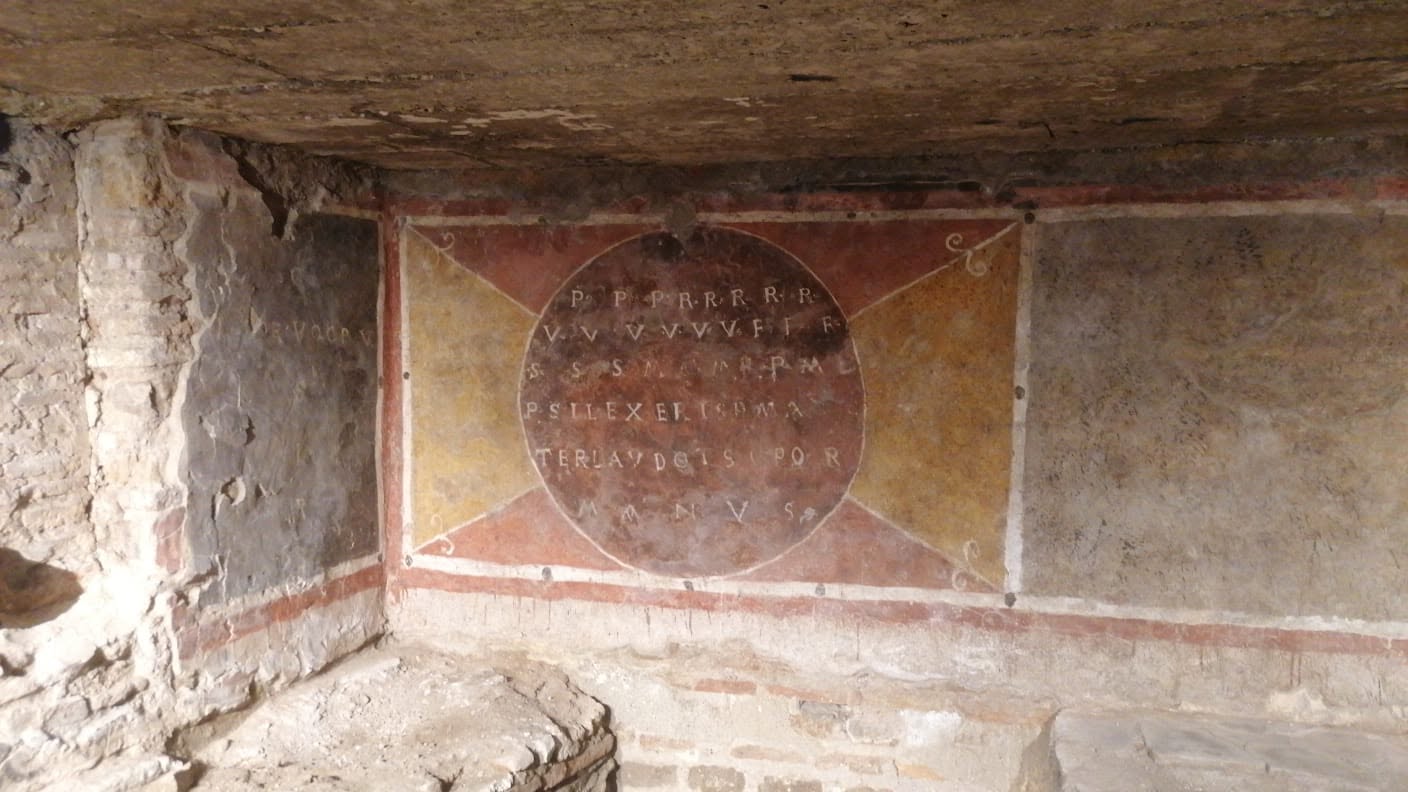 Later Construction
How far below Rome is ancient Rome?
There is no universal answer.
The depth of an archaeological structure depends on its original topographical position and everything that happened at that particular location afterwards.
An ancient feature on elevated terrain may remain relatively close to the present surface. Elsewhere, repeated construction, filling and environmental deposition can place Roman levels several metres below today's streets.
Even within the same archaeological complex, several ancient and later levels may survive one above another. Asking how deep ancient Rome is therefore leads to a more useful question: which Rome, in which place, and from which period?
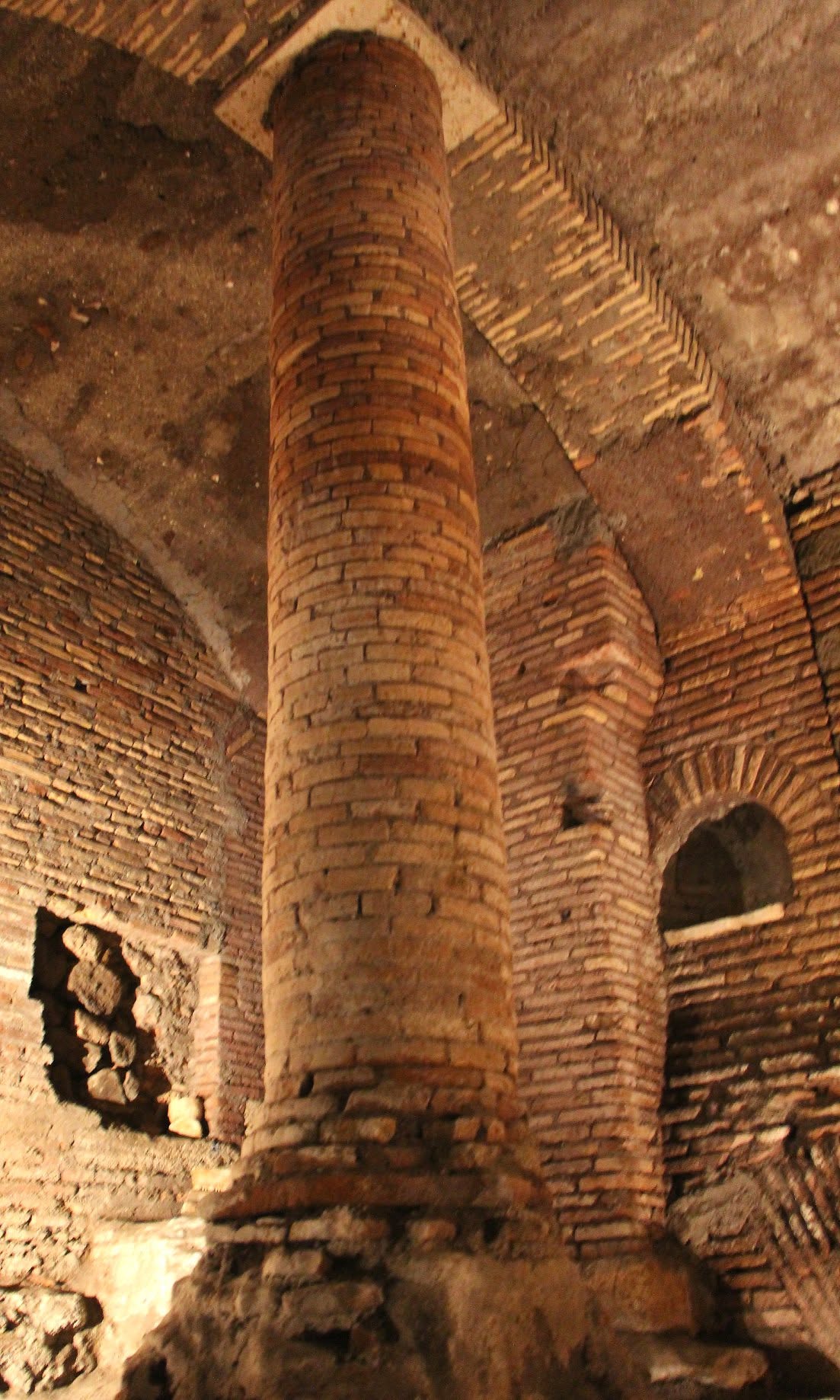 San Paolo alla Regola · Rome
San Paolo alla Regola.
San Paolo alla Regola provides an unusually clear example of how changing urban levels can be read inside a single site.
Roman structures here survive through several storeys. The complex developed through multiple phases, including warehouses from the Imperial period and later alterations.
During the Constantinian period, a lower level was deliberately filled and structural walls were reinforced.
Following later abandonment, collapses and alluvial deposits contributed to the rising ground level. Medieval construction was then established using and consolidating the earlier fabric.
The site therefore preserves not simply an ancient building below a later one, but a physical sequence of urban decisions extending across centuries.
Not everything below Rome was once at street level.
Rome's subsurface also contains spaces that were intentionally excavated underground.
Quarries were cut to extract building material. Tunnels served hydraulic purposes. Hypogea and catacombs occupied deliberately excavated spaces. Other cavities acquired new functions over time.
These are fundamentally different from a Roman street, courtyard or room that became lower than the surrounding city because the external ground level changed.
Both belong to the archaeology of Rome below ground, but they arrived there through different processes. Distinguishing between them is essential to understanding the physical development of the city.
Rome is not a stack of complete cities. It is a record of continuous transformation.
Archaeological levels preserve fragments of that process: a wall retained, a doorway blocked, a floor raised, a building reused, a space filled and another structure established above it.
Looking at Rome vertically changes the question. Instead of asking only what stood here in antiquity, we can ask how this particular piece of the city travelled from its original setting to its present position below today's streets.
Insula di San Paolo alla Regola — archaeological description, building phases and present depth.
San Paolo alla Regola Roman Insula — development of the complex and changes in ground level.
Studies and cartography concerning Rome's anthropogenic underground cavities.
Plan a private visit
Explore this subject through a private archaeological journey.
Tell us which place or question interests you and when you will be in Rome. We will check current access for your dates and, if needed, suggest a suitable alternative. Sending a request is not a confirmed booking.
Request a private archaeological journey →