
San Clemente
A single site in which successive phases of Rome remain physically connected: the present basilica, an earlier Christian church and Roman structures preserved at lower levels.
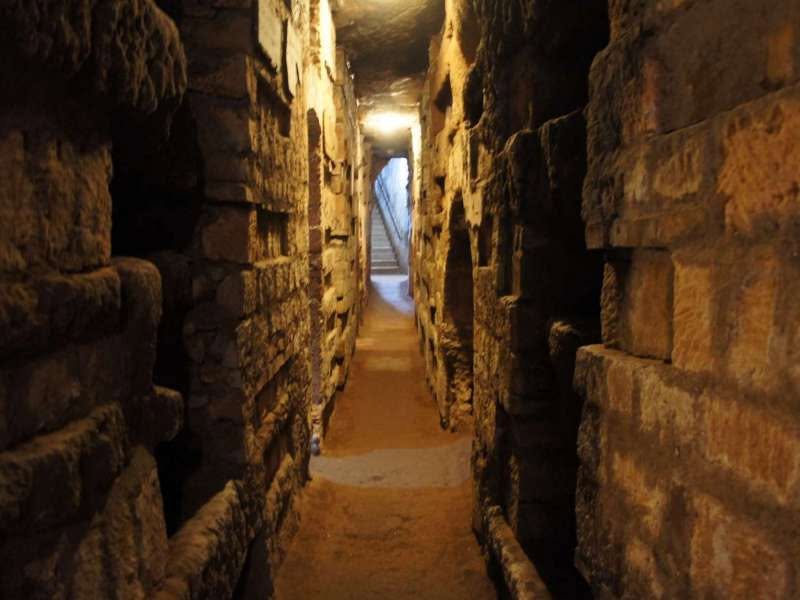
One address. Several phases of Rome.
San Clemente stands in the valley between the Caelian and Oppian hills, a short distance from the Colosseum.
Its archaeological importance lies not simply in the age of what survives below the present church, but in the physical relationship between different periods of construction.
The present basilica belongs to the medieval phase of the complex. Beneath it survives an earlier Christian basilica, while a further descent reaches Roman buildings whose history extends back into the first centuries of the imperial city.
The site is read from the present downward.
Descending through San Clemente means moving through spaces that were built, transformed, filled and reused at different moments in the history of the city.
The Present Basilica
The church visible today belongs to the medieval rebuilding of San Clemente and occupies the highest principal historical level of the complex.
The Earlier Basilica
Below the present church survives the earlier Christian basilica, transformed into a monumental basilical space around the year 400 and later abandoned and filled.
Roman Buildings
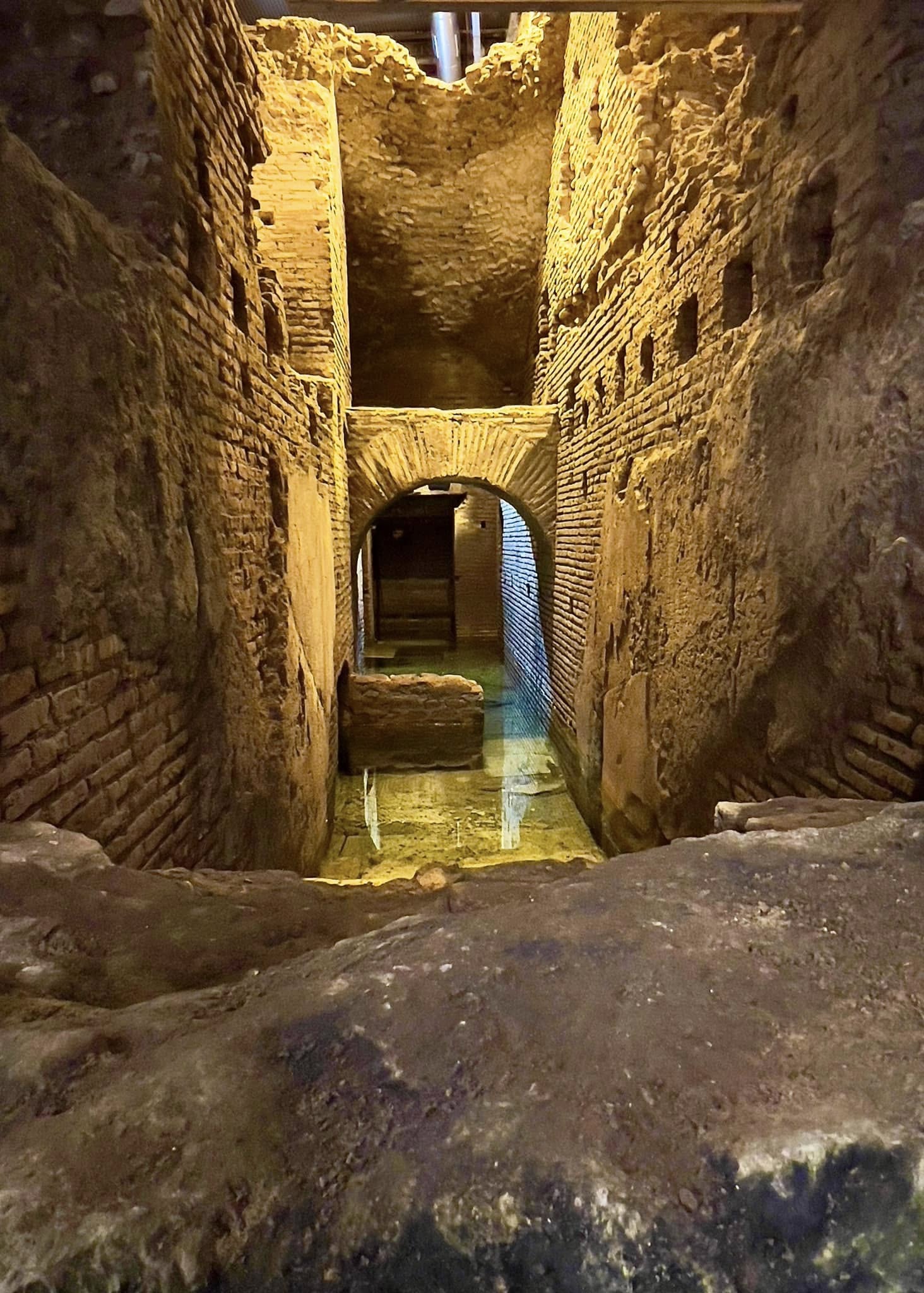
At a lower level are Roman structures including a brick-built domestic complex and a much larger building constructed in tufa and Roman concrete.
The Mithraic Complex
Part of the lower area of the Roman house was transformed around the end of the second century into a sanctuary associated with the cult of Mithras.
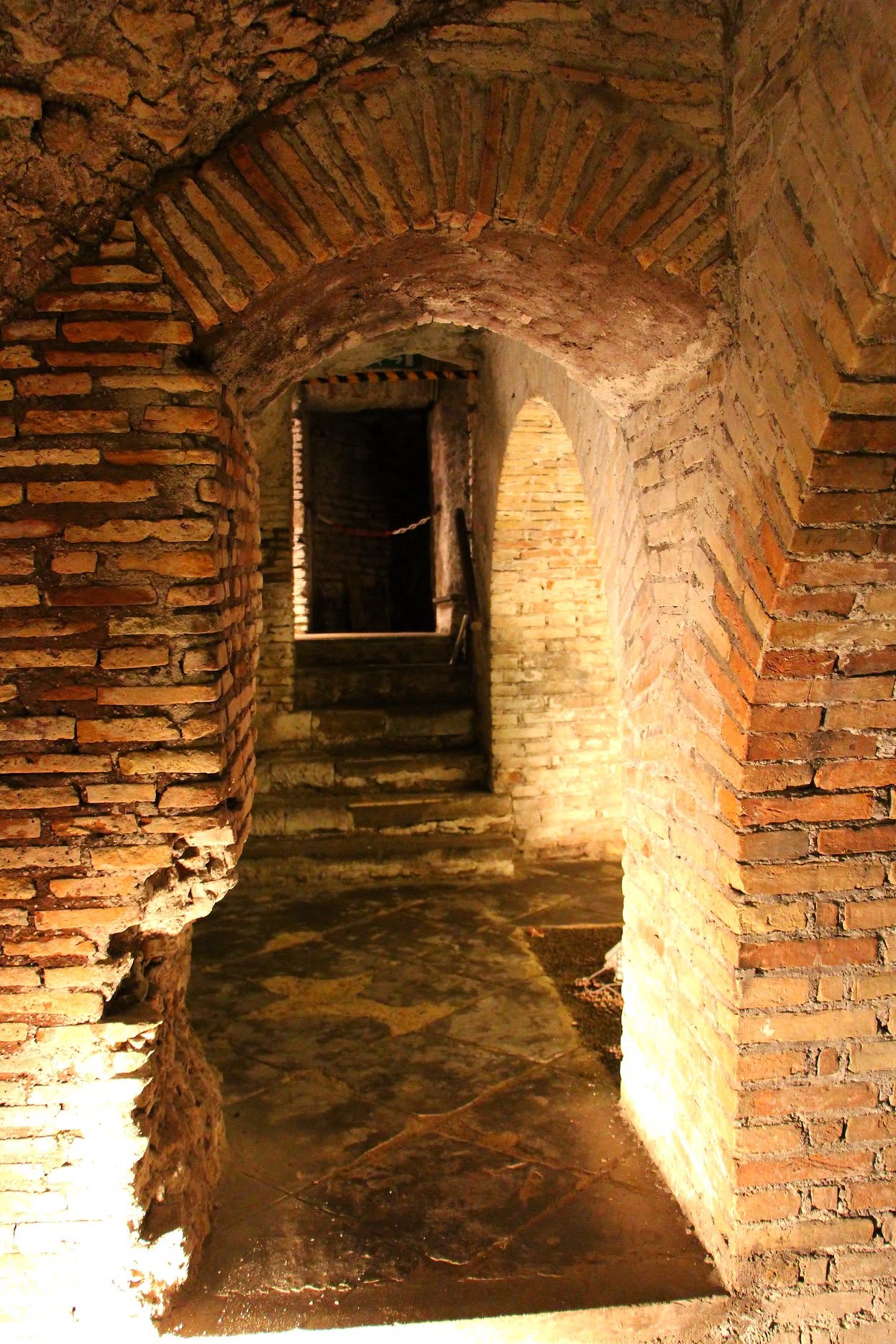 Rome · Changing Ground Levels
Depth here is part of the history.
According to the history published by San Clemente, the valley's ground level in the first century was approximately twenty metres below the present level.
That figure does not represent a standard depth for ancient Rome. It describes this particular topographic and archaeological context.
After the fire of AD 64, damaged structures in the area were filled and new construction took place above them. Later phases repeated the process of transformation, reuse and building at different elevations.
Architecture from different periods remains in physical contact.
The Lower Basilica
The earlier Christian church preserves architectural elements and medieval wall paintings from several phases of its long history.
The Roman House
A brick-built domestic structure occupied one side of the ancient lane. Its lower area included a cryptoporticus and vaulted spaces.
The Mithraeum
Part of the lower Roman complex was adapted for Mithraic worship, creating a ritual environment within an already existing architectural structure.
The Monumental Roman Building
Across the ancient lane stands a large rectangular structure with tufa walls, vaulted rooms and herringbone floors. Current research associates it with the imperial mint known in this area.
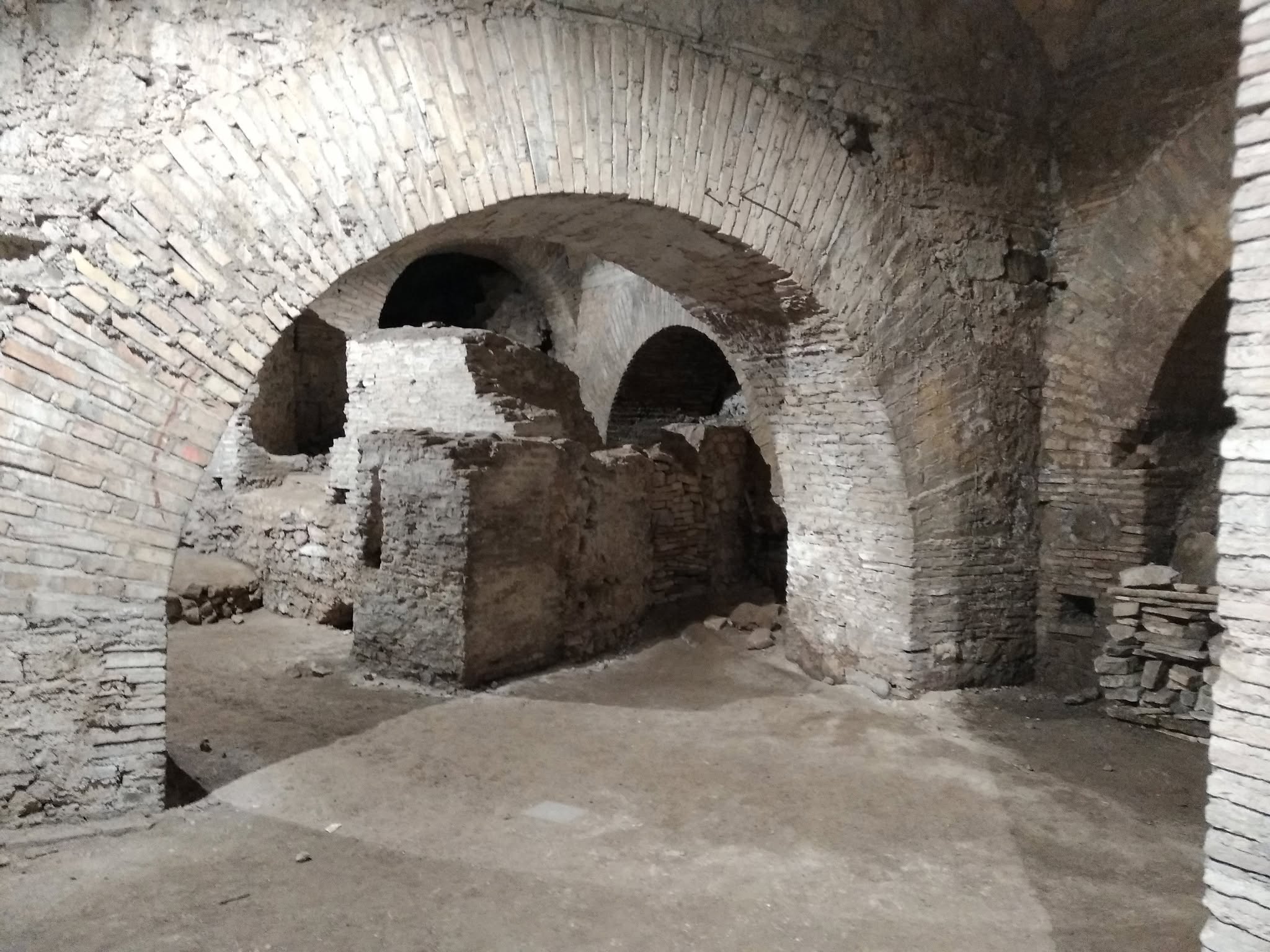 Earlier Architecture
San Clemente · Archaeological Sequence
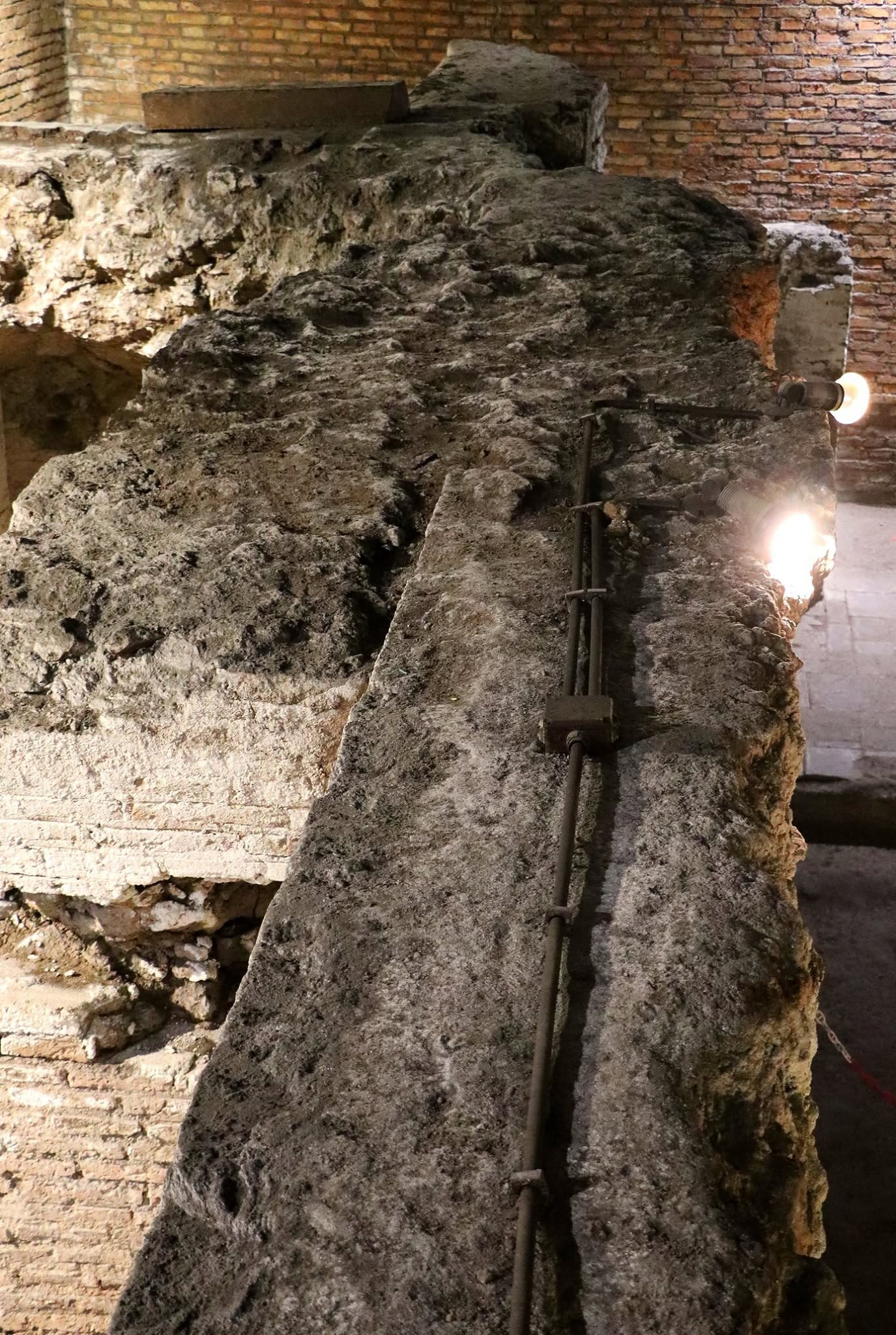 Mithraic Architecture · Comparative Context
Not a stack of monuments. A sequence of decisions.
The archaeological value of San Clemente is not simply that older structures survive beneath a later church.
The site records repeated decisions about what to preserve, what to fill, what to reuse and where to build again.
Roman buildings changed function. Earlier spaces became foundations. A Christian basilica occupied a new phase of the complex. That basilica was itself later filled and used to support another church.
Visiting the archaeological complex.
Access conditions are controlled by the site and can change. Always check the official information before planning a visit.
ACCESS INFORMATION MAY CHANGE. VERIFY CURRENT CONDITIONS WITH THE BASILICA BEFORE VISITING.
San Clemente raises bigger questions.
The site becomes more useful when read as part of the broader processes that shaped Rome below present street level.
San Clemente is one point in a much larger subsurface.
Continue through the Underground Atlas to compare different archaeological environments across Rome: Roman houses, sanctuaries, earlier churches, public buildings and engineered spaces.
Build a journey around the Rome you want to understand.
San Clemente can be one point within the Rome Beneath the Churches private journey. Tell us your dates, interests and available time. We will consider what can genuinely be visited and how the sites can be combined into a coherent journey.
Request a private San Clemente journey →Underground Rome is dedicated specifically to the archaeological city below street level. For broader private programmes across Rome, bespoke itineraries and experiences extending beyond the underground city, discover Rome Private Experience.