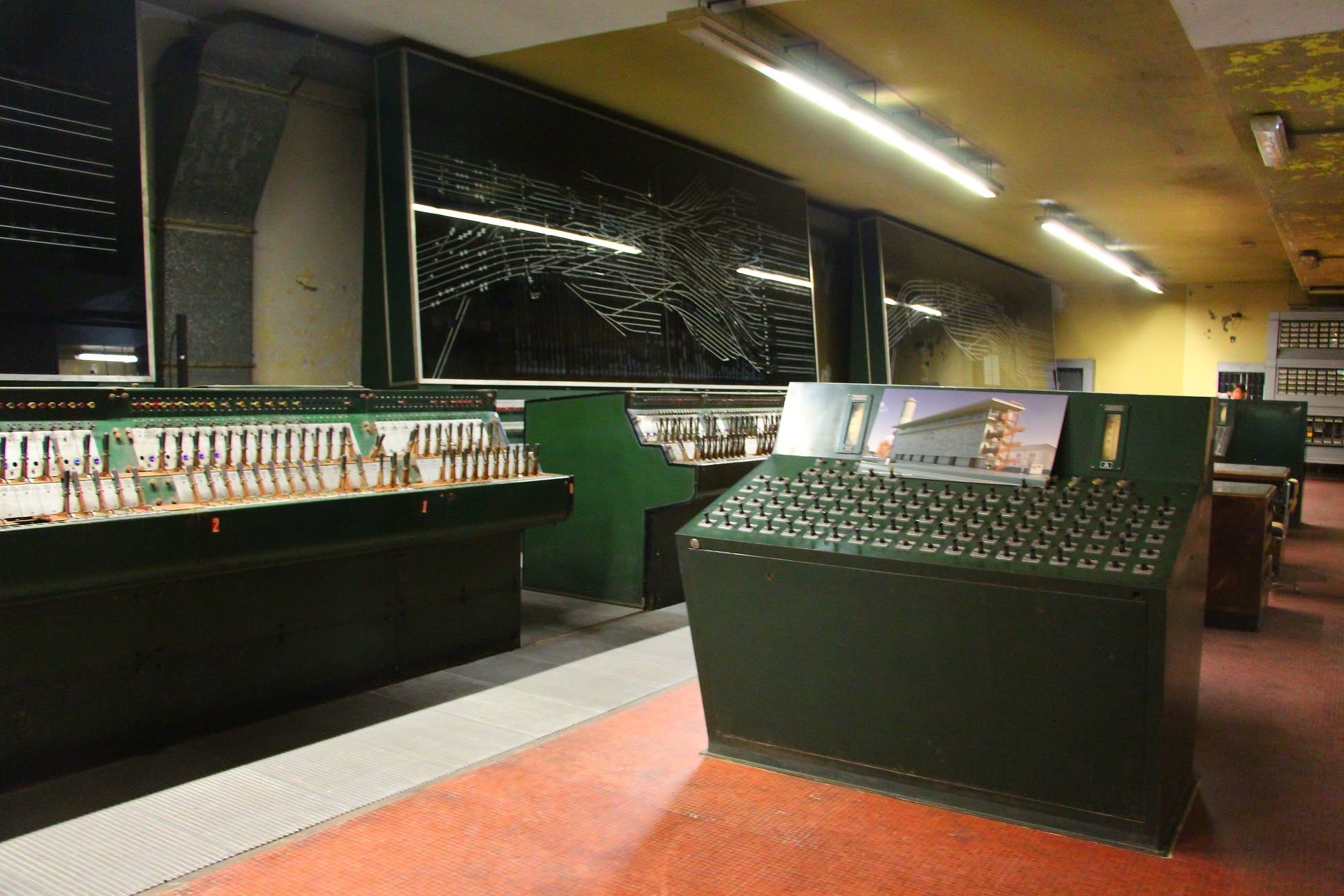
Beneath Termini survives a twentieth-century technological landscape built for an entirely different kind of emergency.
In 1936, an underground control installation was constructed beneath the railway complex as an emergency counterpart to the principal Apparato Centrale Elettrico, or ACE, operating above.
Its purpose was practical: if wartime conditions made the surface control room unusable, essential railway operations could be transferred below ground.
The bunker therefore belongs to a different archaeology of Rome — the archaeology of infrastructure, technology and twentieth-century conflict.
Built beneath the railway complex in preparation for the possibility of wartime disruption.
The underground installation reproduced the functions required to control railway movements from the protected space below.
The bunker was constructed during the Fascist period on the orders of Benito Mussolini, several years before Italy entered the Second World War.
It was conceived both as a protected working environment for railway personnel and as an emergency command position from which the movement of trains could continue.
The bunker makes sense only when read together with the control installation above it.
The underground equipment was designed as an emergency counterpart to the station's surface railway-control apparatus.
The principal installation controlled the movement of trains through Roma Termini and remained in railway service for decades.
The protected bunker reproduced essential control functions so railway operations could continue from below ground in an emergency.
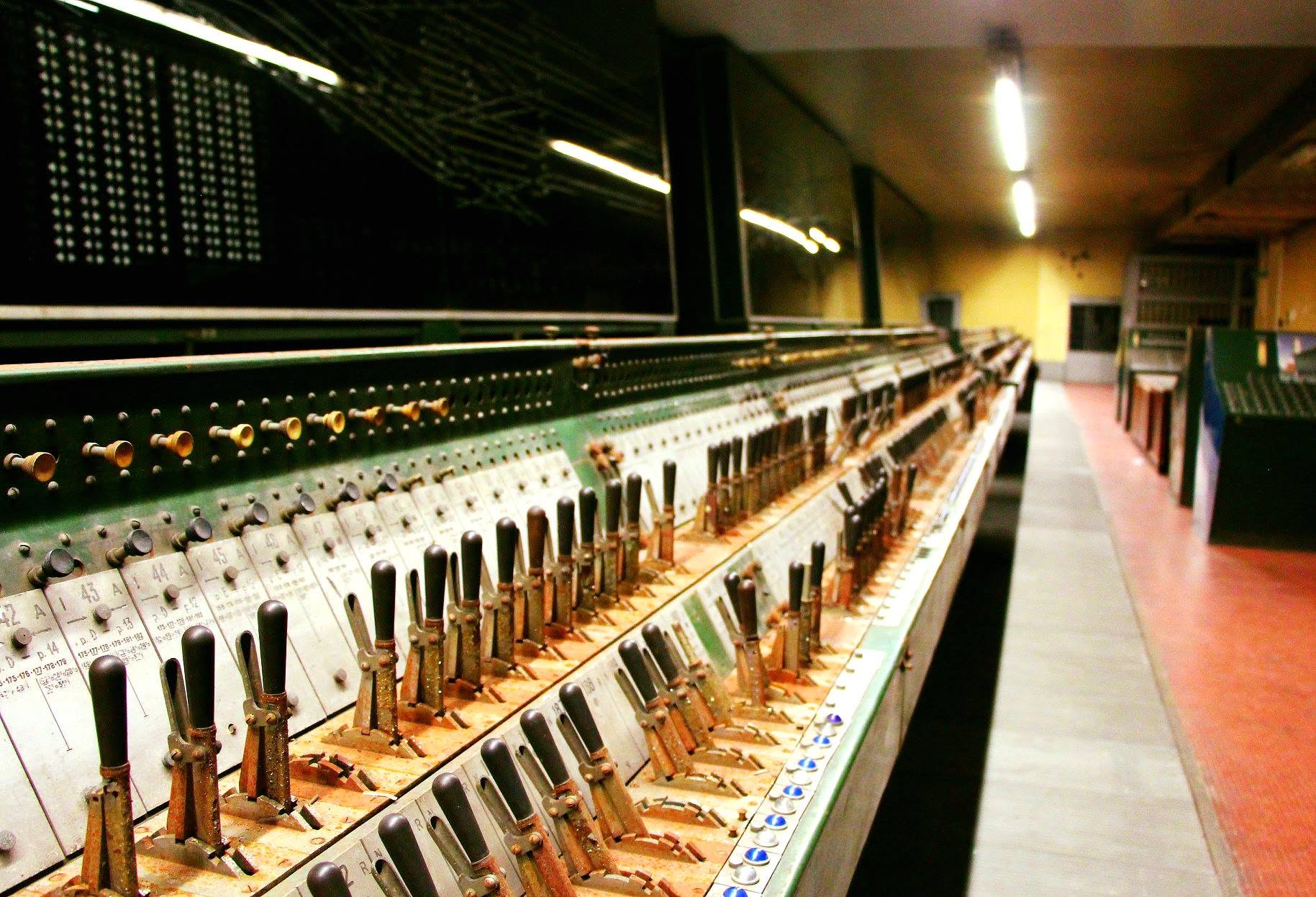
Hundreds of individual controls formed part of the electromechanical system used to establish railway routes.
The levers were connected to the systems controlling points and signals across the station, allowing operators to prepare routes for arriving and departing trains.
The installation is therefore more than a wartime shelter: it preserves an important stage in the technological history of railway traffic control.
The diagram below is conceptual. It represents the principle of an electromechanical control bank rather than the exact layout of the Termini installation.
In an ACE system, individual controls were used to command elements of the railway layout and establish the path required for a train.
The bunker preserved this operational logic inside a protected environment below the station.
The underground control room formed part of a protected wartime environment rather than a conventional railway office.
Surviving features illustrate the precautions considered necessary for personnel and railway operations during an emergency.
The underground location and protected entrances separated the operational space from conditions at surface level.
The complex included equipment intended to maintain usable air in the event of chemical attack.
The central purpose of the installation was to preserve the ability to manage railway traffic during wartime disruption.
The bunker lies approximately ten metres below the railway level.
Its depth was functional rather than archaeological. The rooms were deliberately constructed underground to provide protection.
This makes the bunker useful for understanding an important distinction: not everything below Rome became underground through the accumulation of later urban levels.
Archaeology can preserve machines, infrastructure and working environments as well as ancient masonry.
The Termini bunker records the organisation of a railway system: how operators worked, how signals and points were controlled, and how critical infrastructure was protected.
The Termini Railway Bunker should not be treated as a site with regular public opening hours.
The railway control installations have been opened on exceptional occasions through initiatives involving organisations such as Fondazione FS and FAI.
Any future access should therefore be confirmed through the organisation responsible for the specific opening before planning a visit.
Underground Rome designs private journeys around archaeological and historic spaces below street level, according to your interests, available time and the access genuinely available during your stay.
Design Your JourneyUnderground Rome is dedicated specifically to the archaeological and historic city below street level.
For broader private programmes across Rome, corporate experiences and complex group arrangements, visit Rome Private Experience .