Stadium of
Domitian
Rione Parione
Rome
The ancient building is still visible in the modern city.
Piazza Navona did not acquire its elongated form by accident.
The buildings surrounding the modern square developed over and around the structures of the Stadium of Domitian, while the open space of the ancient arena remained largely free from construction.
The result is unusual: even before descending underground, the plan of an imperial monument can still be read at the scale of the modern city.
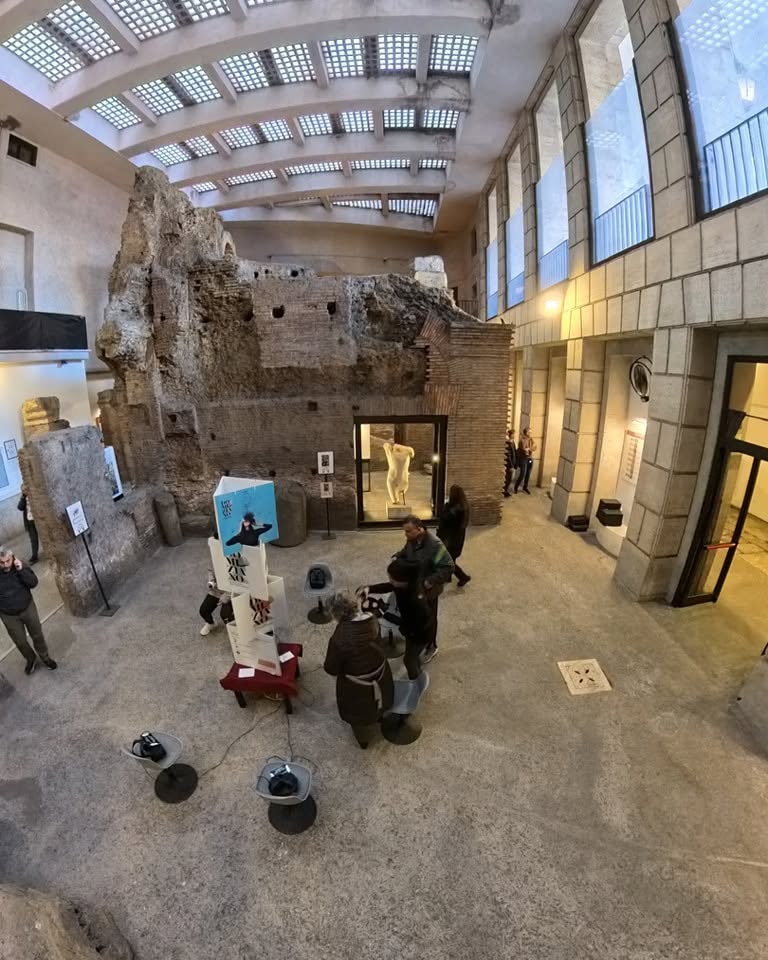
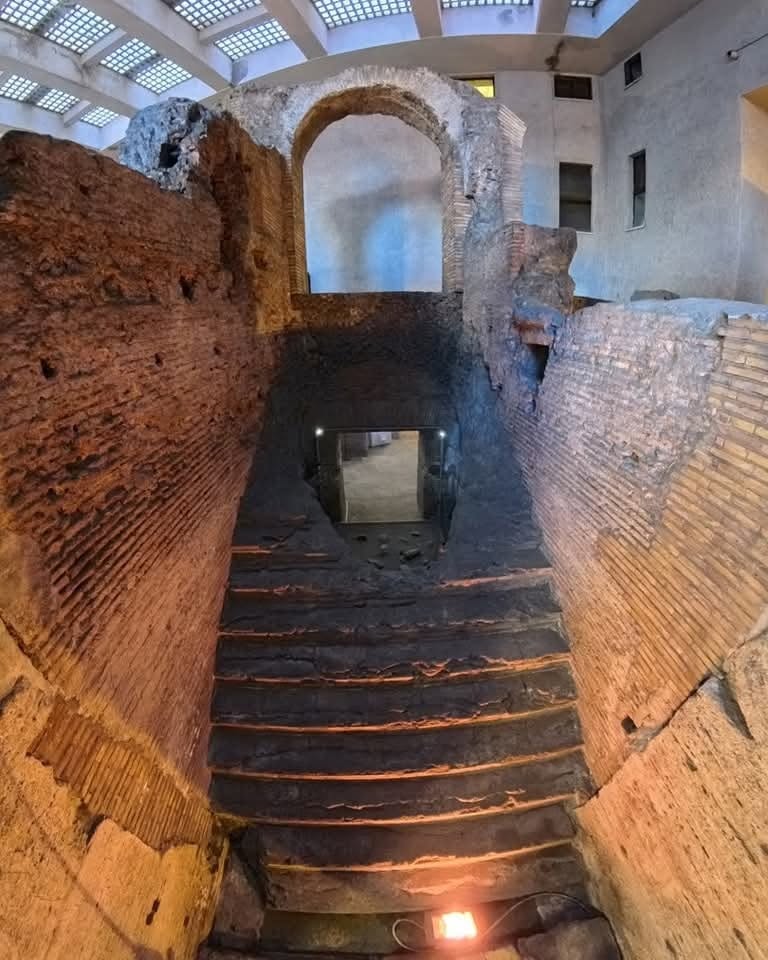
Below the level of Piazza Navona.
The archaeological area at Tor Sanguigna lies approximately 4.5 metres below the present street.
Other remains associated with the stadium survive at different points beneath the buildings surrounding Piazza Navona.
As elsewhere in Rome, the precise depth varies according to the location and later development of the site.
A stadium written into the city plan.
The Stadium of Domitian was a long masonry building with parallel sides and a curved end.
Its form differed from a Roman circus: it was designed primarily for athletic contests and did not contain the central spina characteristic of circus racing.
Domitian
Built for athletic competition.
Domitian's stadium brought the architecture of Greek-style athletic competition into a monumental Roman setting.
The Arena
The long central space provided the setting for athletic contests and public competition.
The Cavea
Spectator seating surrounded the arena and was supported by the masonry substructures whose remains survive around Piazza Navona.
The Façade
The exterior was organised as two levels of arcades, with architectural elements in travertine and brick construction behind them.
The building disappeared. Its geometry did not.
Piazza Navona preserves the footprint of the ancient stadium at the scale of an entire urban space.
Later buildings rose over the seating structures around the perimeter, while the former arena became the open space of the piazza.
The ancient monument therefore survives in two forms: physically in archaeological remains below and geometrically in the city above.
Fragments of a building larger than the excavation.
What can be visited or observed today represents only portions of a monument whose complete footprint extended beneath the modern urban fabric.
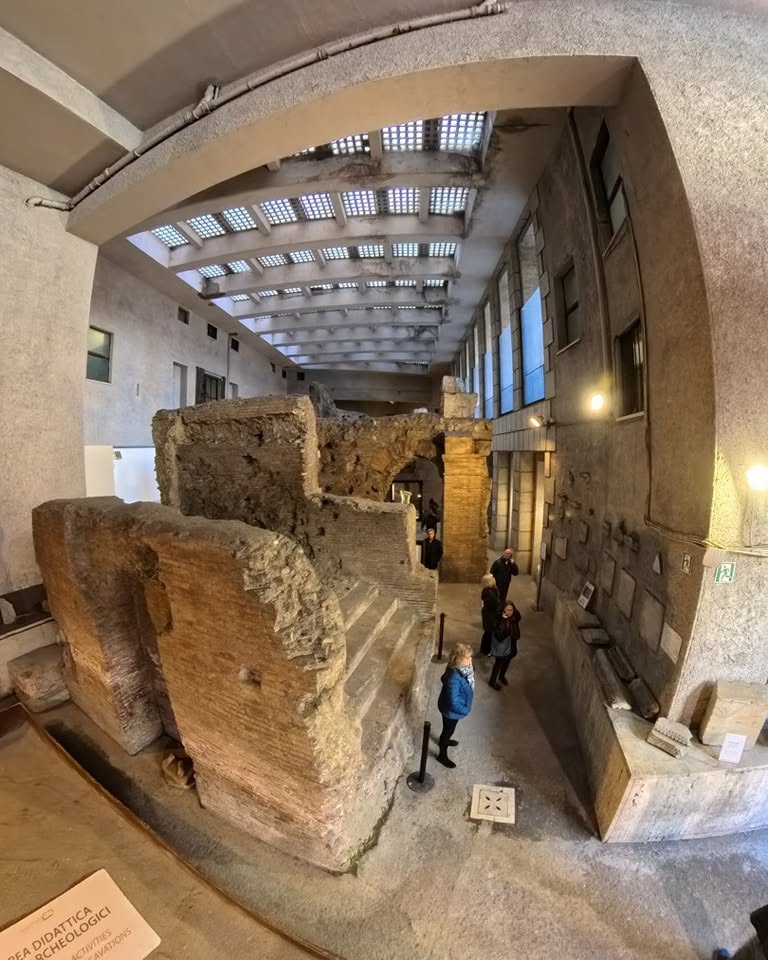
Structures
more than one modern building.
One monument, dispersed remains.
Archaeology does not stop at the excavation wall.
At Piazza Navona, the ancient monument can be read simultaneously below ground and in the geometry of the modern city.
The archaeological fragments explain the construction of the stadium. The piazza above reveals what happened to its footprint over the following centuries.
Together they show how a Roman building can disappear architecturally while continuing to organise urban space.
The archaeological area is undergoing restoration.
The archaeological area at Tor Sanguigna is undergoing restoration works before returning to public access.
Visiting arrangements should therefore be checked before planning a visit. Other traces of the stadium remain distributed beneath the urban fabric surrounding Piazza Navona.
Explore more places below Rome.
Read the ancient city through the modern one.
Underground Rome designs private archaeological journeys around the city below street level, selecting sites according to your interests, available time and the access genuinely available during your stay. Tell us your dates and group size; we’ll check site access and prepare a private route proposal with a clear quote.
Request a private archaeological journeyby Rome Private Experience
Underground Rome is dedicated specifically to the archaeological city below street level.
For broader private programmes across Rome, corporate experiences and complex group arrangements, visit Rome Private Experience .