
Archaeological Area
of San Saba
San Saba · Rome
A medieval basilica occupies a site with a much longer history.
San Saba is not a single-period monument. Its archaeological area preserves evidence for successive forms of occupation extending from imperial Rome into the early Middle Ages.
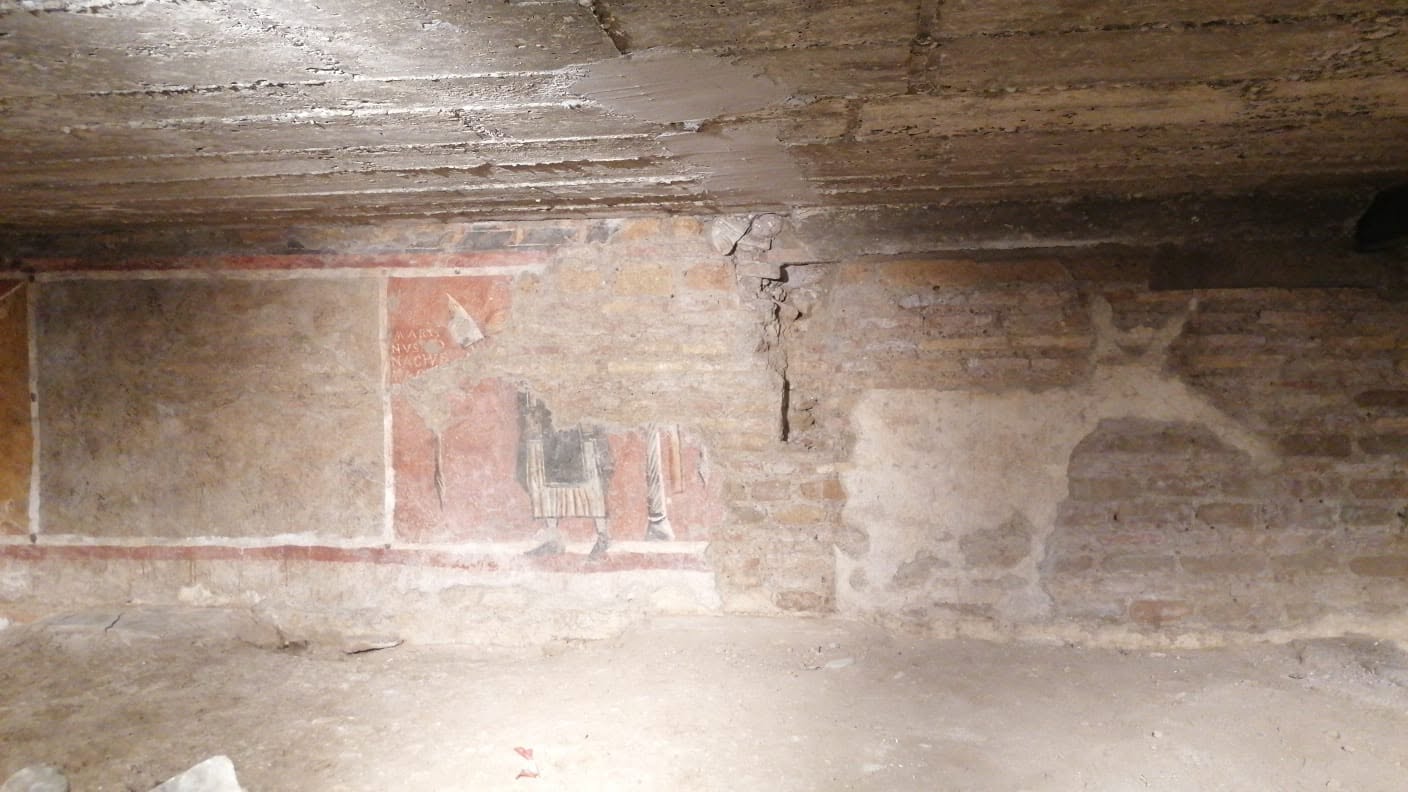
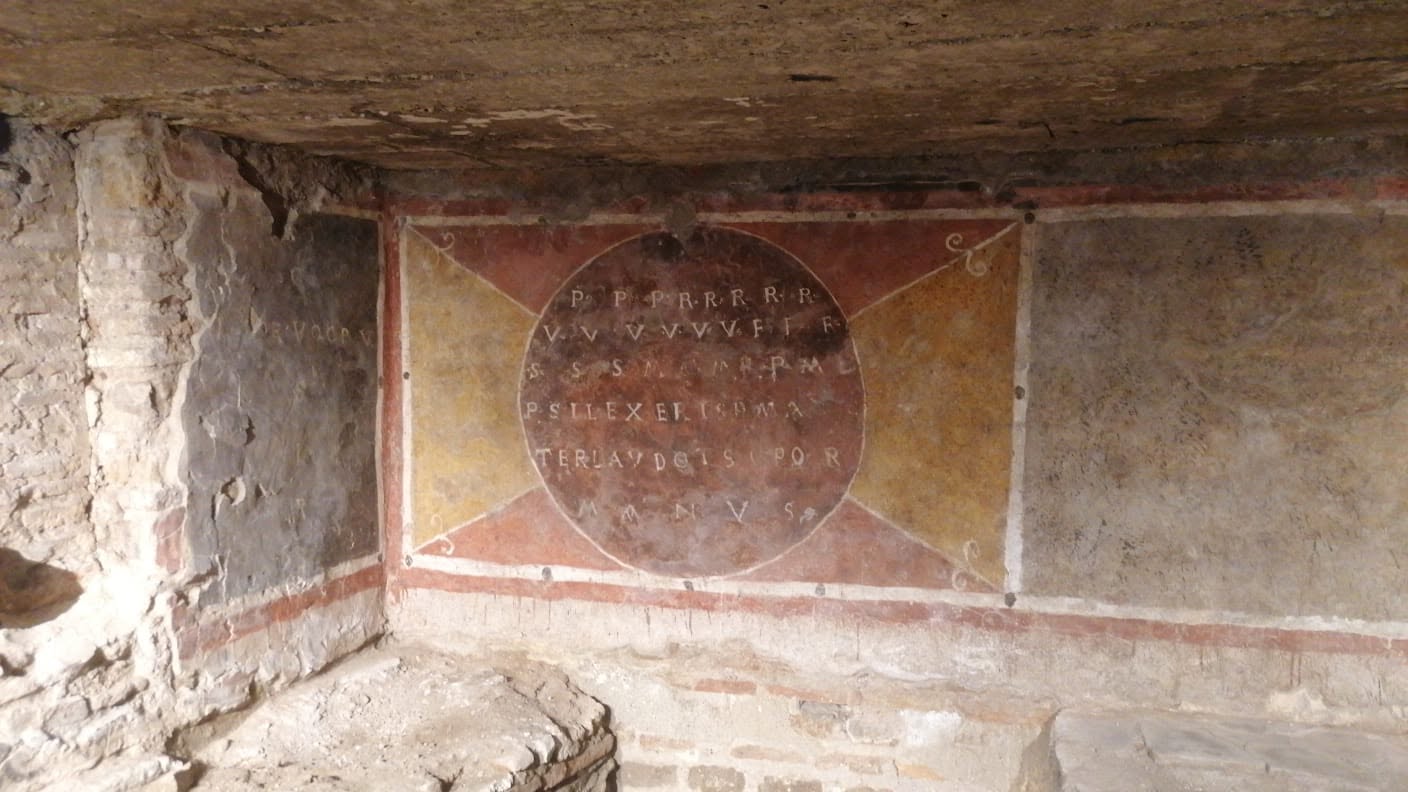
Archaeological remains associated with the complex include structures belonging to the barracks of the Fourth Cohort of the Vigiles, a Roman residential building with mosaics, a later residential phase and an early medieval oratory decorated with wall paintings.
The basilica visible today therefore represents only the latest monumental expression of a site repeatedly adapted to different functions.
Military, domestic and religious occupation.
The significance of San Saba lies in the coexistence of structures belonging to very different moments in the history of the site.
Roman service infrastructure and residential architecture were followed by later occupation and eventually by a Christian religious presence.
Rather than erasing the earlier phases completely, each transformation left physical evidence that can be reconstructed archaeologically.
The Fourth Cohort of the Vigiles.
Part of the Roman phase is associated with the IV Cohors of the Vigiles.
The Vigiles formed Rome's organised firefighting and night-watch service during the imperial period. The city was divided into administrative sectors, each served by units stationed in barracks and smaller posts.
Official heritage documentation identifies remains of the barracks of the Fourth Cohort within the archaeological complex of San Saba and dates this phase to the first century AD.
Their presence places this part of the Little Aventine within the operational infrastructure of the imperial city.
A Roman residence with mosaic floors.
The archaeological sequence also preserves evidence for domestic occupation.
Official documentation records an imperial-period domus with mosaics within the San Saba complex.
This residential evidence complicates any attempt to interpret the area through a single Roman function. The site changed during antiquity itself.
A later residential installation documents another transformation during late antiquity, before the establishment of the early medieval religious complex.
Architecture repeatedly changed function.
San Saba is best understood as a sequence of occupations rather than as a stack of perfectly separated historical periods.
An oratory preceded the medieval basilica.
Christian occupation did not begin with the large church visible today.
An earlier oratory developed within the site and preserves evidence of wall painting associated with the early medieval phase.
Historical tradition connects the origins of the religious complex with eastern monastic communities. By around the eighth century a church dedicated to Saint Sabas had developed here.
The later basilica therefore grew from an already established religious landscape rather than being imposed on an empty site.
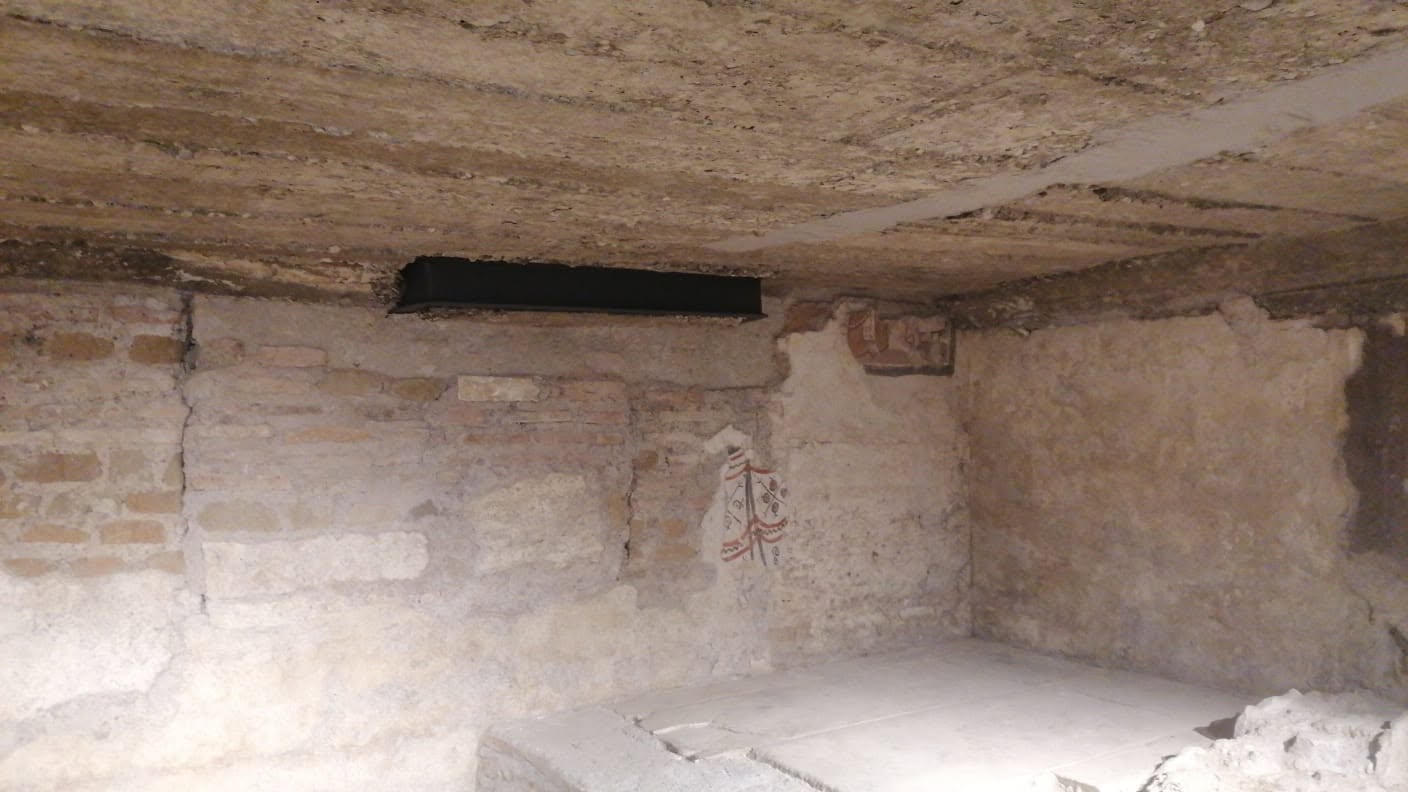
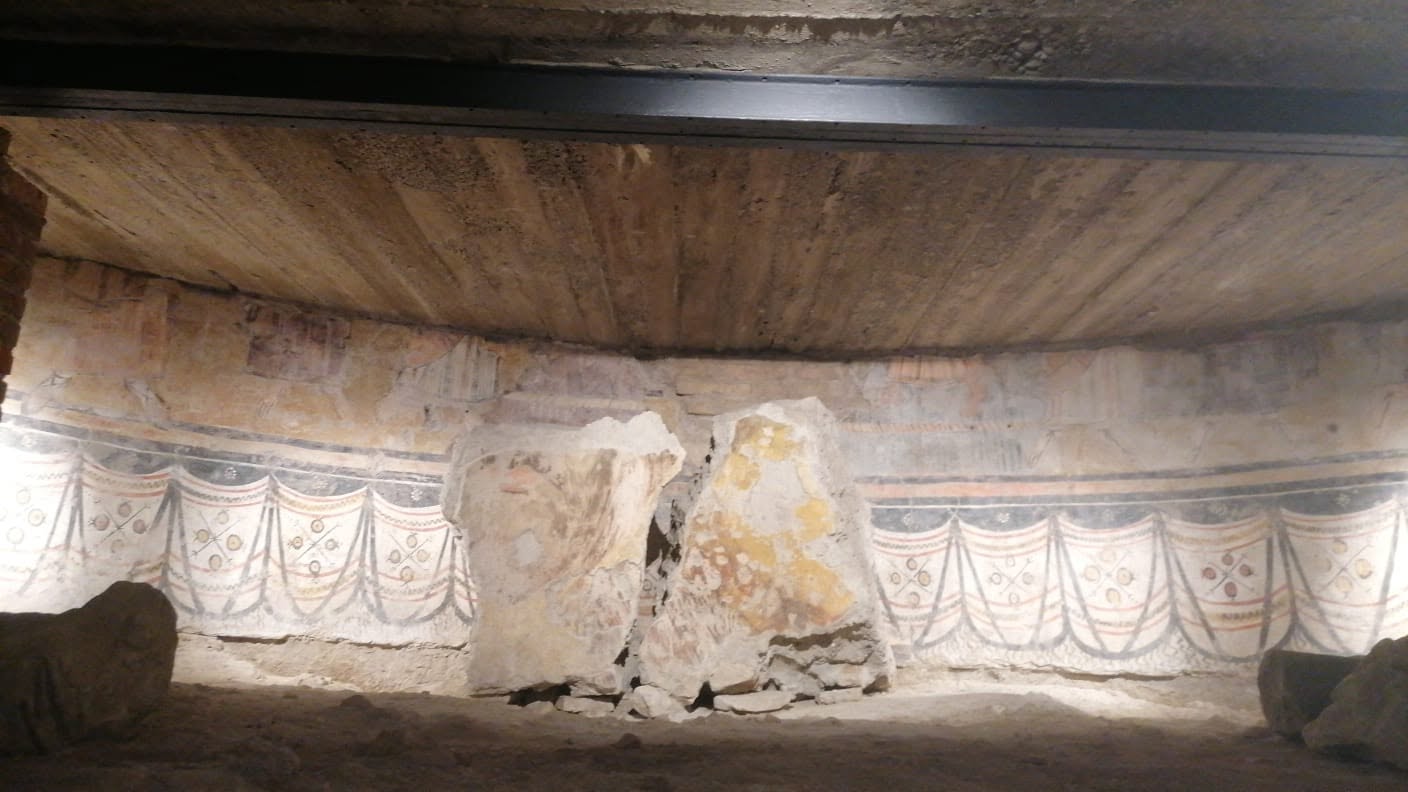
A small area contains several versions of the city.
The value of San Saba is not determined by one spectacular structure but by the relationship between successive forms of occupation.
The basilica and archaeological area are not the same visit.
Public access to the Basilica of San Saba should not be confused with regular access to its archaeological lower area.
The basilica is an active religious building with published liturgical opening information. The lower archaeological area has been the subject of a dedicated conservation and enhancement programme.
For this reason Underground Rome does not treat the archaeological area as a continuously open attraction. Current access conditions should be confirmed before planning a visit.
Explore more archaeological and historic places across Rome.
Build a journey around archaeology that can genuinely be accessed.
Underground Rome designs private archaeological journeys according to your interests, available time and the sites that can actually be visited during your stay.
Design Your Journeyby Rome Private Experience
Underground Rome is dedicated specifically to Rome's archaeological and historic subsurface.
For broader private programmes across Rome, corporate experiences and complex group arrangements, visit Rome Private Experience .