
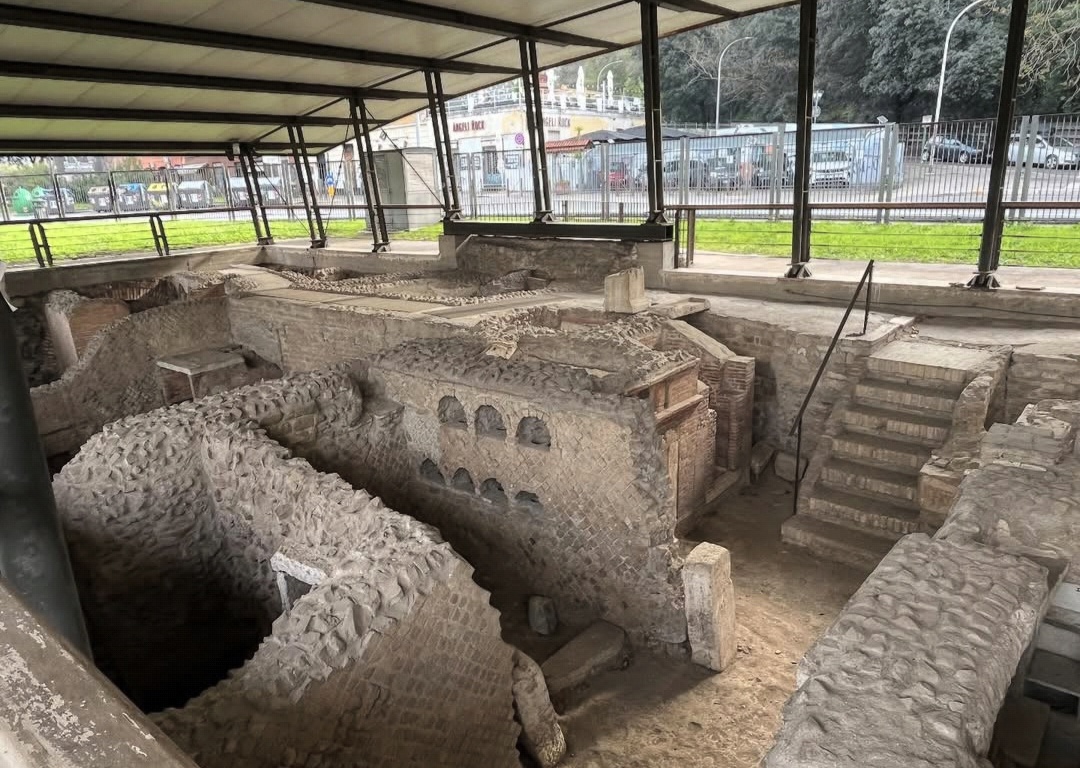
San Paolo fuori le Mura Archaeological Area
Archaeology discovered while building for the present.
In 2007, construction beside the Basilica of San Paolo fuori le Mura exposed an archaeological landscape whose physical remains had effectively disappeared from view.
Excavations in the south-western sector of the complex, beside the Abbey garden, continued for approximately two years. Instead of removing the discoveries, the project was redesigned so that the archaeological remains could survive within the underground level of the new building.
The result is an unusual encounter between contemporary architecture and the early medieval infrastructure that once supported one of Rome's most important pilgrimage destinations.
A construction project reopened an early medieval chapter of the basilica.
The excavations began when the basilica required new facilities for receiving pilgrims. Archaeological investigation preceded the construction of a multifunctional building beside the Abbey.
The remains that emerged were substantial enough to alter the project. The underground floor was instead organised as an area for the protection and presentation of the archaeology.
The discovery was especially important because written evidence had suggested the existence of an early monastic community, but archaeological traces of the complex had not previously been identified.
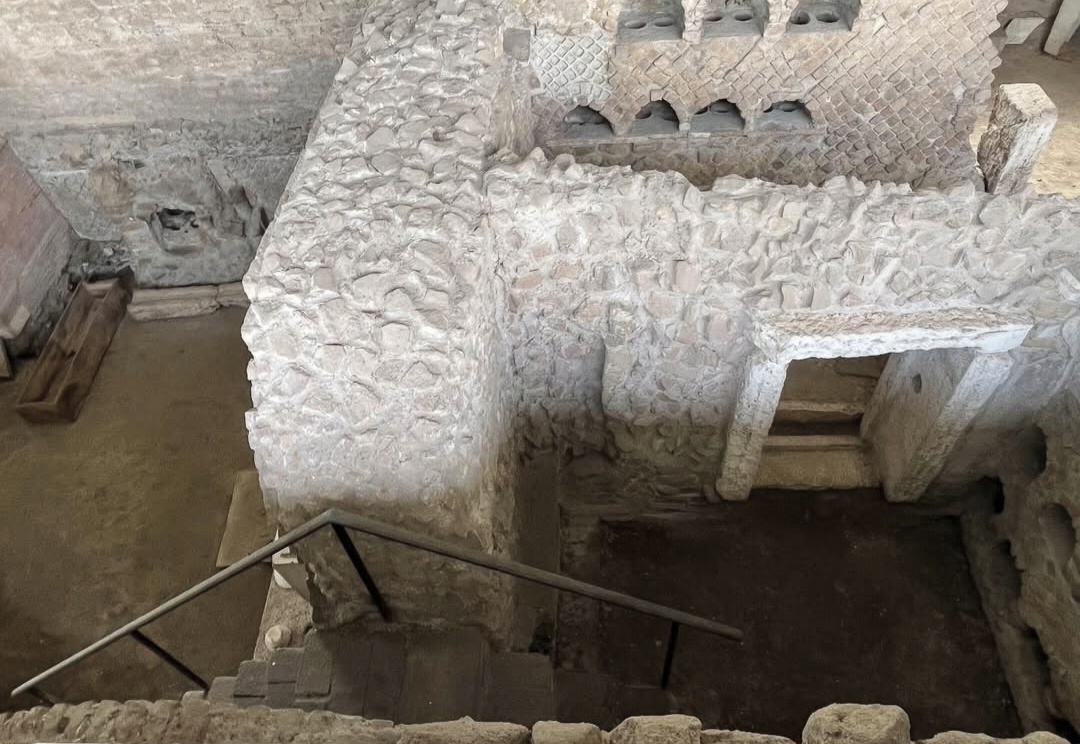
Excavation transformed that documentary reference into a physical site that can now be read through walls, circulation spaces and architectural remains.
A community that had survived in texts reappeared in the ground.
A surviving inscription dating to the period of Pope Gregory the Great, between 590 and 604, referred to a female monastic community associated with an oratory dedicated to Saint Stephen.
Before the modern excavations, however, no archaeological trace of that monastery had been securely identified in this sector.
Excavation exposed remains attributed to a monastic complex dating between the fifth and seventh centuries.
The archaeology therefore provides physical evidence for a community that formed part of the religious and practical landscape surrounding the basilica during the early Middle Ages.
Not a monument, but the infrastructure of a community.
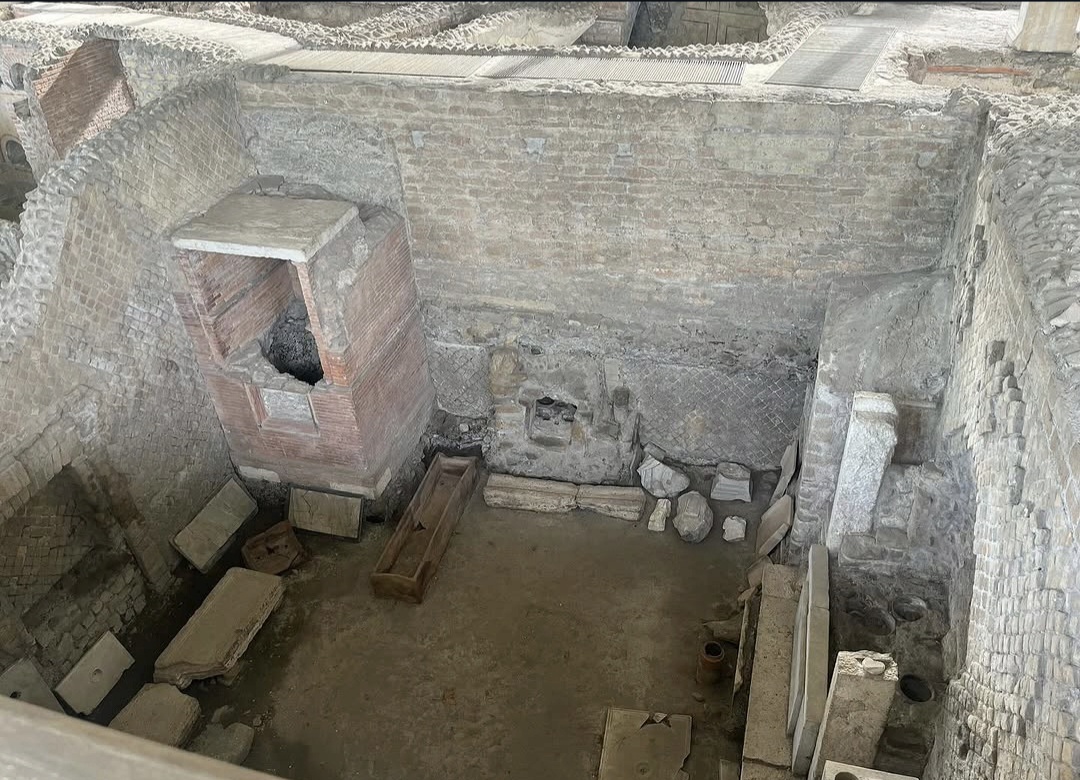
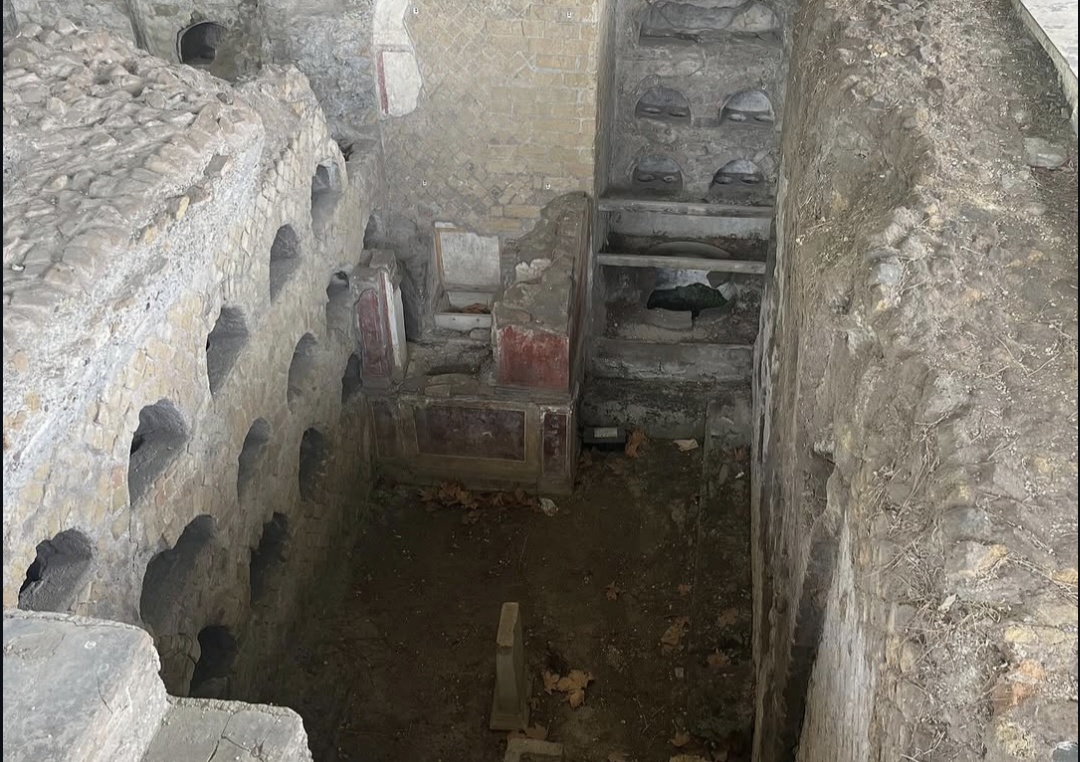
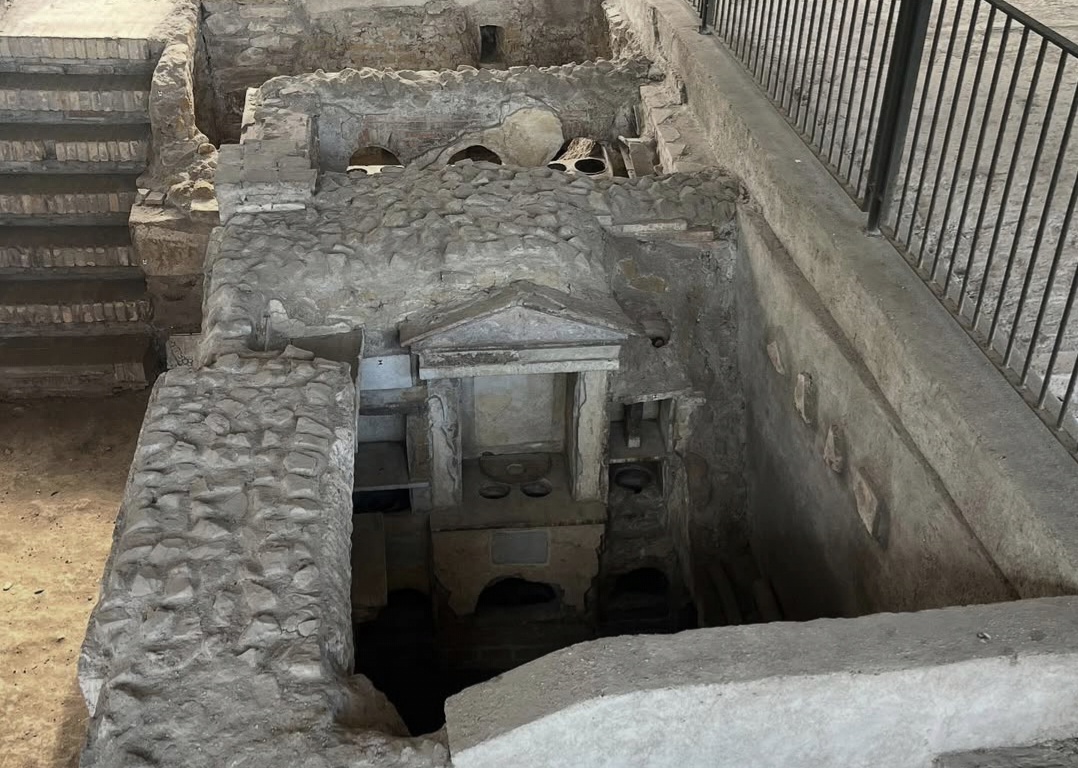
The archaeological remains include an extensive hall interpreted as a reception or refectory space, together with porticoes, columns and a well.
These are spaces associated with movement, water, hospitality and communal life. Their importance lies precisely in their ordinary function.
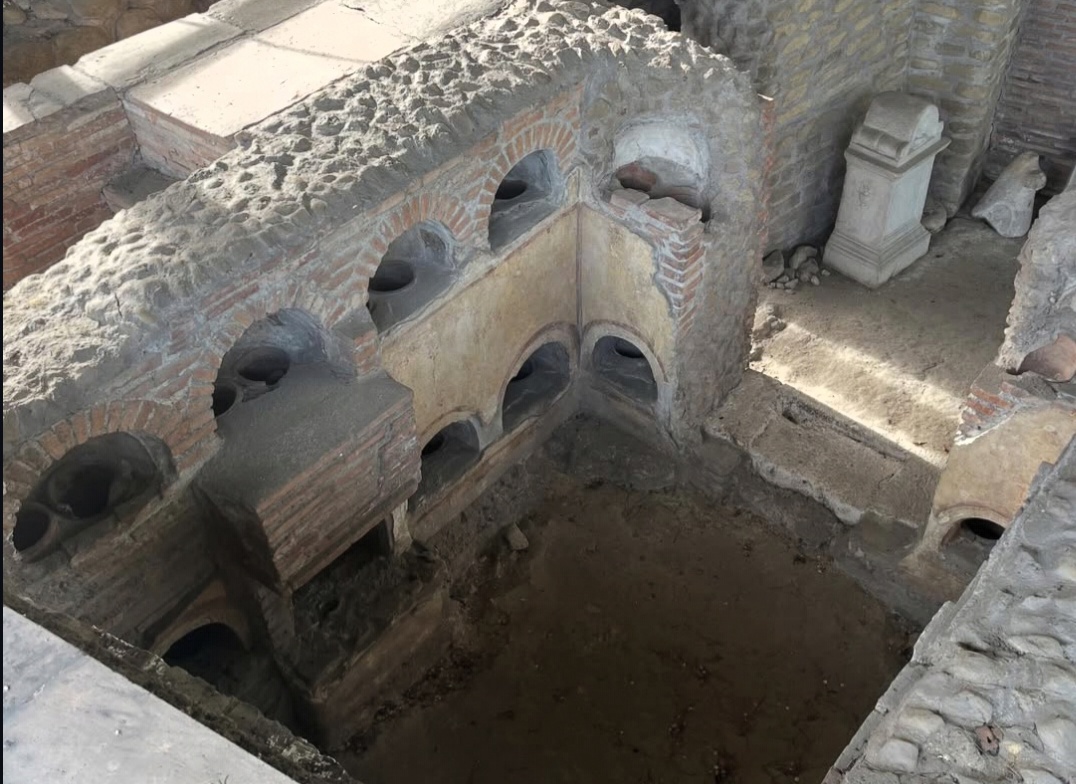
The basilica was connected to Rome by a monumental approach.
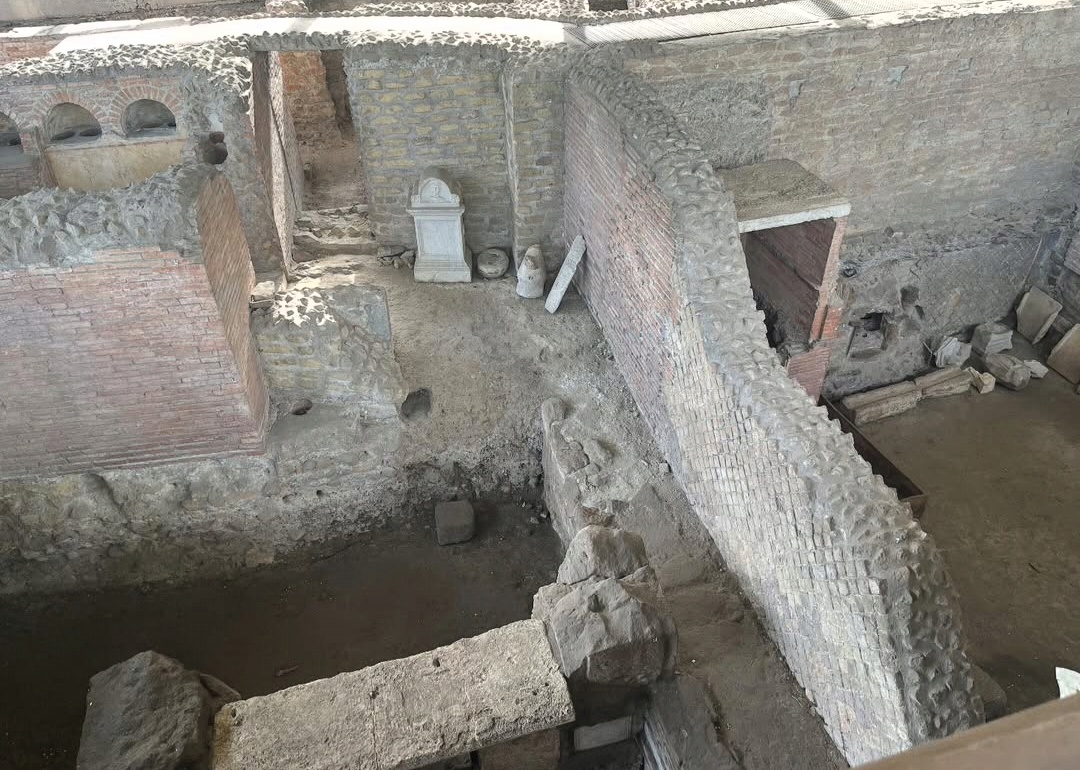
Among the remains identified during excavation are elements associated with a colonnaded portico that once accompanied pilgrims travelling from the Aurelian Walls toward the basilica.
Ancient written testimony describes this covered approach extending from the area of Porta San Paolo and the Pyramid of Cestius toward the sanctuary.
The archaeology helps restore the basilica to its wider urban context: not as an isolated church outside the walls, but as the destination of an organised route through the Ostiense landscape.
The archaeology belongs to a landscape formed around a tomb.
The history of San Paolo fuori le Mura begins with a funerary landscape along the Via Ostiense.
Christian tradition located the burial of the Apostle Paul within this cemetery, and the site became a destination for commemoration and pilgrimage.
Constantine constructed the first basilica over the venerated tomb in the fourth century. Increasing numbers of pilgrims eventually required a much larger building.
At the end of the fourth century the monumental basilica associated with Theodosius, Valentinian II and Arcadius replaced the smaller Constantinian church.
Via Ostiense necropolis
A funerary landscape developed along the road leading from Rome toward Ostia.
Constantinian basilica
The first basilica monumentalised the location associated with the burial of Paul.
Monumental expansion
A much larger basilica responded to the increasing importance of the pilgrimage destination.
Monastic landscape
Communities and service structures developed around the major sanctuary.
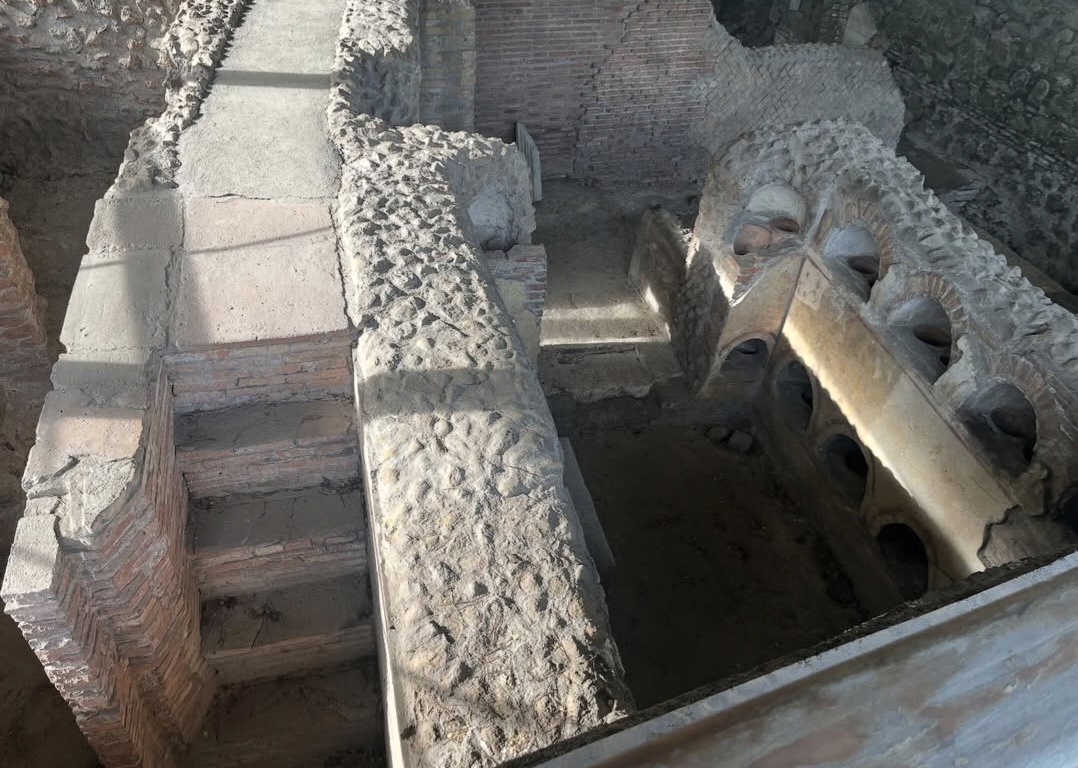
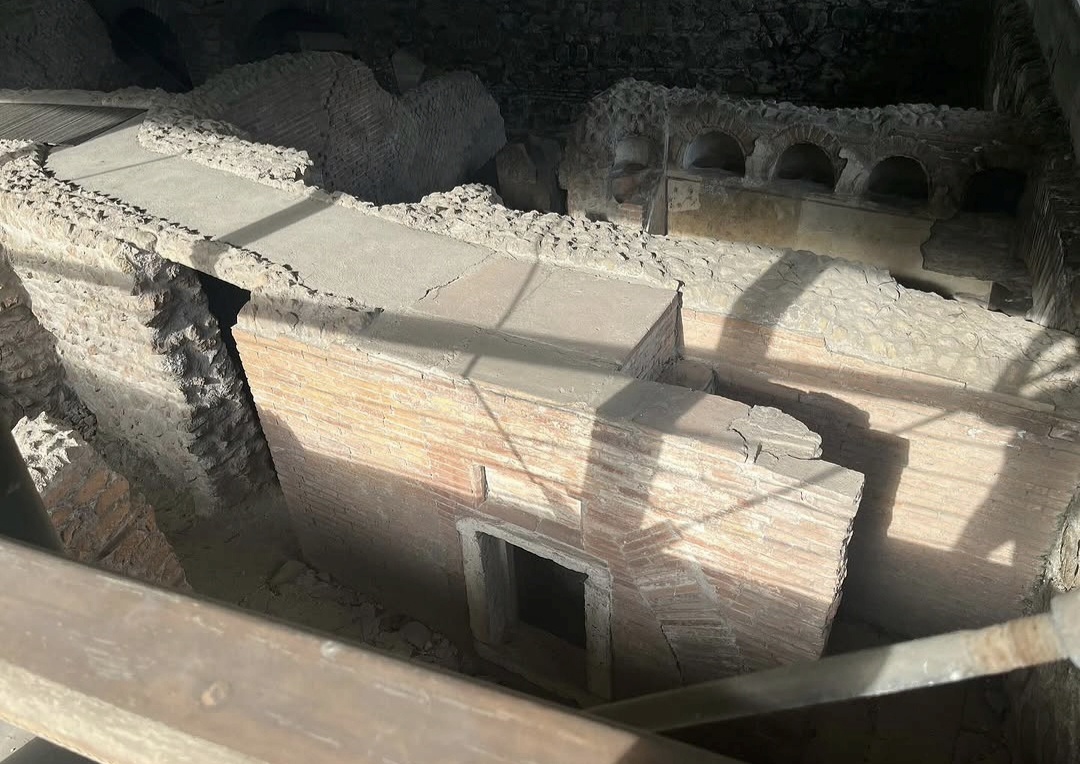
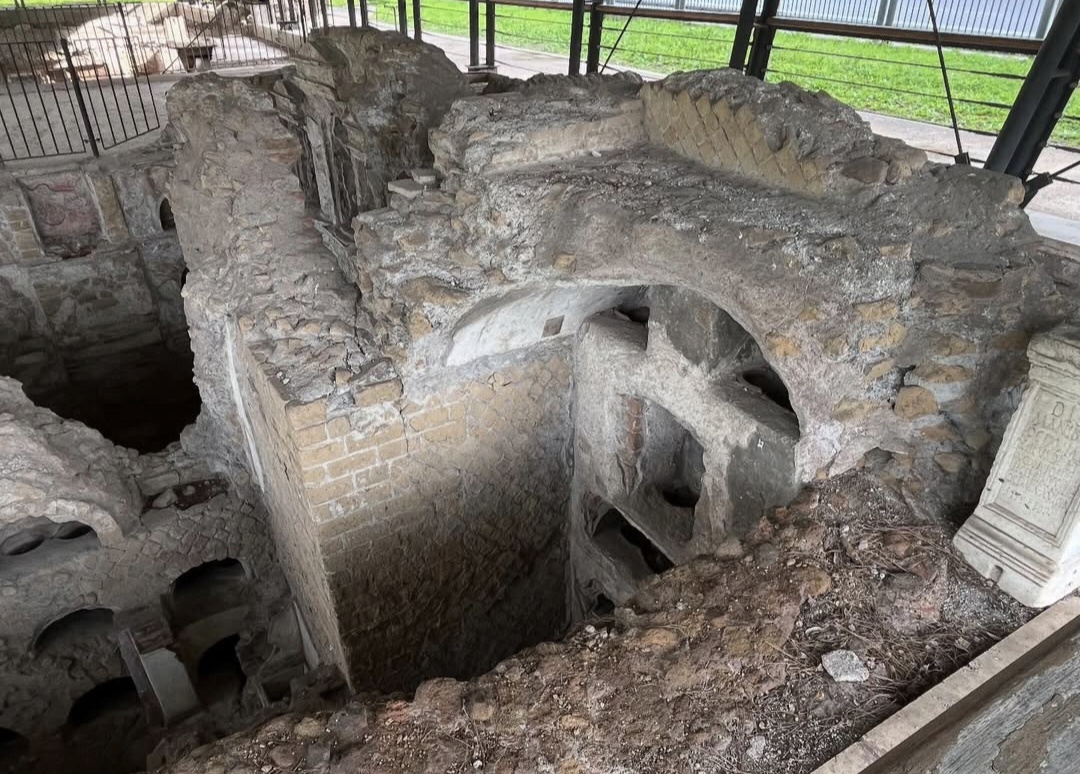
Modern architecture now protects an earlier architectural landscape.
The archaeological area survives because the contemporary construction project incorporated the remains rather than eliminating them.
The entire complex developed around one fixed point.
Beneath the Papal Altar lies the large rough-marble sarcophagus traditionally identified as the tomb of the Apostle Paul.
Archaeological work carried out in 2006 exposed the sarcophagus, which had been concealed by later masonry, and also brought elements of the Constantinian apse back into view.
Above the sarcophagus is the marble inscription traditionally read as PAVLO APOSTOLO MART, identifying the place with Paul the Apostle and martyr.
When the basilica was enlarged at the end of the fourth century, the location of the tomb remained the determining point around which the new monumental building was organised.
San Paolo records the infrastructure created by pilgrimage.
The archaeological area shifts attention away from the monumental basilica itself and toward the structures required to sustain the religious community that developed around it.
Refectories, porticoes, water supply, monastic buildings and circulation routes reveal how the sanctuary functioned as part of a much larger physical system.
The site therefore documents a different form of urban archaeology: not the survival of a single celebrated monument, but the material organisation of movement, hospitality, community and devotion.
The monumental basilica above is only one part of that history.
The archaeological area forms part of the basilica's exhibition route.
The archaeological area is reached through the exhibition complex associated with the cloister of San Paolo fuori le Mura.
Visiting conditions and opening arrangements can change. Check the basilica's current official information before travelling.
Sources
Alessandro Tanzilli
Photography documenting the archaeological complex on this page is by Alessandro Tanzilli. @alessandrotanz_
Design Your Journey
Underground Rome creates private archaeological journeys selected around your interests, available access and time in the city.
Design Your Journey →Underground Rome is a specialist project by Rome Private Experience .