
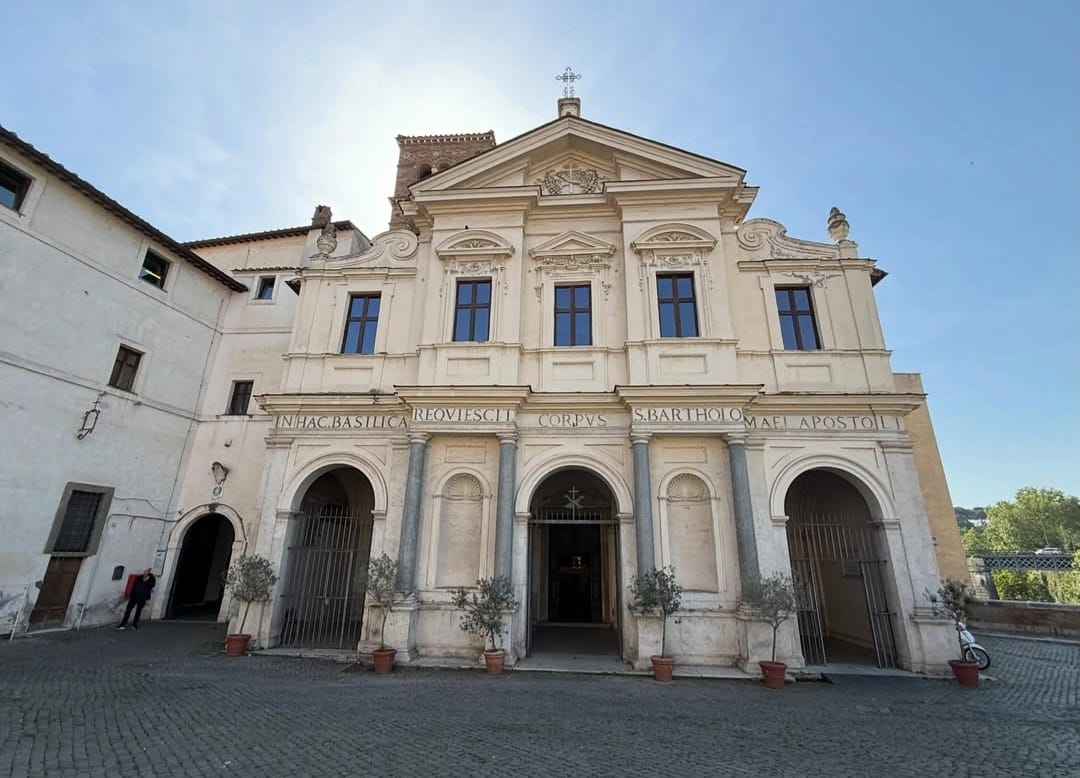
San Bartolomeo all'Isola
Archaeological Area
Rome
One sacred site changed identity without losing its physical continuity.
San Bartolomeo all'Isola occupies one of the most historically persistent sacred locations in Rome.
In antiquity, the Tiber Island was associated with Aesculapius, the god of medicine. A sanctuary dedicated to him was established on the island during the Republican period and remained an important cult centre through the Roman imperial age.
Centuries later, Christian buildings occupied the same area. The basilica commissioned by Emperor Otto III in 998 incorporated earlier structures into its foundations.
Archaeological investigations conducted in 2006–2007 made this long architectural sequence substantially clearer.
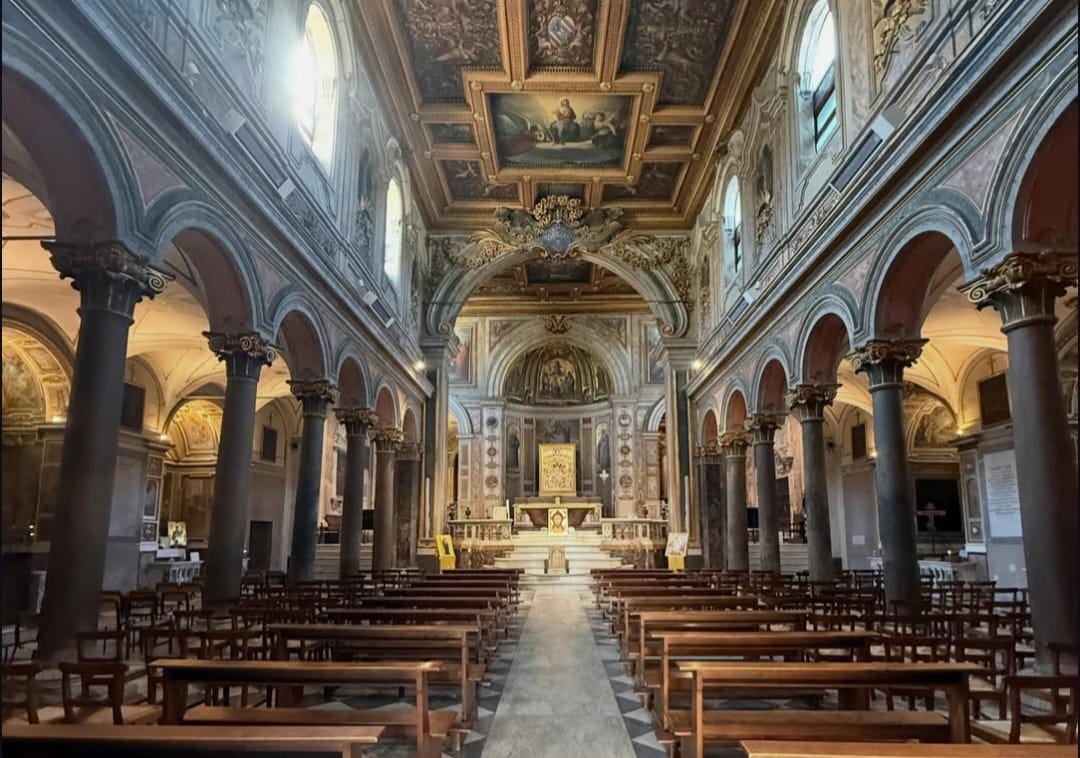
Excavation revealed the architecture supporting the basilica.
Archaeological investigations carried out in 2006–2007 identified substantial structures below the historic church.
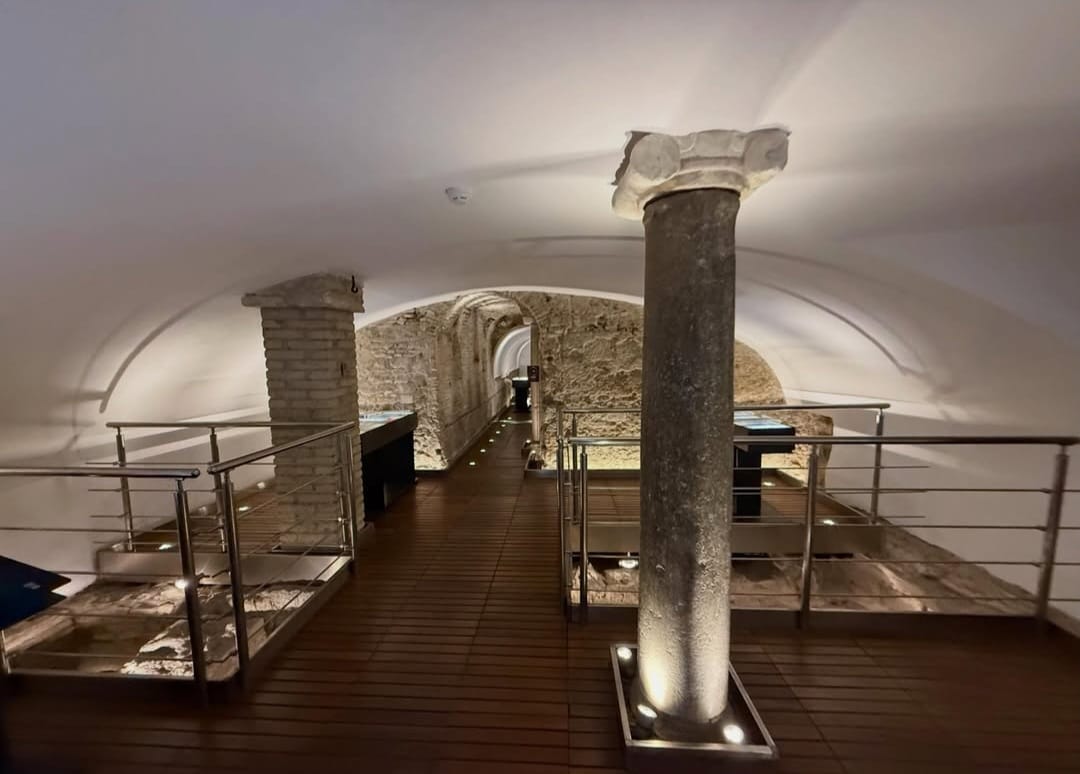
Among the most important discoveries were two rows of large tuff blocks.
According to the archaeological interpretation presented by the Basilica, these constitute the only physical trace so far identified of one of the courtyards belonging to the ancient sanctuary of Aesculapius.
The same masonry was subsequently reused structurally when Christian buildings developed on the site.
The site's history can be read as a sequence of reuse.
New buildings did not simply erase what came before. Earlier structures became foundations for later ones.
This physical reuse is what makes San Bartolomeo especially valuable archaeologically.
Roman sacred architecture, early Christian occupation and medieval construction remain connected within the same architectural footprint.
Photography © Alessandro Tanzilli · @alessandrotanz_
The island had been associated with healing for centuries.
The sanctuary of Aesculapius transformed the Tiber Island into one of ancient Rome's principal places associated with medicine and healing.
Ancient tradition connected the establishment of the cult with a Roman mission to Epidaurus during an epidemic at the beginning of the third century BC.
The famous story of the sacred serpent choosing the island belongs to the literary and religious tradition surrounding the sanctuary rather than to archaeological evidence.
What excavation has supplied is physical evidence: monumental tuff masonry associated with the ancient sacred complex.
Architecture
Ancient Sanctuary
Roman masonry acquired a new structural purpose.
Before Otto III's basilica, an earlier Christian building already occupied the site.
The Basilica's archaeological interpretation identifies this earlier phase probably with the church known as San Salvatore de Insula.
The large Roman tuff walls were incorporated into the foundations of the Christian building.
A small Christian burial area associated with this earlier place of worship was also discovered and remains visible within the archaeological sequence.
Otto III expanded a church that was already there.
In 998, Emperor Otto III established the basilica associated with the relics of important Christian martyrs.
Archaeological evidence indicates that this project enlarged the existing church by adding lateral aisles.
The earlier rows of Roman tuff blocks were reused as foundations for the new colonnades.
The result was not a clean break between ancient and medieval architecture. The basilica physically depended on the structures that preceded it.
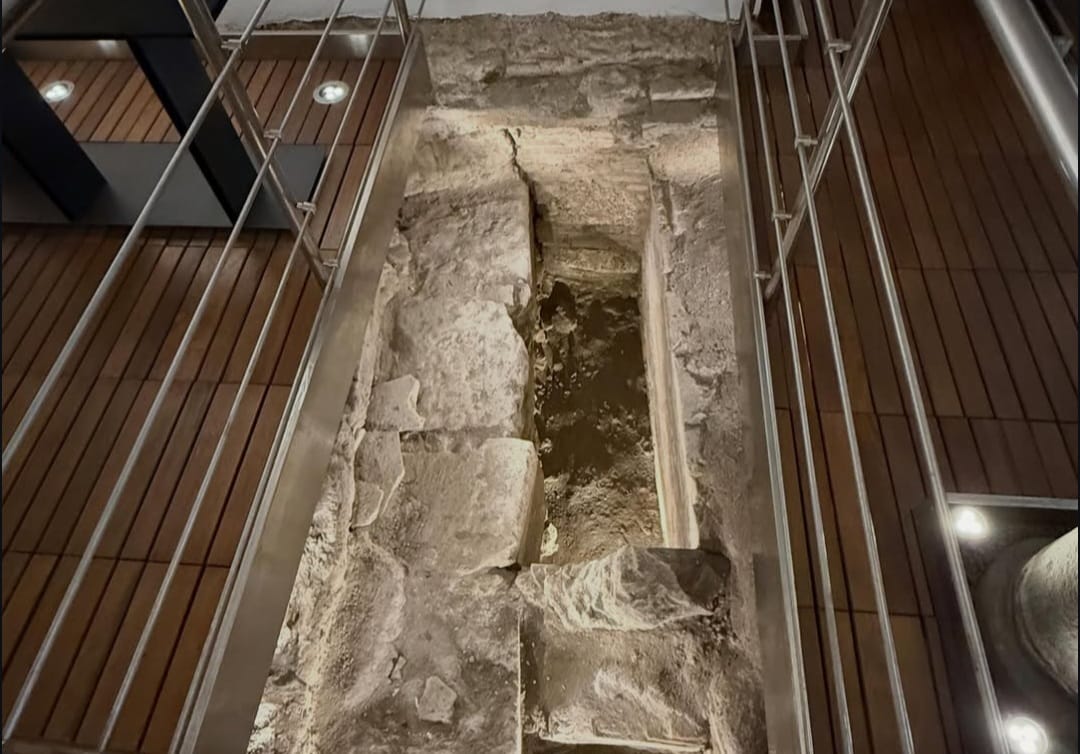
Archaeology revealed a structure designed to protect relics.
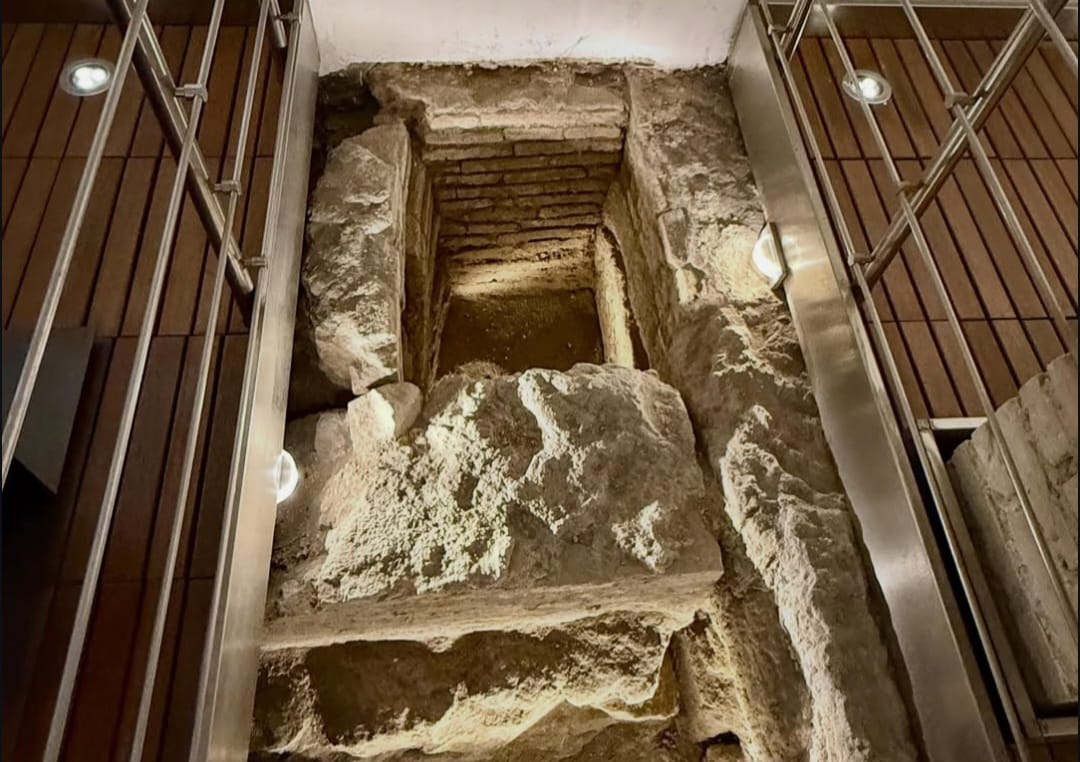
Excavation identified a large rectangular masonry structure below the floor of the Ottonian presbyterium.
It measures approximately 2.50 metres by 1.70 metres and is about one metre deep.
According to the archaeological interpretation presented by the Basilica, the cavity separated the reliquaries from the ground and allowed air circulation, reducing the accumulation of damaging moisture.
Its position corresponds precisely with the centre of the medieval presbyterial arrangement.
An earlier presbyterium became a lower church space.
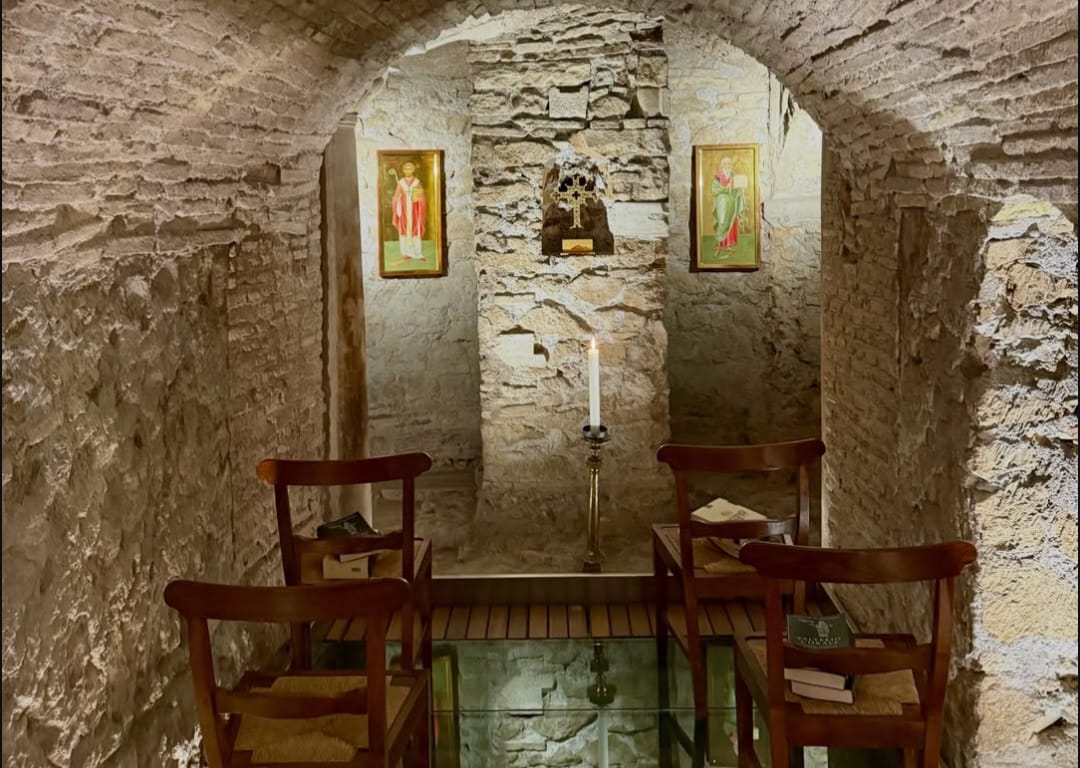
During the twelfth-century reconstruction, the earlier presbyterial area was reorganised as the crypt of the new basilica.
A long wall separated it from the naves, while columns subdivided spaces on either side.
Traces of Cosmatesque decoration survive from the medieval rebuilding.
The lower level therefore preserves not one historical phase but a succession of changing architectural functions.
A well connects two different sacred traditions.
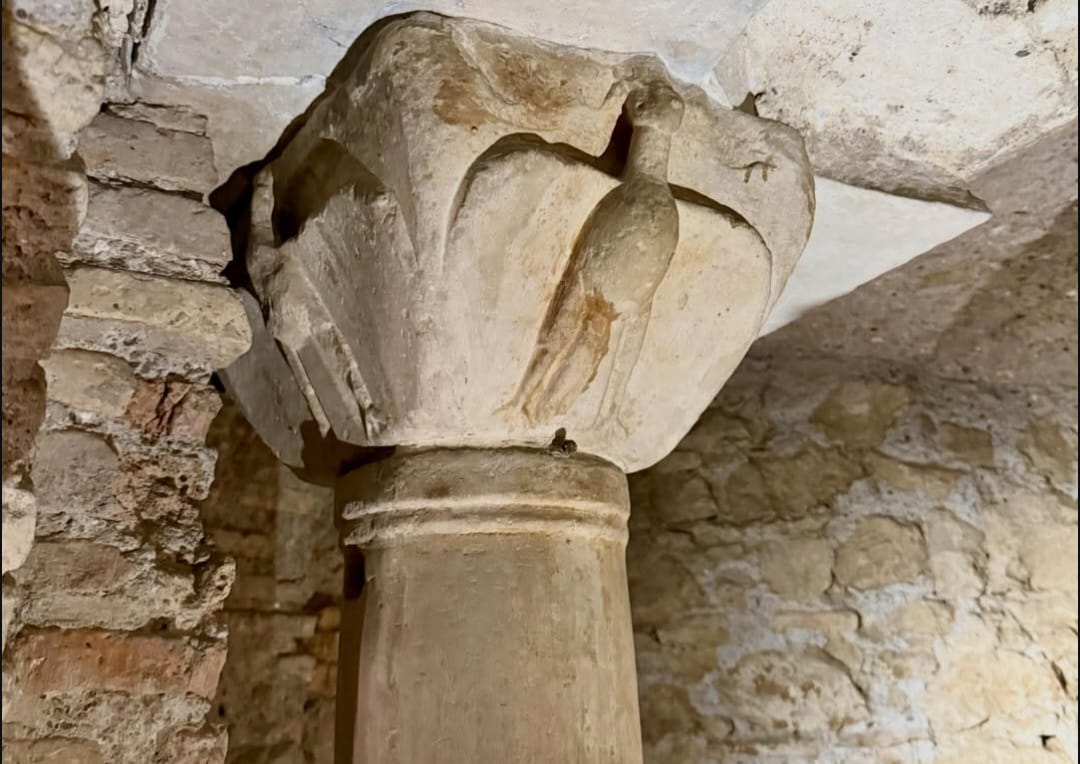
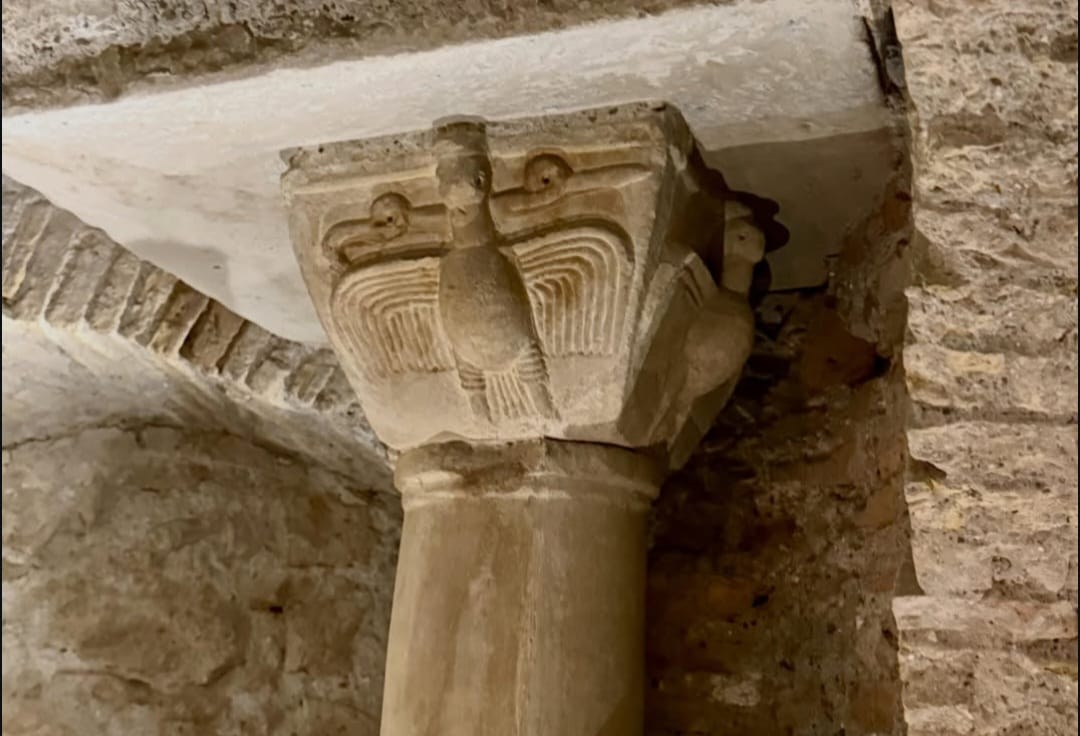
At the centre of the present basilica stands an unusual marble well-head associated with the site's long history of water and healing.
The Basilica describes the underlying well as probably Roman in origin and connected with the healing tradition of the ancient sanctuary.
Otto III subsequently monumentalised the well-head, incorporating Christian imagery and giving the earlier association with water a new religious meaning.
It is a particularly clear example of continuity through reinterpretation rather than simple survival unchanged.
Photography © Alessandro Tanzilli · @alessandrotanz_
The significance lies in continuity, not in a single monument.
San Bartolomeo records repeated adaptation of one strategically and religiously important place.
The basilica and its lower historical spaces have different access conditions.
San Bartolomeo all'Isola is an active church. Access to the Basilica should not be confused with access to the Memorial and archaeological spaces.
At the time of writing, the Basilica publishes regular daily opening hours, while the Memorial of the New Martyrs is open on Saturdays and can also be visited by reservation.
Because the archaeological evidence is incorporated into this lower visitor route, current arrangements should be checked directly before planning a visit.
Contributor
Photography of San Bartolomeo all'Isola and its historic lower spaces reproduced on this page with credit to the photographer.
@alessandrotanz_ · Instagram →Explore more archaeological and historic places across Rome.
Build a private journey through Rome's archaeological transformations.
Underground Rome designs private archaeological journeys around sites that can be accessed at the time of the visit, connecting Roman structures, later reuse and the changing physical development of the city.
Design Your Journeyby Rome Private Experience
Underground Rome is dedicated specifically to Rome's archaeological and historic subsurface.
For broader private programmes across Rome, corporate experiences and complex group arrangements, visit Rome Private Experience .