
Mausoleum of the
Equinoxes
Fourth Mile · Rome
A circular tomb containing a square funerary chamber.
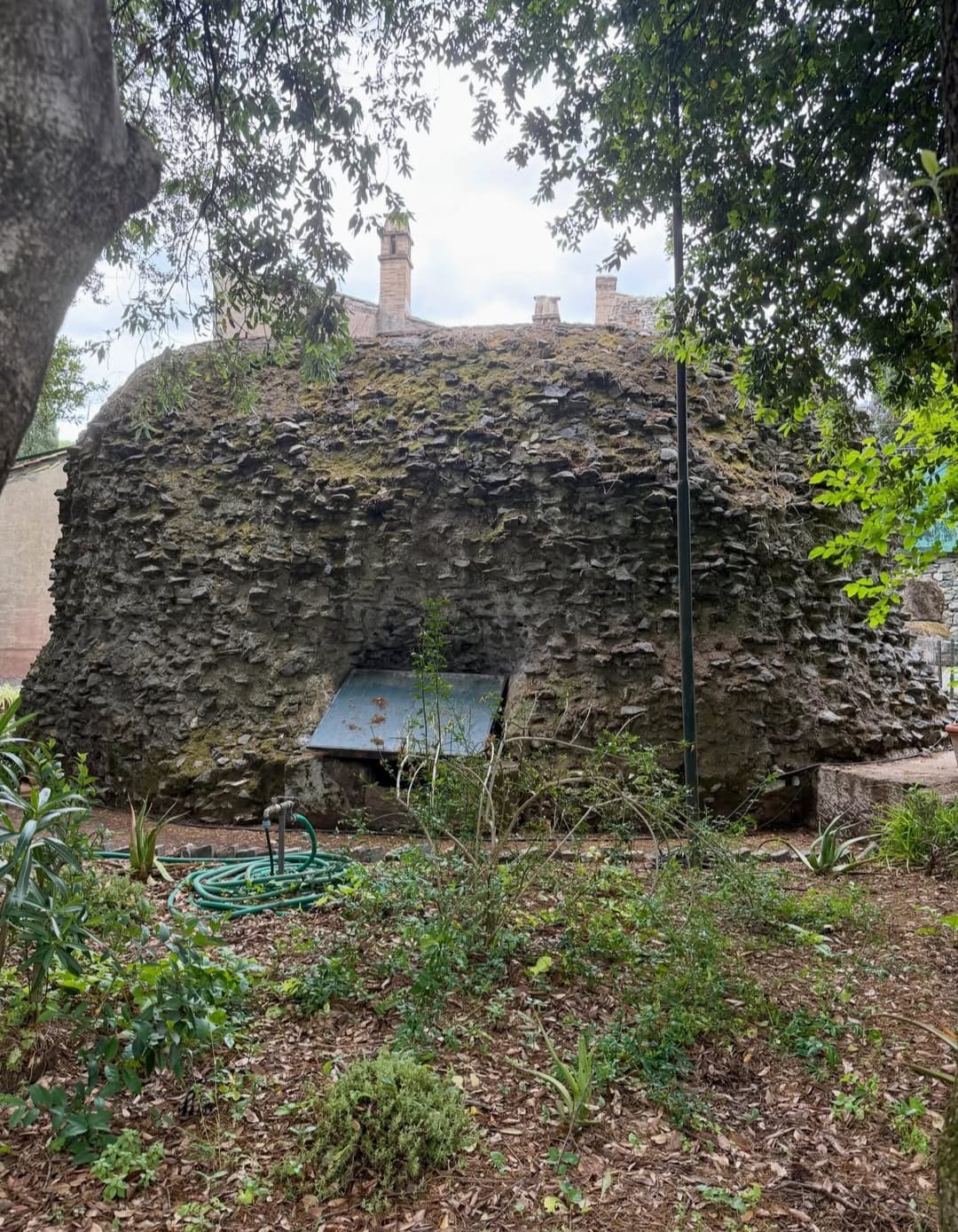
The Mausoleum of the Equinoxes is one of the most unusual funerary monuments preserved along the Via Appia.
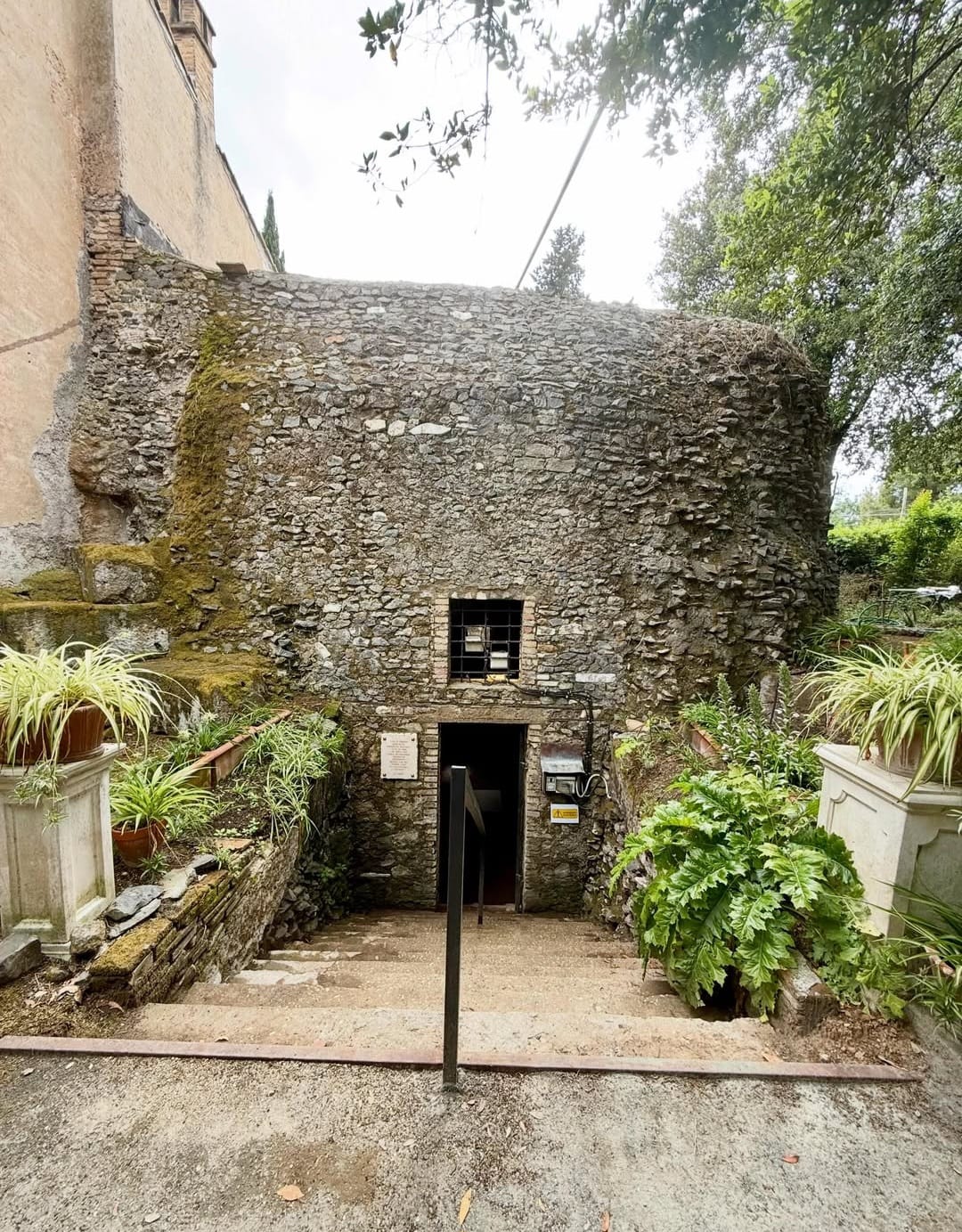
Constructed probably during the second century BC, the monument was circular on the exterior, with a masonry drum approximately 13.5 metres in diameter.
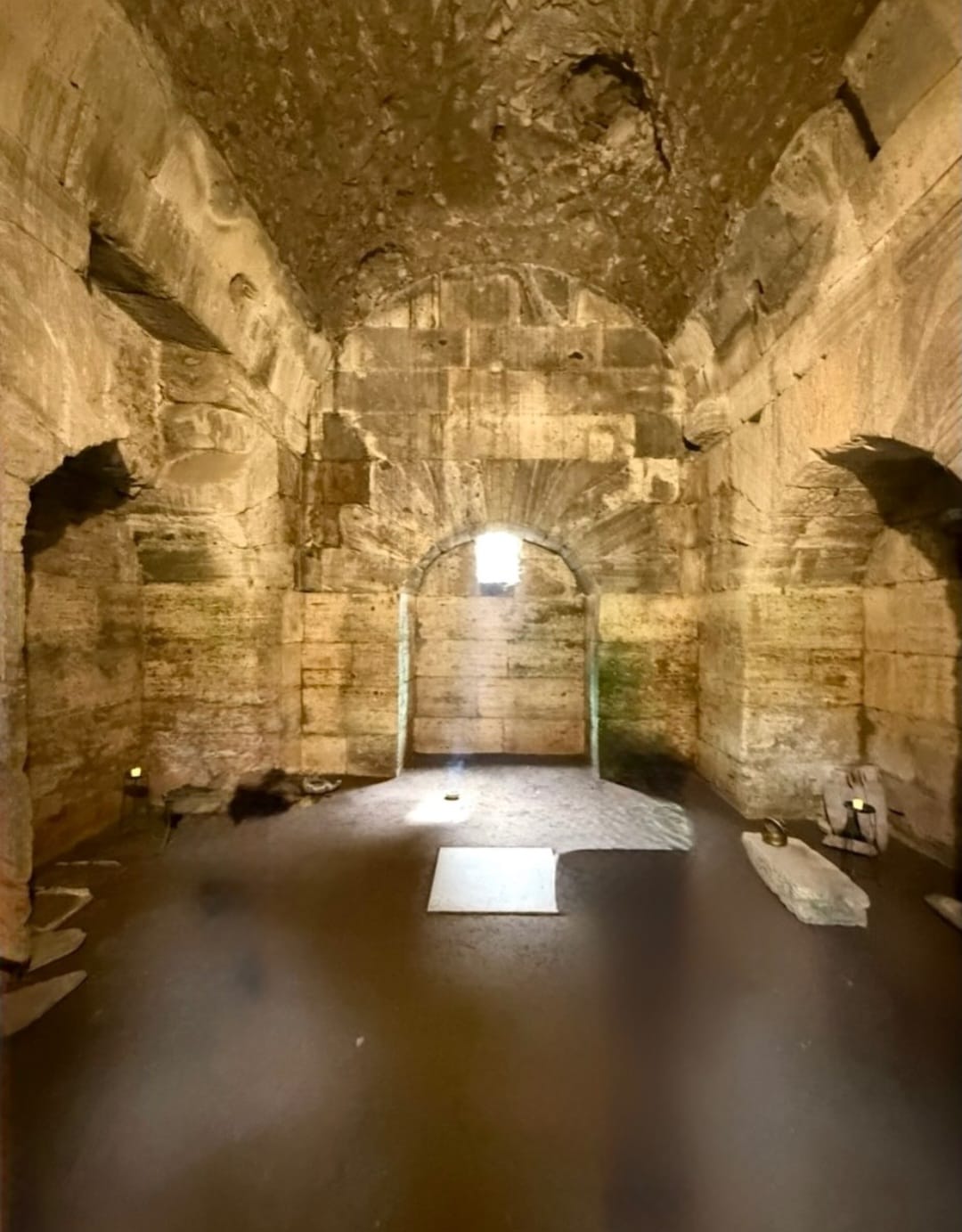
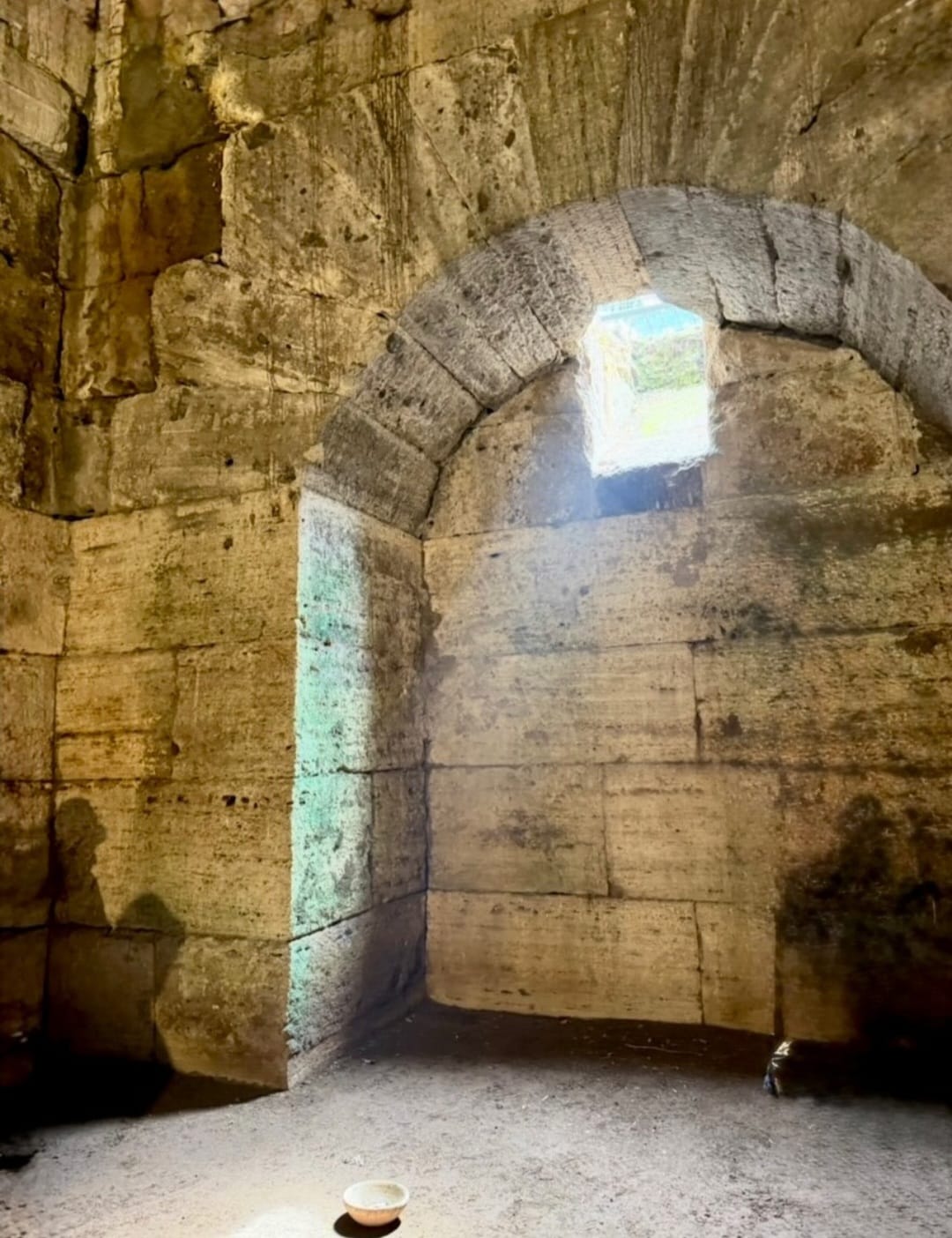
Inside, however, the geometry changes completely. The funerary chamber is square, approximately 5.30 metres on each side, and is covered by a monumental barrel vault.
The name of the family for whom the mausoleum was constructed is unknown.
The interior preserves its ancient travertine construction.
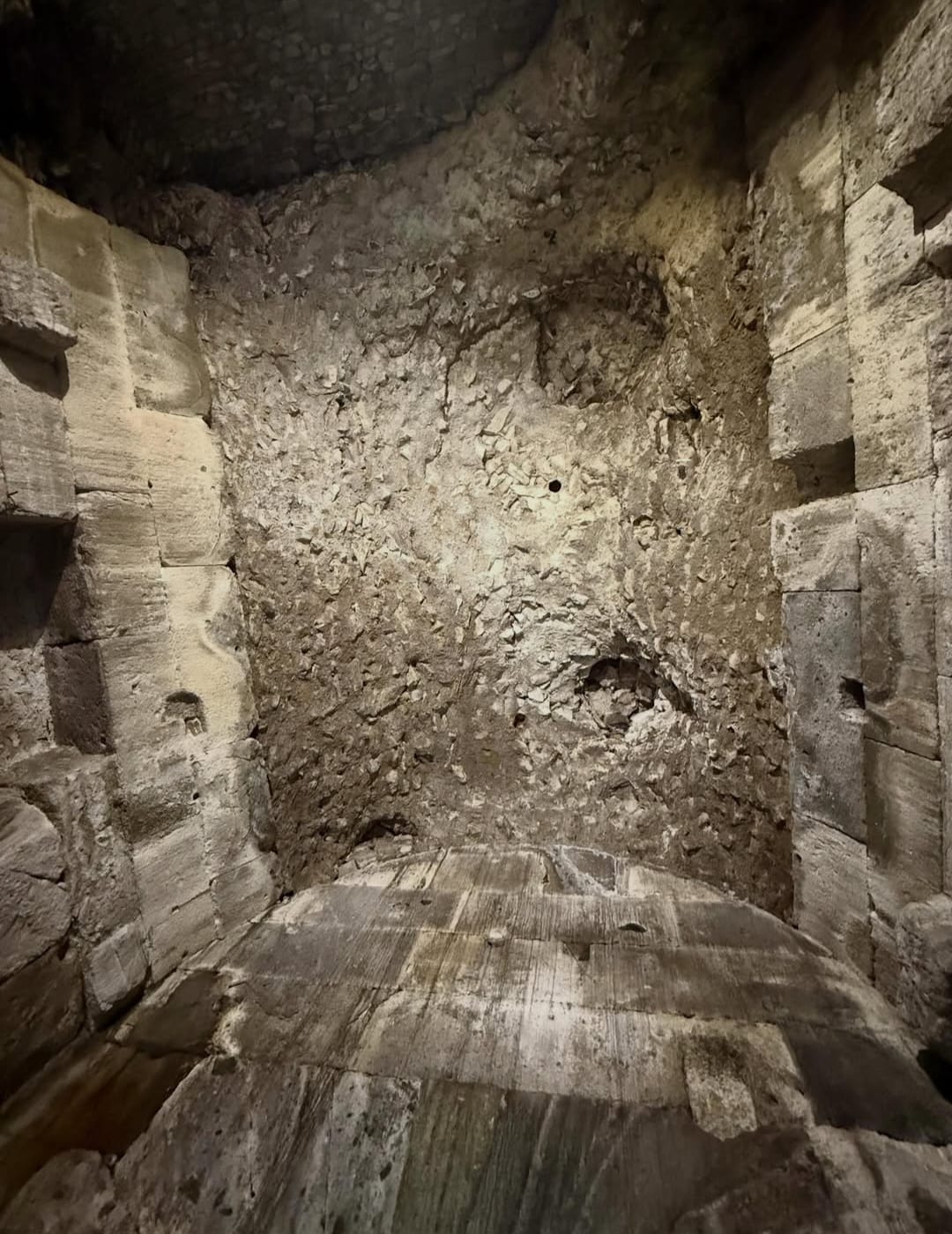
The square chamber is lined with carefully laid blocks of travertine.
Three sides contain rectangular niches intended for funerary deposits. Within this architectural arrangement are three characteristic openings commonly described as bocche di lupo.
The chamber is covered by a barrel vault rising to approximately seven metres.
Its exceptional state of preservation makes it possible to read the relationship between construction, burial practice and controlled natural light.
Two geometries define the monument.
A circular external monument surrounds a comparatively compact square burial chamber.
This contrast between exterior form and internal space is fundamental to understanding the tomb.
Circle outside. Square inside.
The funerary chamber was enclosed within a circular monument originally associated with a tumulus.
Access was provided through a dromos leading toward the internal chamber.
The external appearance of the monument was therefore substantially different from the interior architecture visible to those entering the tomb.
Funerary Chamber
Photography © Alessandro Tanzilli · @alessandrotanz_
Sunlight turns orientation into an architectural event.
The modern name of the monument derives from the astronomical orientation of its funerary chamber.
Around the spring and autumn equinoxes, sunlight enters through one of the chamber's openings and produces a distinctive illumination inside.
At the relevant moment, the light reaches the central area of the floor.
The phenomenon is observable and documented. Its precise ritual meaning, however, cannot be reconstructed with the same certainty.
Observation is certain. Meaning requires caution.
The solar phenomenon provides evidence that the orientation of the chamber has an astronomical relationship with the equinoxes.
The Archaeological Park notes the possible relationship between the phenomenon, funerary rites and ancient ideas concerning cosmic cycles, death and the fertility of the earth.
These associations provide an important interpretative context, but they should not be transformed into a detailed ritual narrative unsupported by archaeological evidence.
What the monument demonstrates directly is more precise: architecture, orientation and sunlight interact in a repeatable event inside the funerary chamber.
The chamber was designed for cremation burials.
Niches within the travertine-lined chamber accommodated containers holding the ashes of the deceased.
The monument therefore belongs to a funerary culture in which architecture created a permanent setting for the commemoration of the dead.
Its substantial construction and monumental external form indicate a family capable of commissioning an important tomb along Rome's principal southern road.
Their identity has not survived with the architecture.
The monument was documented before its modern name existed.
Giambattista Piranesi recorded the tomb in 1748, referring to it simply as an unidentified sepulchre.
His drawings documented the architecture at a time when traces of ancient plaster and painted decoration were still visible on the chamber walls.
Those observations are important because some decorative evidence recorded in the eighteenth century has subsequently disappeared.
The name “Mausoleum of the Equinoxes” belongs instead to the modern recognition of the monument's astronomical orientation.
Five elements explain the tomb.
The monument is not a regularly open archaeological site.
The Mausoleum of the Equinoxes stands within privately owned property on the Via Appia Antica.
It should not be treated as a monument with ordinary daily admission or guaranteed visitor access.
The Archaeological Park has opened the site on exceptional occasions. In May 2026, for example, guided visits were organised for Open House Roma with the cooperation of the owners.
Current opportunities to enter the monument should therefore always be verified before planning a visit.
Contributor
Photography of the Mausoleum of the Equinoxes reproduced on this page with credit to the photographer.
@alessandrotanz_ · Instagram →Explore more archaeological and historic places across Rome.
Explore the funerary landscapes of the ancient Appian Way.
Underground Rome designs private archaeological journeys around monuments that can be accessed at the time of the visit, combining them according to historical context, current availability and your interests.
Design Your Journeyby Rome Private Experience
Underground Rome is dedicated specifically to Rome's archaeological and historic subsurface.
For broader private programmes across Rome, corporate experiences and complex group arrangements, visit Rome Private Experience .