
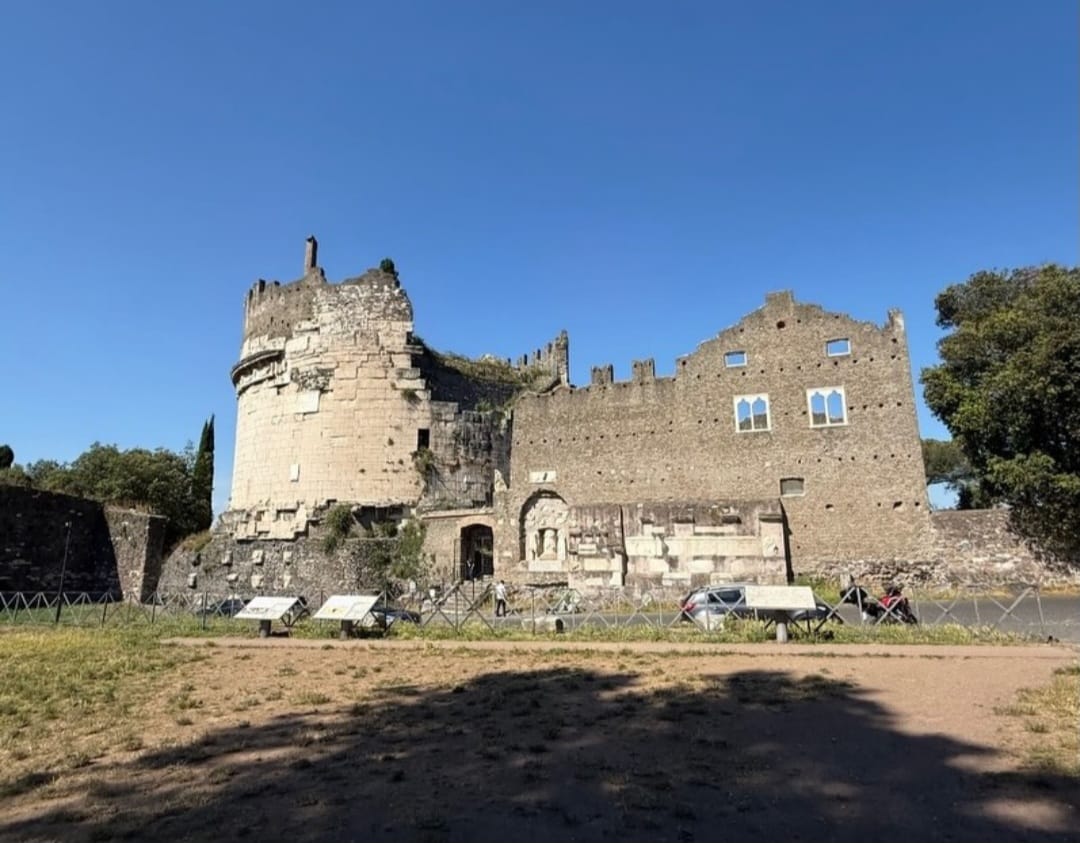
Mausoleum of
Cecilia Metella
Third Mile · Rome
A funerary chamber enclosed within monumental architecture.
The Mausoleum of Cecilia Metella was constructed between approximately 30 and 10 BC along one of the most prestigious funerary landscapes of ancient Rome.
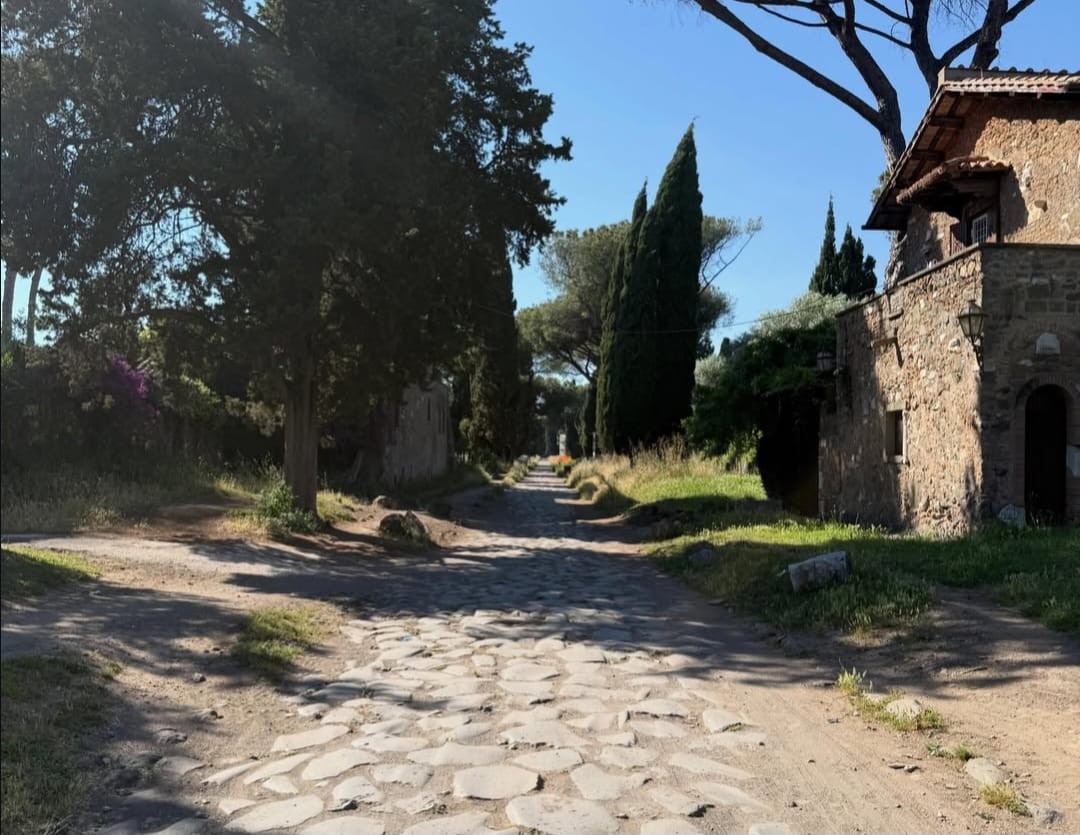
From the Via Appia, the monument presents itself as an enormous cylindrical mass rising above a square base. Much of the cylinder still preserves its travertine facing.
The scale of the exterior can obscure the monument's original purpose. At its centre lies the funerary chamber for which the entire structure was constructed.
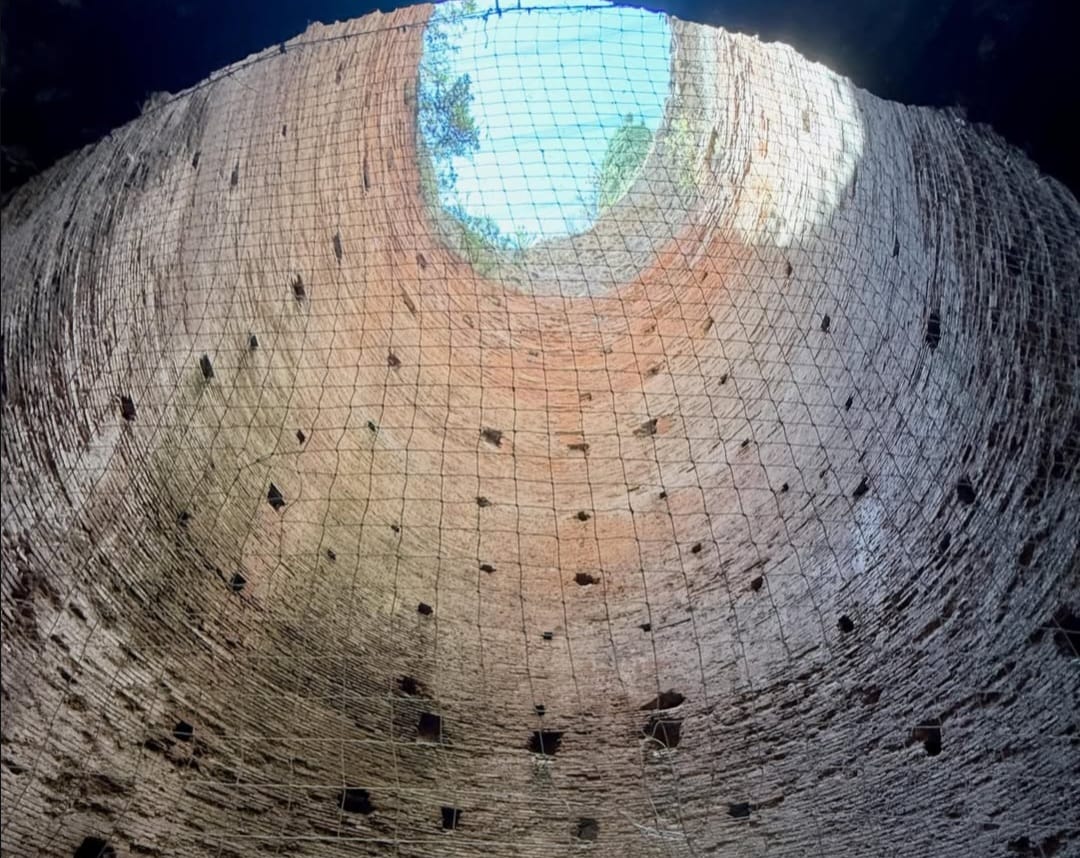
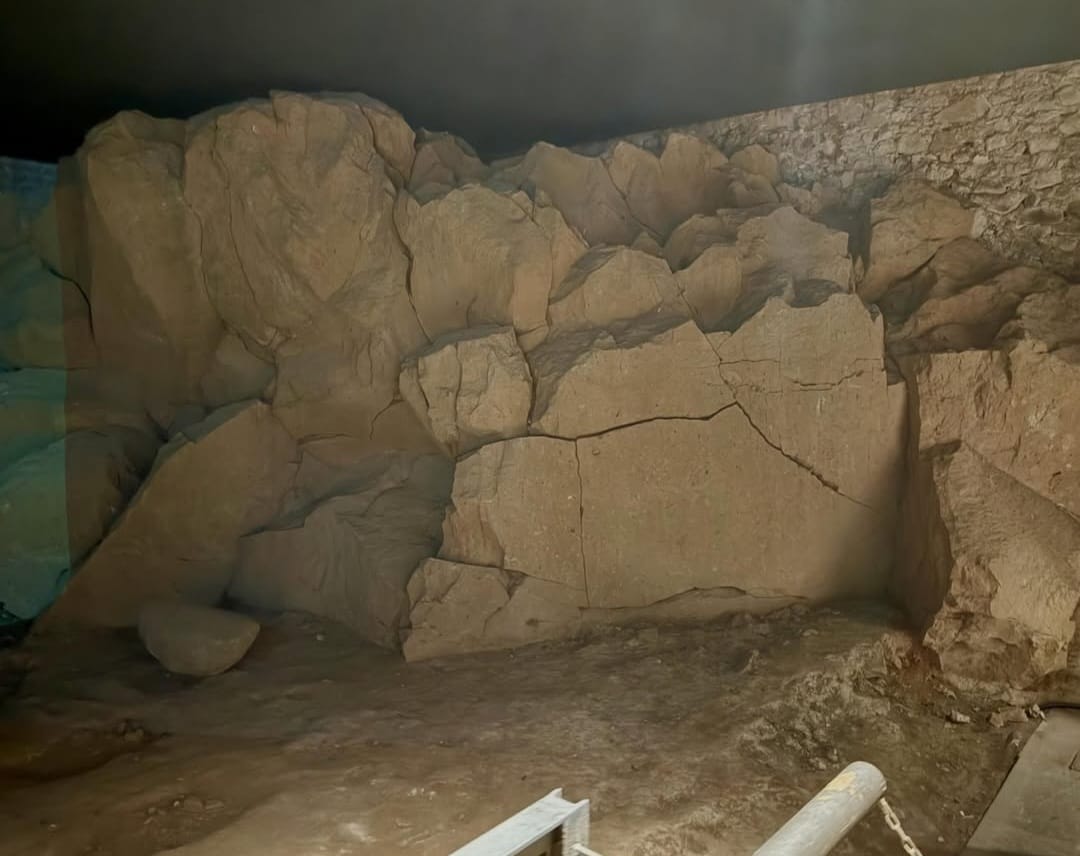
That internal space is markedly different from the geometry seen outside: a tall, narrowing chamber rises toward an opening at its summit.
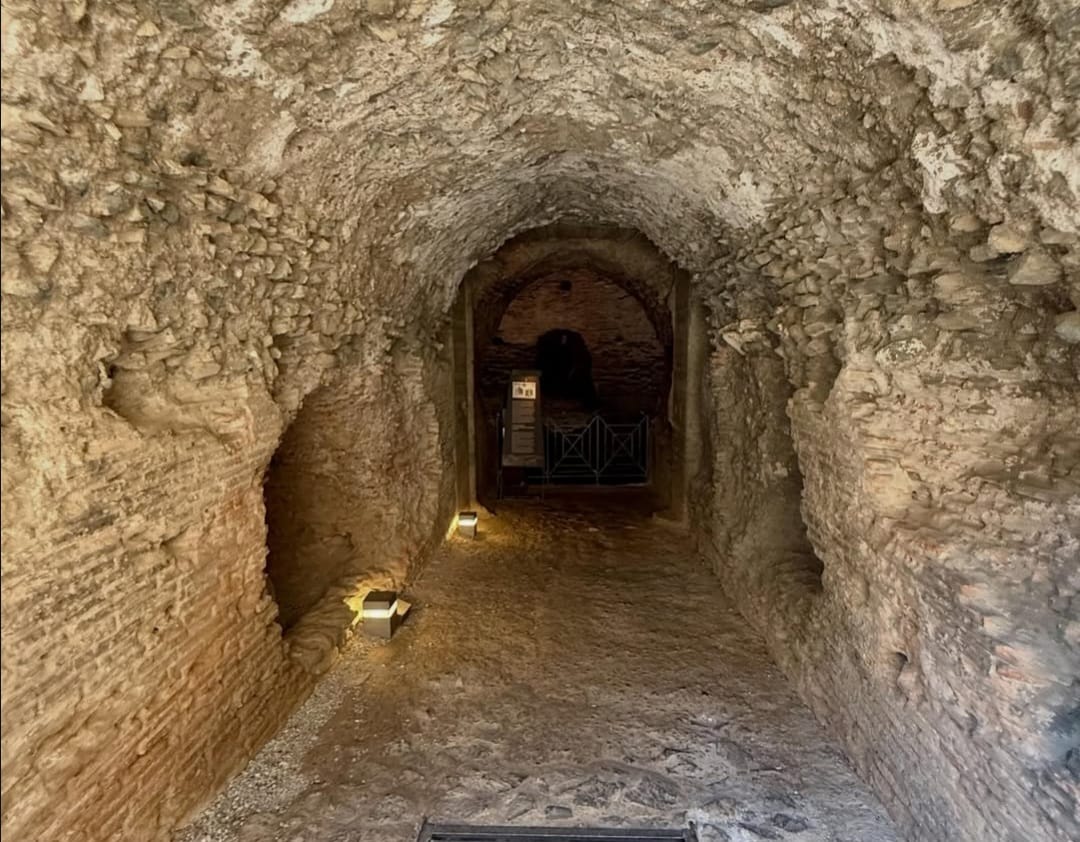
Square base. Circular drum. Internal chamber.
The monument combines simple geometric forms at an exceptional scale.
A square podium formed the base of the structure. Much of its external facing has disappeared, leaving the concrete core with flint aggregate visible.
Above it rises the great cylindrical drum, originally faced in travertine and decorated by a marble frieze.
Inside this massive architecture, the burial chamber occupied the core of the tomb.
The visible monument surrounds an internal void.
The funerary chamber represents only a portion of the enormous structural mass visible from the Appian Way.
This distinction between exterior monumentality and interior space is fundamental to understanding the tomb.
The cylindrical exterior created an unmistakable landmark, while the chamber at its centre performed the monument's primary funerary function.
Chamber
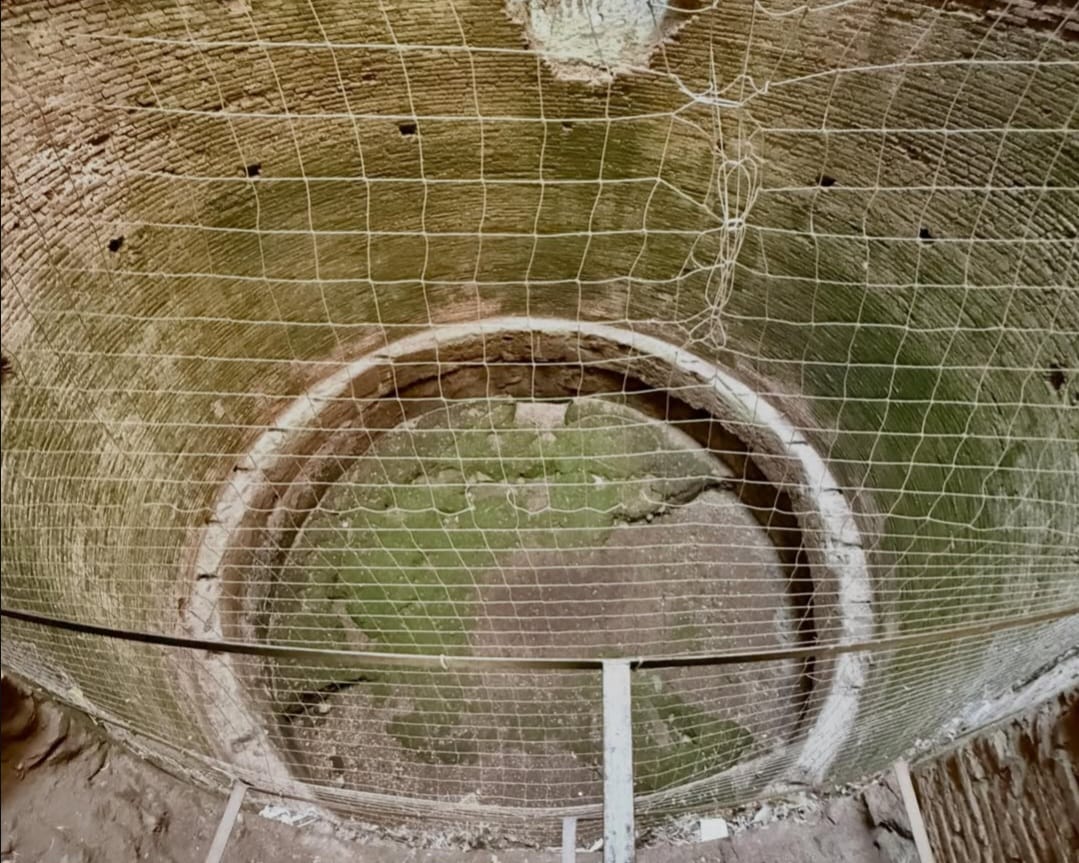
Photography © Alessandro Tanzilli · @alessandrotanz_
The geometry changes as the chamber rises.
The internal burial chamber is described by the archaeological park as conical in form.
Its walls rise and narrow toward the upper part of the monument, creating an interior that contrasts sharply with the massive cylindrical exterior.
An opening at the summit connects the chamber vertically with the exterior.
The architecture therefore combines enclosure with a controlled point of light and air from above.
The inscription preserves the identity the monument was built to proclaim.
Cecilia Metella belonged to one of the most prominent aristocratic networks of late Republican Rome.
The monumental inscription identifies her as the daughter of Quintus Caecilius Metellus Creticus.
She is generally considered to have been the wife of Marcus Licinius Crassus, son of the triumvir Marcus Licinius Crassus.
The scale of her tomb therefore reflects not only individual commemoration but the public display of family status along the Via Appia.
The tomb was designed to be seen.
Monumental burial along the Via Appia was also a form of public communication.
Travellers moving along the road encountered a succession of funerary monuments constructed by families competing for visibility and memory.
Cecilia Metella's tomb occupied a commanding position at the third mile of the road.
Its architectural mass ensured that the name inscribed on the monument remained part of the landscape.
Roman monumentality became medieval infrastructure.
The survival of the mausoleum is inseparable from the fact that later generations found new uses for its enormous masonry.
Roman and medieval structures now form a single archaeological complex.
The site is unusual because later construction did not simply cover the Roman monument. It incorporated its mass into an entirely new architectural system.
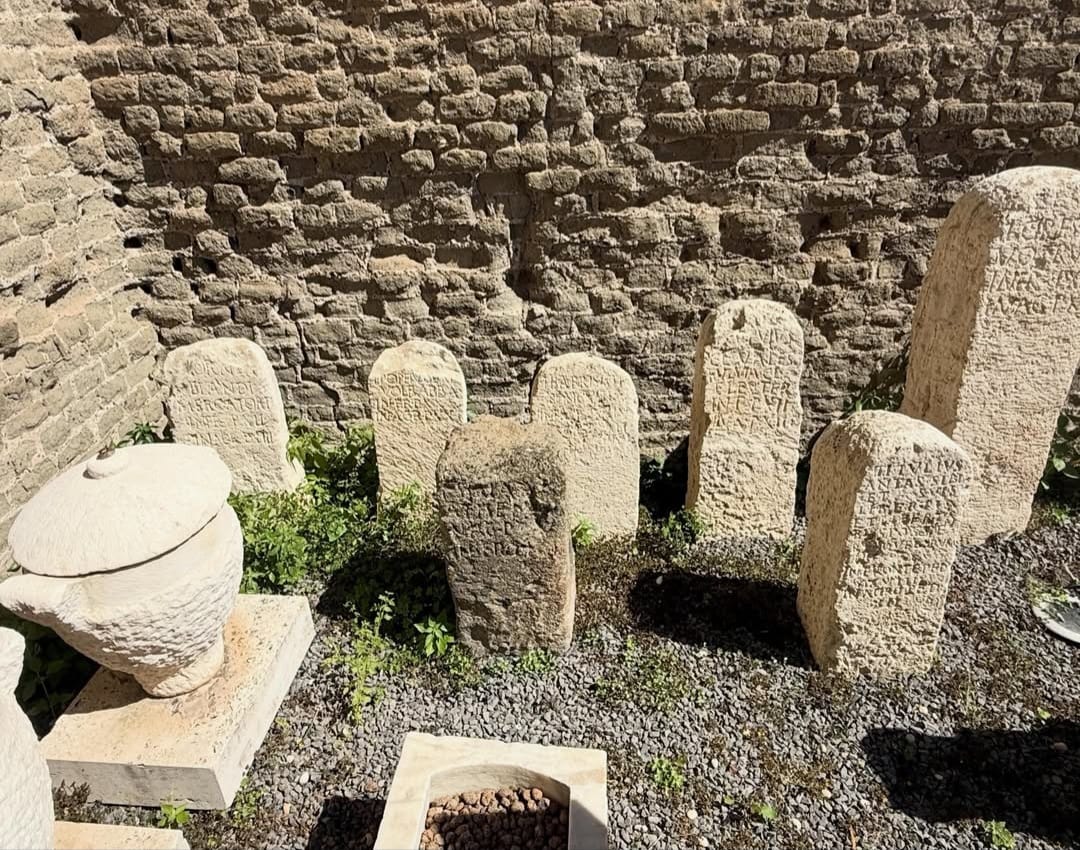
The mausoleum can be read from the outside inward.
Cecilia Metella preserves several different kinds of evidence within the same structure.
Survival can result from transformation.
Cecilia Metella is an unusually clear example of how the function of a Roman monument could change while its structural mass remained useful.
The tomb began as a statement of aristocratic memory along the Via Appia.
Centuries later, the same scale and solidity that made it an imposing funerary monument made it valuable as part of a fortified medieval complex.
The site therefore preserves two very different architectural intentions within the same physical structure: Roman commemoration and medieval defence.
The mausoleum is regularly open to visitors.
The archaeological complex includes the Mausoleum of Cecilia Metella, the Caetani residence and the church of San Nicola.
As of September 2026, the site is open from Tuesday to Sunday. Opening hours vary according to season.
Current access conditions and ticketing should always be checked with the Archaeological Park of the Appian Way before a dedicated visit.
Contributor
Photography of the Mausoleum of Cecilia Metella and its archaeological complex reproduced on this page with credit to the photographer.
@alessandrotanz_ · Instagram →Explore more archaeological and historic places across Rome.
Build a private archaeological journey along Rome's ancient roads.
Underground Rome designs private archaeological journeys according to current access, available time and the monuments you want to understand in greater depth.
Design Your Journeyby Rome Private Experience
Underground Rome is dedicated specifically to Rome's archaeological and historic subsurface.
For broader private programmes across Rome, corporate experiences and complex group arrangements, visit Rome Private Experience .