Largo Argentina Sacred Area
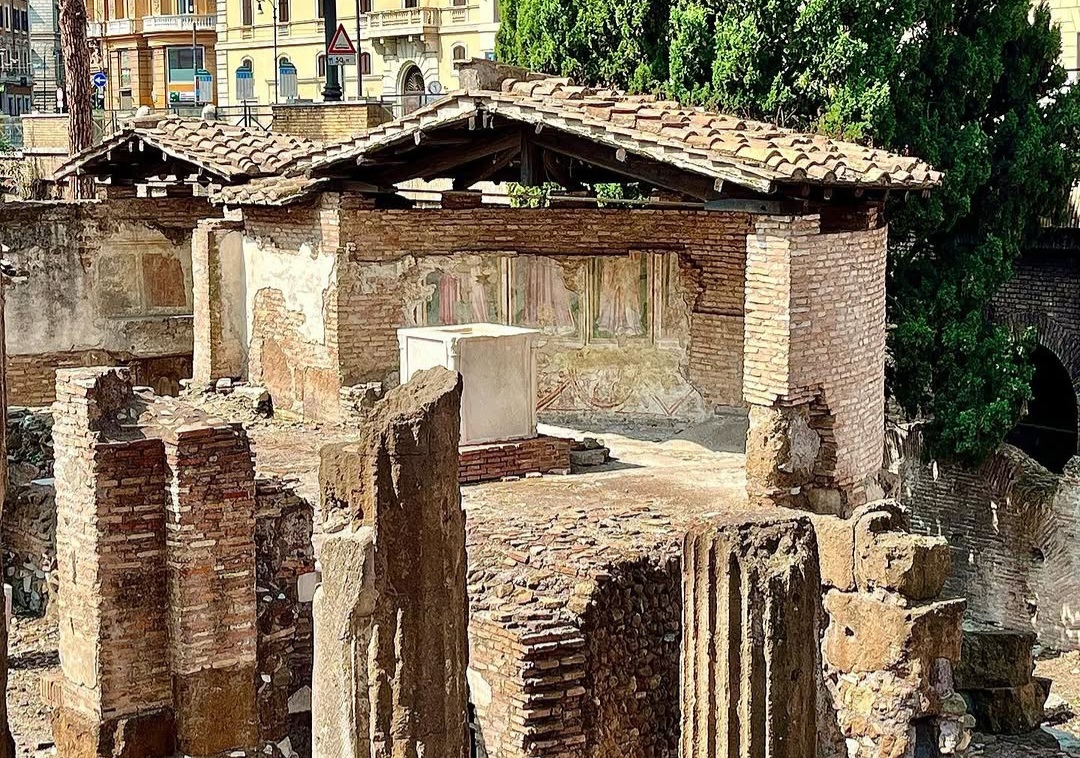
Four temples preserve several centuries of Republican religious architecture.
Largo Argentina contains one of the most concentrated archaeological sequences of Republican Rome.
The monuments now visible below the surrounding streets developed gradually rather than as a single planned sanctuary. Four temples were constructed and repeatedly modified as the surrounding sector of the Campus Martius changed.
Archaeologists conventionally identify them as Temples A, B, C and D because the dedication of each building cannot be established with complete certainty.
The temples did not all belong to the same moment.
Temple C is the earliest building in the archaeological area, constructed at the beginning of the third century BC and probably dedicated to Feronia.
Temple A followed around the middle of the third century BC and is commonly associated with Juturna.
Temple D was constructed at the beginning of the second century BC and is generally associated with the Lares Permarini.
The circular Temple B was added toward the end of the second century BC and is commonly identified with the sanctuary of Fortuna Huiusce Diei.
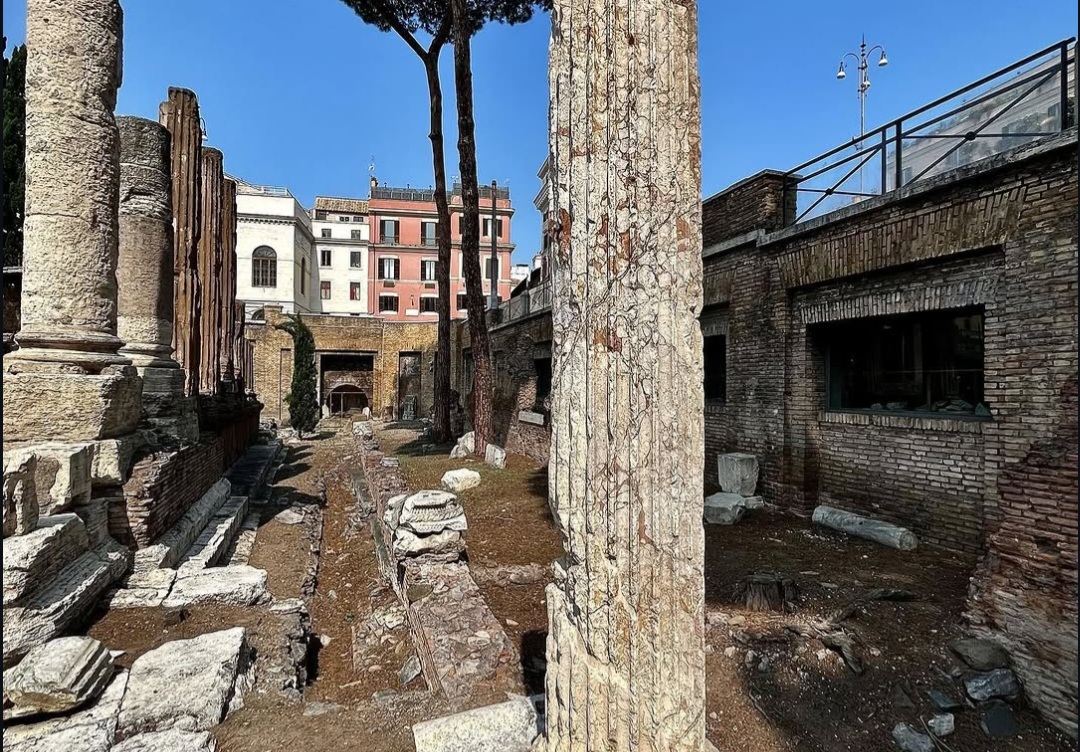
The ancient piazza itself changed elevation.
The earliest sanctuary developed on a ground surface of compacted earth and gravel.
As new buildings were added and existing temples modified, the shared space around them was progressively reorganised.
After a major fire in 111 BC, a new pavement of tufa slabs unified the area around the temples.
Later interventions raised and transformed the sacred space again, leaving several ancient elevations preserved within the archaeological record.
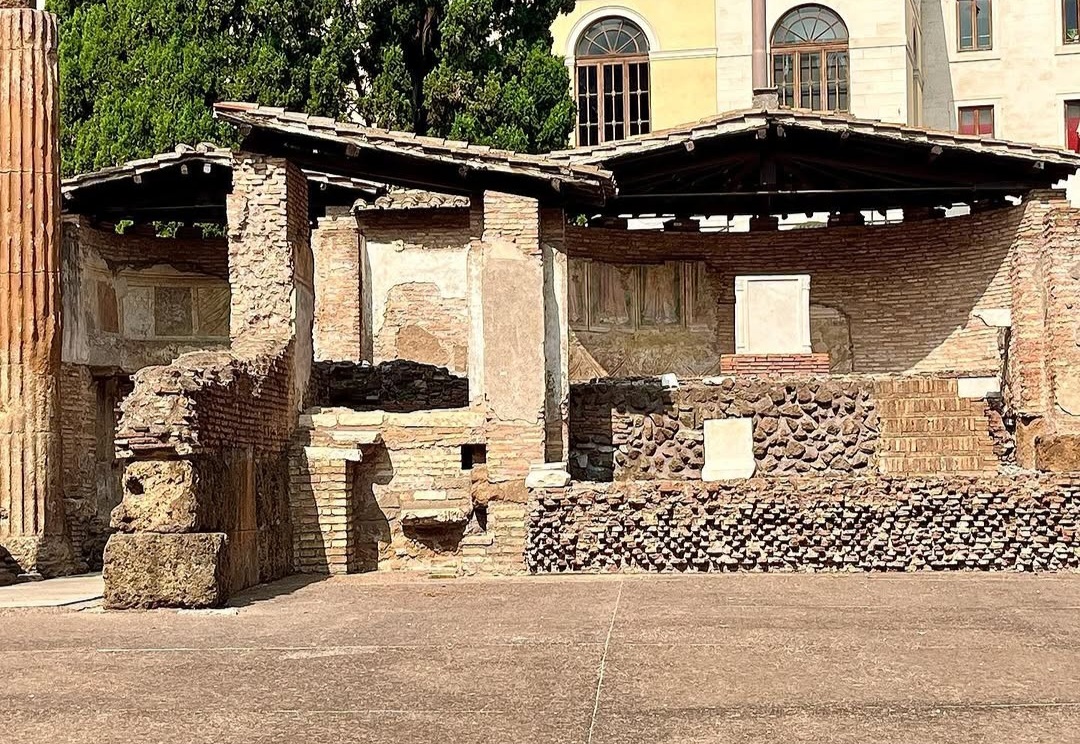
The archaeology is lower today. It was not originally underground.
Largo Argentina is important to the Underground Rome Atlas precisely because it demonstrates the difference between an ancient structure designed underground and an ancient urban level that later became lower than the surrounding city.
The temples were monumental buildings standing in an open sacred piazza.
Their present relationship with modern street level is the result of later construction, demolition, rebuilding and changes in the physical elevation of the city around them.
What looks like a sunken archaeological island was once the active ground level of Rome.
Largo Argentina makes the vertical transformation of the city visible from the modern pavement above.
The western edge of the area entered one of the most famous political landscapes of ancient Rome.
During the first century BC, the construction of the enormous Theatre of Pompey transformed the surrounding district.
Behind the theatre extended the Porticus of Pompey, terminating in a meeting hall known as the Curia of Pompey.
Part of that complex reached the western side of the modern archaeological area.
It was in the Curia of Pompey, rather than inside one of the four temples, that Julius Caesar was assassinated on 15 March 44 BC.
The temples returned to view during the demolition of a modern neighbourhood.
In 1926, demolition work began in the district between Via del Teatro Argentina, Via Florida, Via di San Nicola de' Cesarini and Corso Vittorio Emanuele II.
The works exposed ancient structures whose scale led to a radical change in the redevelopment of the area.
Excavation revealed the four temples and the ancient paved piazza around them.
The archaeological area was formally inaugurated on 21 April 1929 and remained one of Rome's most recognisable open excavations for almost a century.
Visitors can now enter the archaeological level itself.
For decades Largo Argentina was primarily experienced from the pavements surrounding the excavation.
The archaeological area is now equipped with a visitor route that allows access to the ancient level and provides a much closer reading of the temples, pavements and architectural transformations.
Opening arrangements and admission conditions can change, so current visitor information should be checked before travelling.
Alessandro Tanzilli
Photography documenting the Area Sacra di Largo Argentina on this page is by Alessandro Tanzilli. @alessandrotanz_
Design Your Journey
Underground Rome creates private archaeological journeys selected around your interests, available access and time in the city.
Design Your Journey →Underground Rome is a specialist project by Rome Private Experience .