
Carcer Tullianum · Mamertine Prison
Two chambers at the political centre of Rome.
Immediately below the Capitoline Hill and beside the Roman Forum survives the complex traditionally known as the Mamertine Prison.
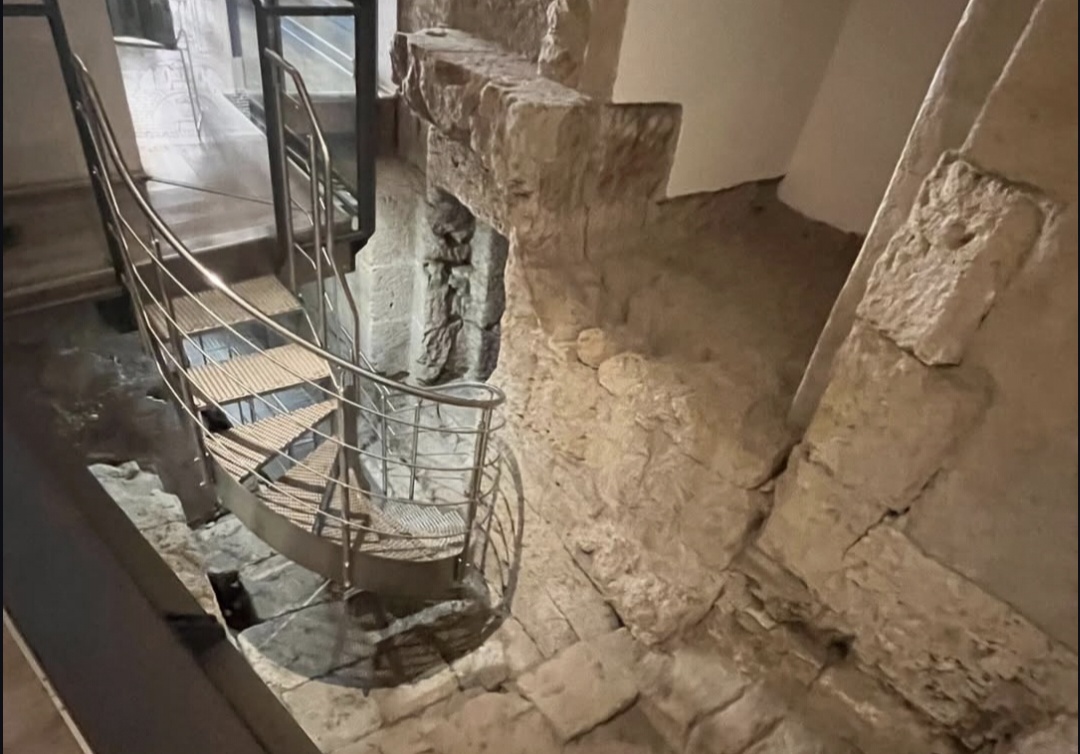
Its ancient name was the Carcer Tullianum. Rather than a prison organised around rows of cells, the monument consists primarily of two distinct architectural nuclei: the upper Carcer and the lower, partly subterranean Tullianum.
Ancient literary sources connect the complex with the detention of enemies of the Roman state who had already been condemned. Its position was therefore crucial: immediately beside the civic and political centre in which Roman power was displayed.
The upper chamber belongs to a structure repeatedly rebuilt by Rome.
The Carcer is the upper component of the complex. Its surviving Republican structure has a trapezoidal plan and incorporates substantial masonry connected with the architectural development of the north-eastern slopes of the Capitoline.
The monument did not remain unchanged. It was repeatedly modified as the surrounding Forum and Capitoline area developed.
During the early Imperial period the exterior was monumentalised with a travertine façade facing the Forum.
The result is not a building from a single date, but an architectural sequence in which different phases of Roman construction remain physically joined.
Below the Carcer lies the chamber that gives the complex its ancient name.
The Tullianum occupies the lower level of the monument. Unlike the trapezoidal space above, it has a rounded plan formed by massive blocks of stone.
It is the genuinely hypogeal component of the complex and preserves one of its most distinctive features: the presence of water.
The ancient name has been connected with the water source inside the chamber, although its precise etymology and the earliest function of the space remain subjects of historical and archaeological discussion.
Its physical character is unmistakable: a confined chamber placed below the political landscape of the Forum.
This was not a prison in the modern sense.
The Carcer Tullianum should not be imagined as an ancient penitentiary containing long corridors and permanent cells.
Roman imprisonment generally did not operate as a sentence comparable with modern incarceration. The Carcer is associated particularly with the temporary detention of individuals awaiting punishment or execution.
That distinction changes the way the monument should be read. Its importance lies less in its size than in its function and location beside the institutions of the Roman state.
Some of Rome's defeated enemies ended their journey here.
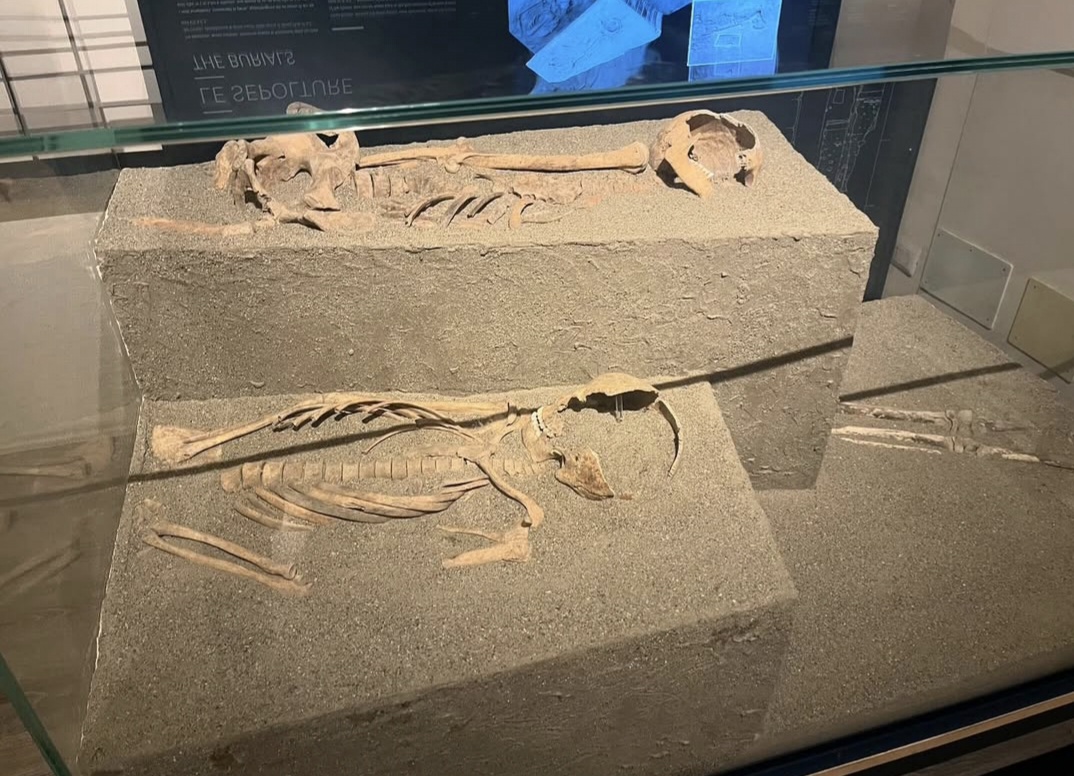
Ancient sources associate the Carcer Tullianum with prisoners whose defeat carried exceptional political significance.
Jugurtha, king of Numidia, died after his defeat and triumphal display in Rome. Vercingetorix, leader of the Gallic resistance to Julius Caesar, was also imprisoned and executed after Caesar's triumph.
The supporters of Catiline executed in 63 BC are another important episode associated with the Carcer.
These were not anonymous occupants of an ordinary prison. Their detention formed part of the public consequences of defeat, treason and conflict with Roman state authority.
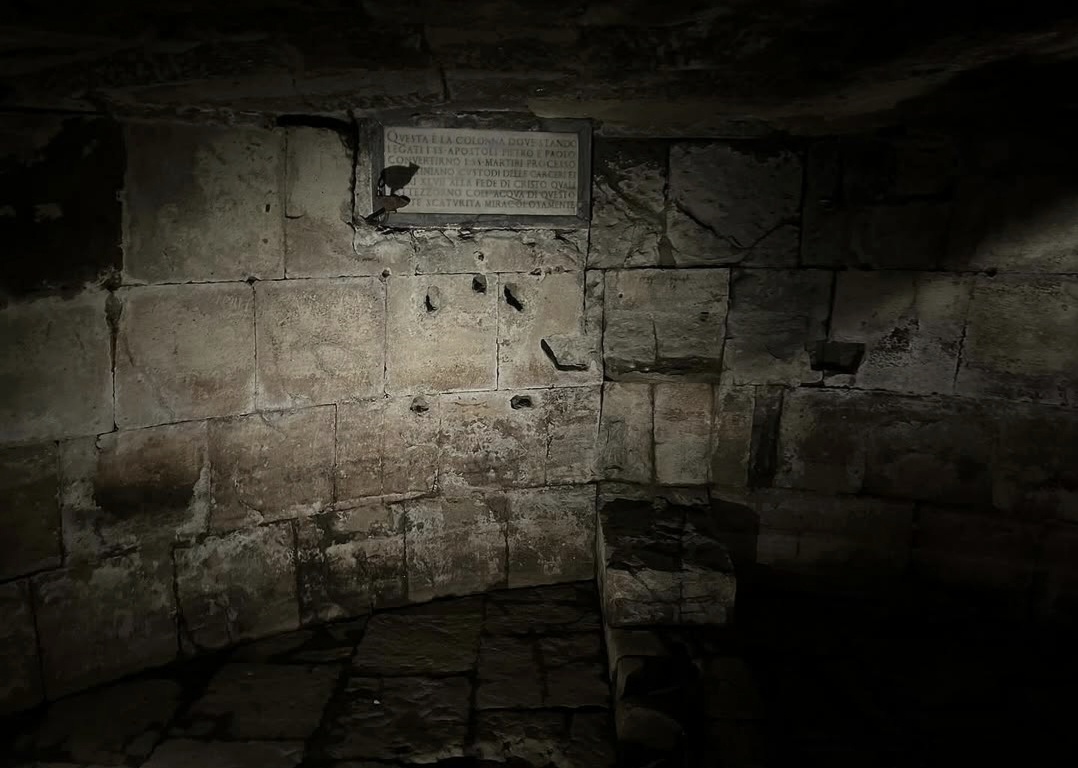
The Tullianum lay below the Forum, but it belonged directly to the machinery of Roman public power.
Its significance came from who entered it, why they were held there and what awaited them after condemnation.
Centuries later, imprisonment acquired another meaning.
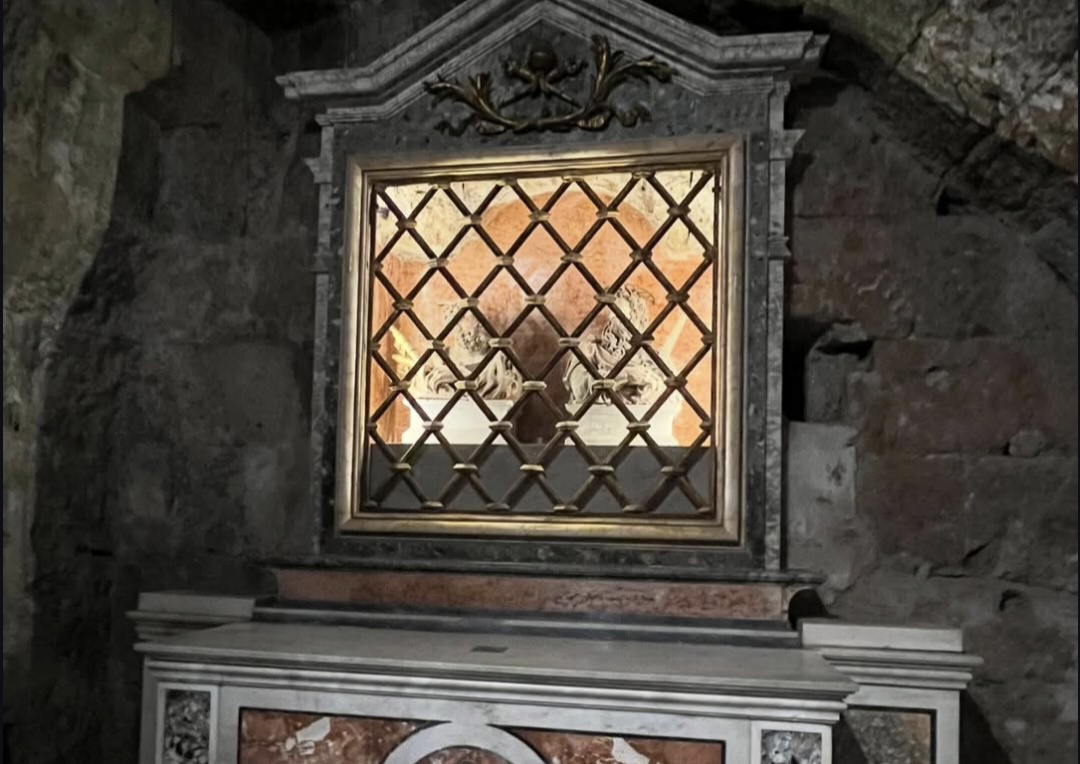
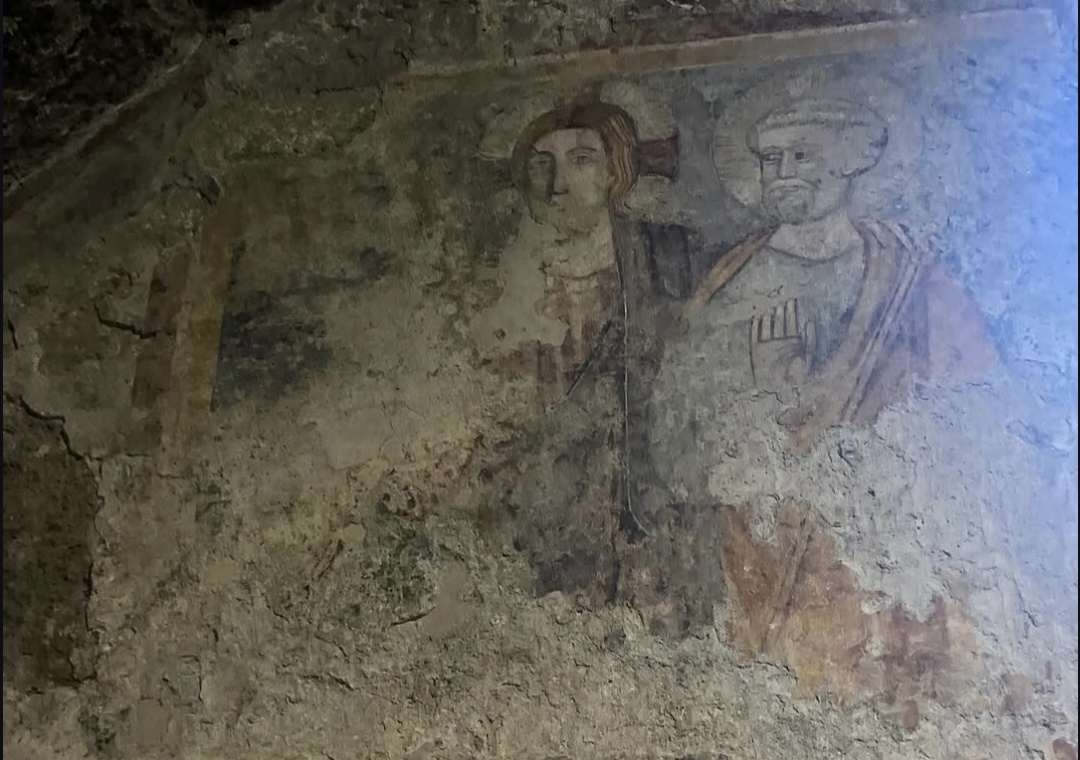
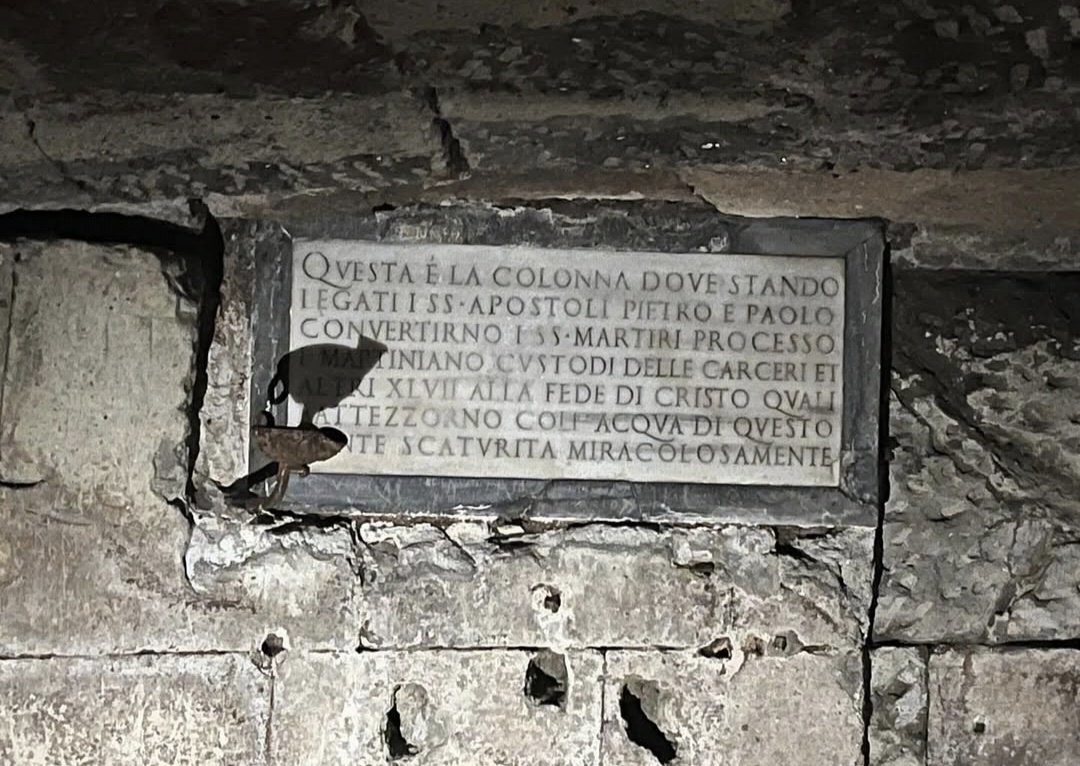
Medieval Christian tradition connected the Carcer Tullianum with the imprisonment of the apostles Peter and Paul before their martyrdom.
This tradition became enormously important to the later history of the monument, but it must be distinguished from the archaeologically documented Republican use of the complex.
According to devotional tradition, a spring appeared so that Peter could baptise fellow prisoners. The water within the Tullianum consequently acquired a new Christian interpretation.
Another tradition identifies a mark in the stone with the impact of Peter's head as he was taken into the prison. These stories belong to the Christian reception of the site, not to demonstrable episodes of its Republican history.
The monument survived because its meaning changed.
During the medieval period the ancient spaces were gradually transformed into Christian places of devotion associated with Saint Peter.
The former prison became known as San Pietro in Carcere, introducing a new religious identity into the ancient structure.
Above the monument eventually rose the church of San Giuseppe dei Falegnami, creating the vertical sequence visible today: Republican architecture, Christianised ancient chambers and the later church occupying the same point beside the Forum.
The survival of the Carcer Tullianum is therefore inseparable from its continuous reinterpretation.
One vertical sequence, several different histories.
The Carcer Tullianum is particularly valuable for the Underground Rome Atlas because its depth is not simply the result of later accumulation.
The lower Tullianum was itself conceived as a confined, partly subterranean architectural space.
Later construction then added further physical and cultural levels above it.
Ancient state power, medieval devotion and early modern architecture now occupy the same vertical coordinates at the edge of the Roman Forum.
An archaeological monument at the edge of the Roman Forum.
The Carcer Tullianum is accessible as a visitor site at Clivo Argentario, immediately below the church of San Giuseppe dei Falegnami.
Timed admission can be reserved through the visitor service. Check its current opening hours and ticket terms before you go. The monument has steps and narrow internal spaces and is not suitable for visitors with mobility difficulties.
Alessandro Tanzilli
Photography documenting the Carcer Tullianum on this page is by Alessandro Tanzilli. @alessandrotanz_
Design Your Journey
Explore the Carcer Tullianum as part of a private archaeological journey through the Forum and its changing political landscape. We confirm access, guiding language, duration and total price before you book.
Request a Private Carcer Tullianum Journey →Underground Rome is a specialist project by Rome Private Experience .