Santa Prassede Basilica & Crypt
A church built around the physical presence of memory.
Santa Prassede is not simply a medieval church containing an older crypt. Its architecture belongs to a much larger transformation of Christian Rome: the movement of relics from suburban cemeteries into churches within the inhabited city.
The present basilica was constructed under Pope Paschal I in the early ninth century. Earlier Christian structures had already occupied the site, and traces associated with the preceding basilica survive within the complex.
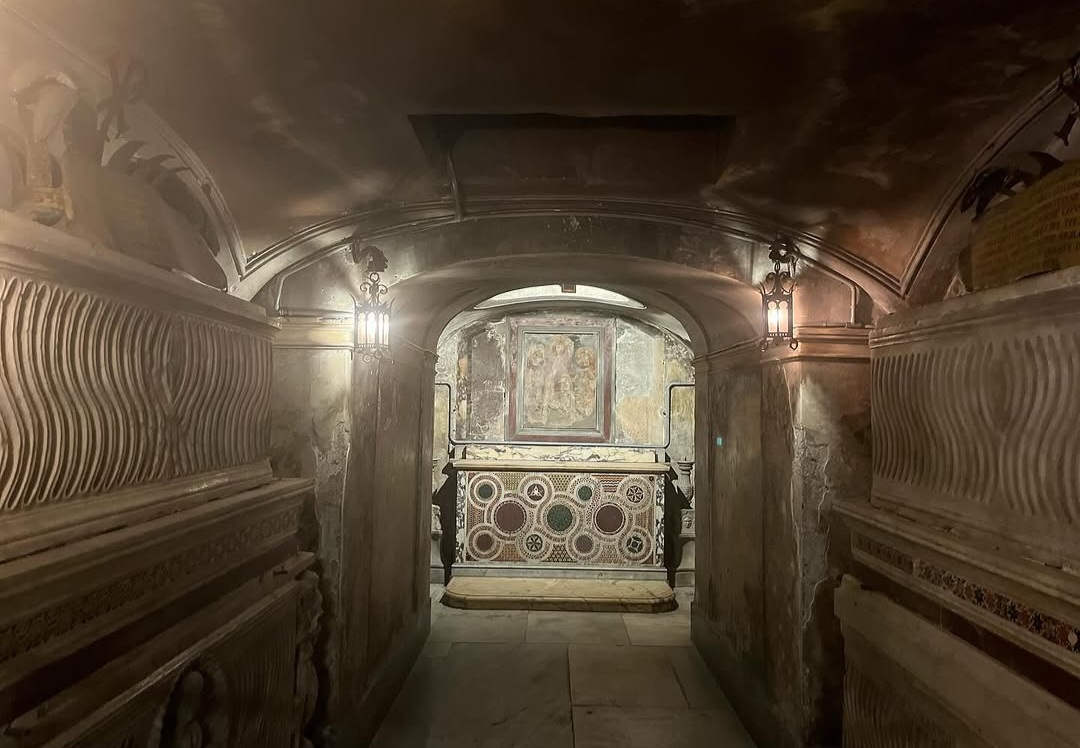
Here, architecture, burial and devotion converge. The crypt and its sarcophagi preserve the material consequences of a profound change in the geography of Christian worship.
Relics brought inside the city
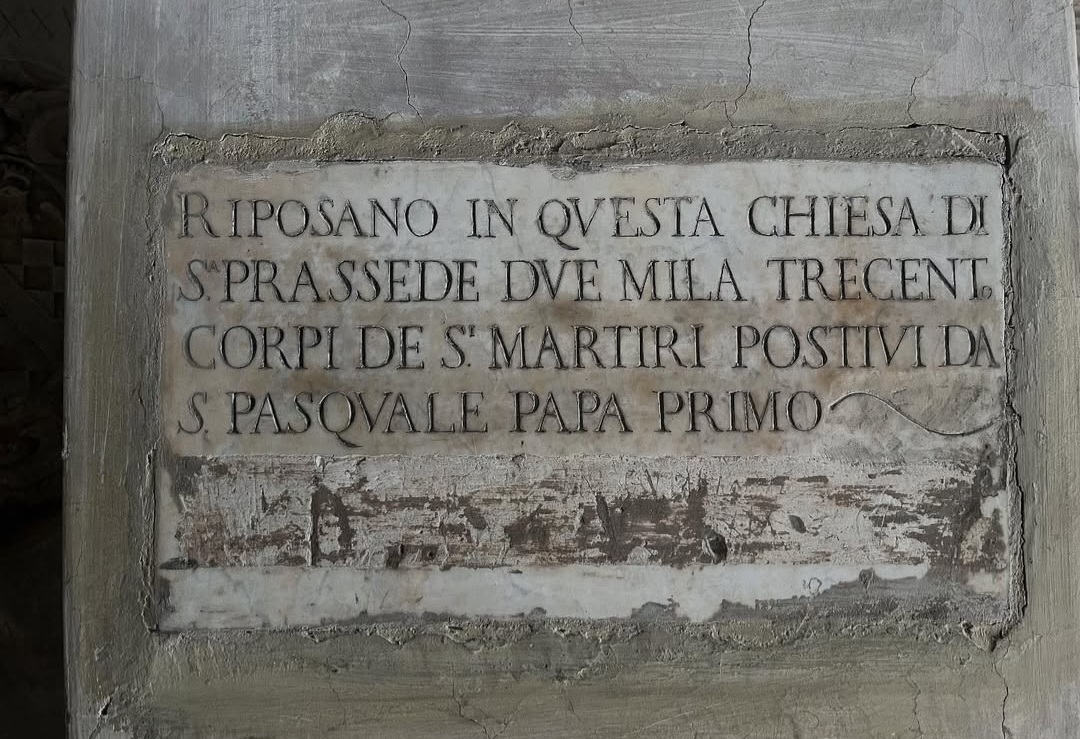
During the pontificate of Paschal I, relics of Christian martyrs were transferred from Roman catacombs and placed within Santa Prassede. The crypt became one of the architectural settings for this new concentration of sacred remains.
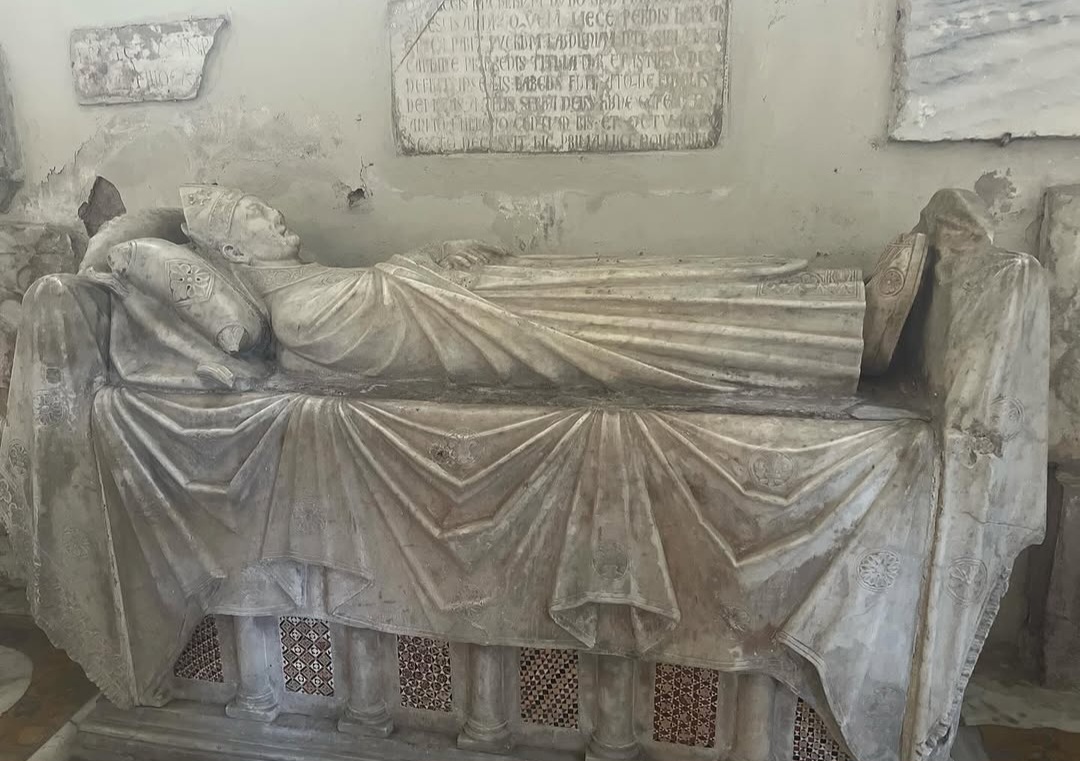
The sarcophagi visible in the crypt are therefore more than funerary containers. They belong to the history of how Rome reorganised the physical location of Christian memory during the early Middle Ages.
Records associated with the crypt describe relics transferred from different Roman catacombs under Paschal I and subsequently reorganised during eighteenth-century works.
The underground space is not an isolated archaeological layer. It is part of a deliberate geography of remembrance.
A new sacred landscape
The rebuilding of Santa Prassede under Pope Paschal I belongs to a decisive period in the development of medieval Rome.
The basilica was conceived not only as a place of worship but as a monumental setting for relics and the memory of the martyrs. Materials, tombs, inscriptions and mosaics were assembled within a single architectural programme.
The result is a building in which different forms of evidence remain physically close: reused stone, funerary objects, medieval sculpture, relics and some of the most important ninth-century mosaics surviving in the city.
A mausoleum translated into mosaic
The Chapel of Saint Zeno provides another expression of the same relationship between death, commemoration and architecture.
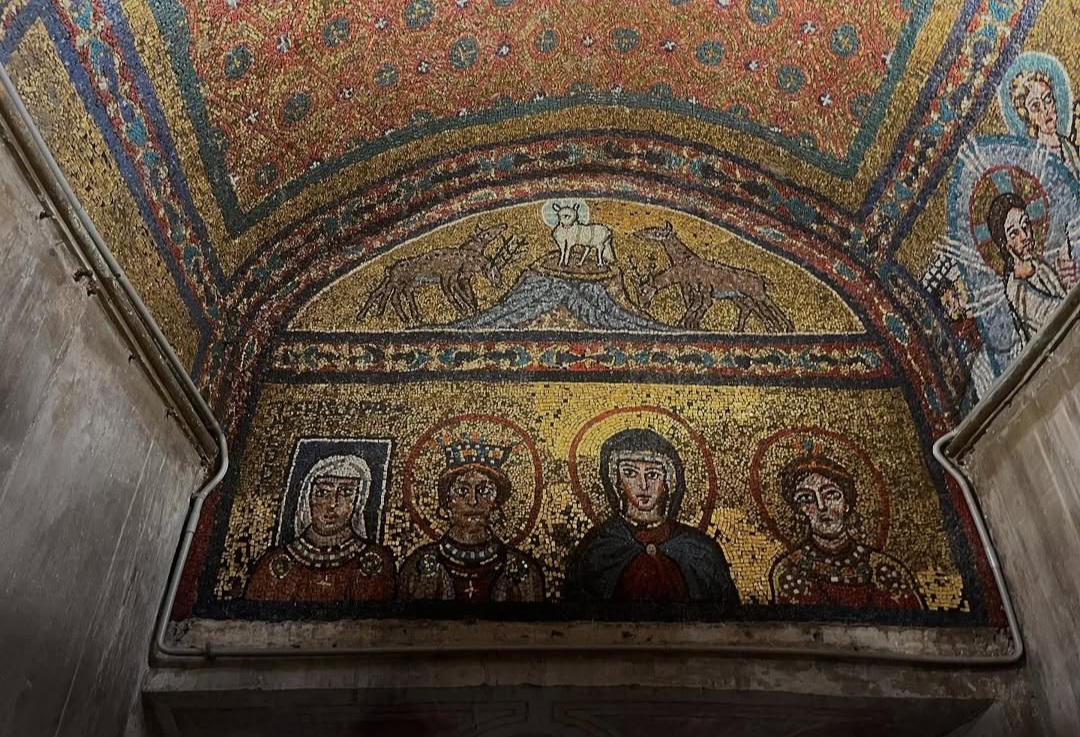
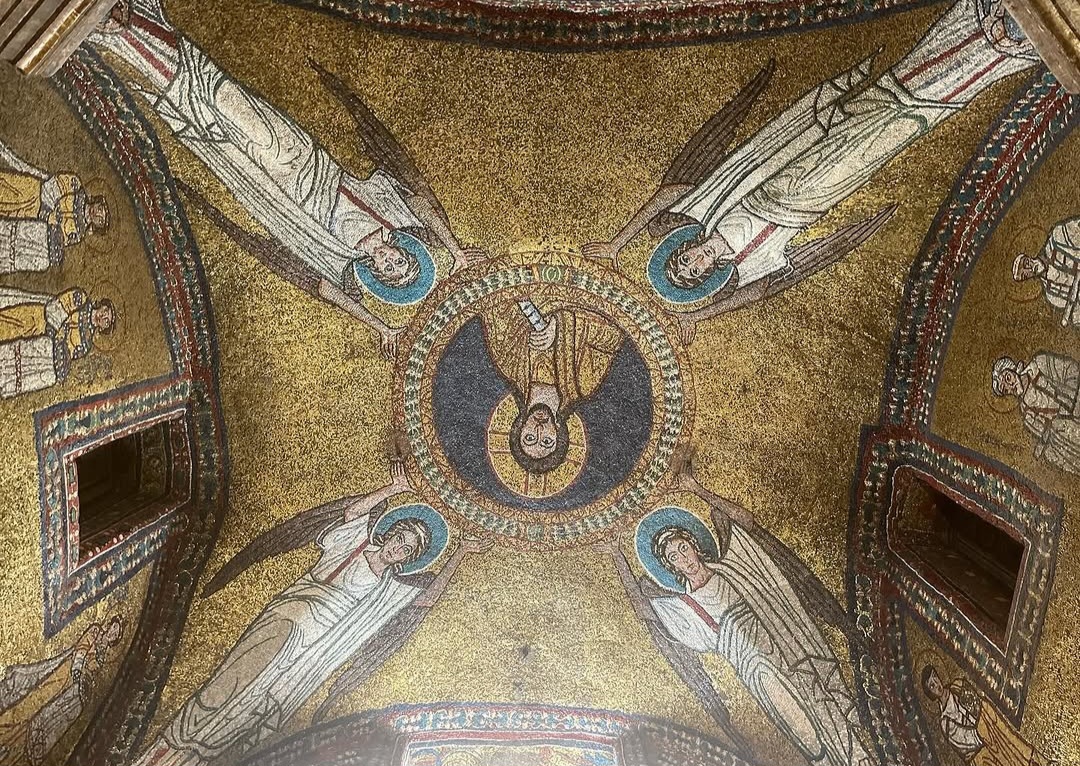
Paschal I commissioned the chapel as a monumental tomb for his mother, Theodora. Its form was inspired by funerary architecture, while its extraordinary mosaic programme transformed the small space into one of the most concentrated surviving statements of ninth-century art in Rome.
Gold surfaces, figures of saints and the image of Christ create an environment in which burial is inseparable from representation. Santa Prassede therefore preserves different ways in which the dead were made present within the architecture of the living church.
Fragments that record change
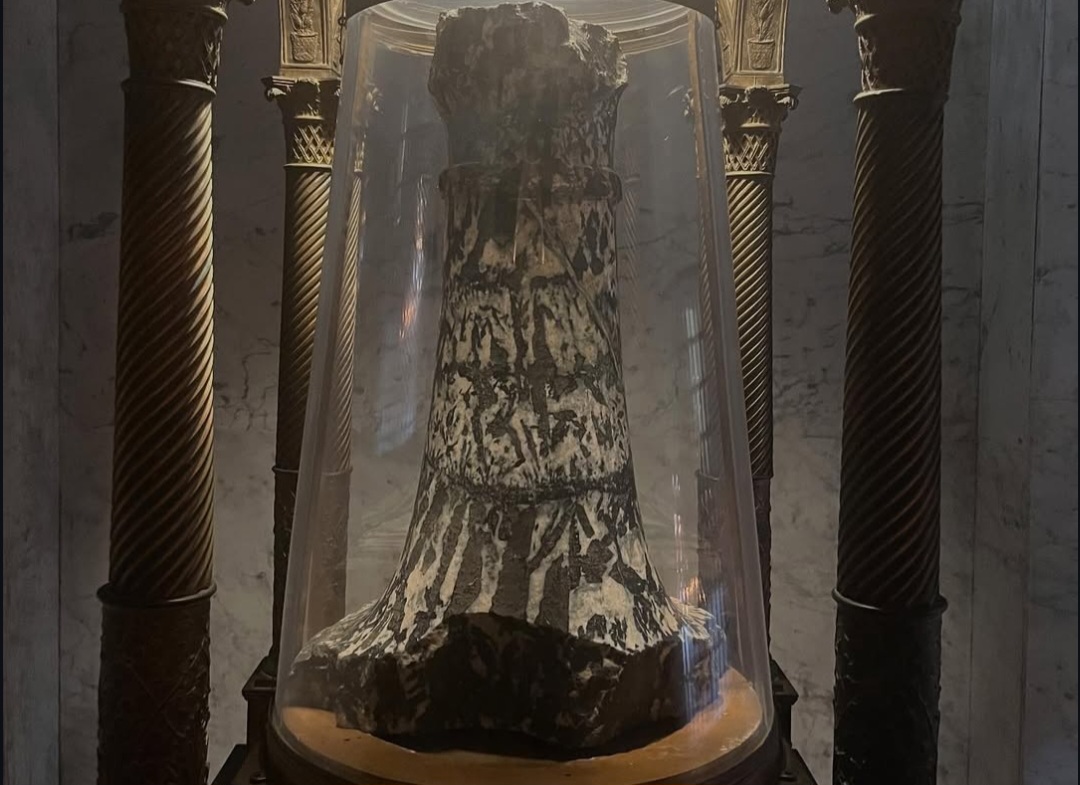
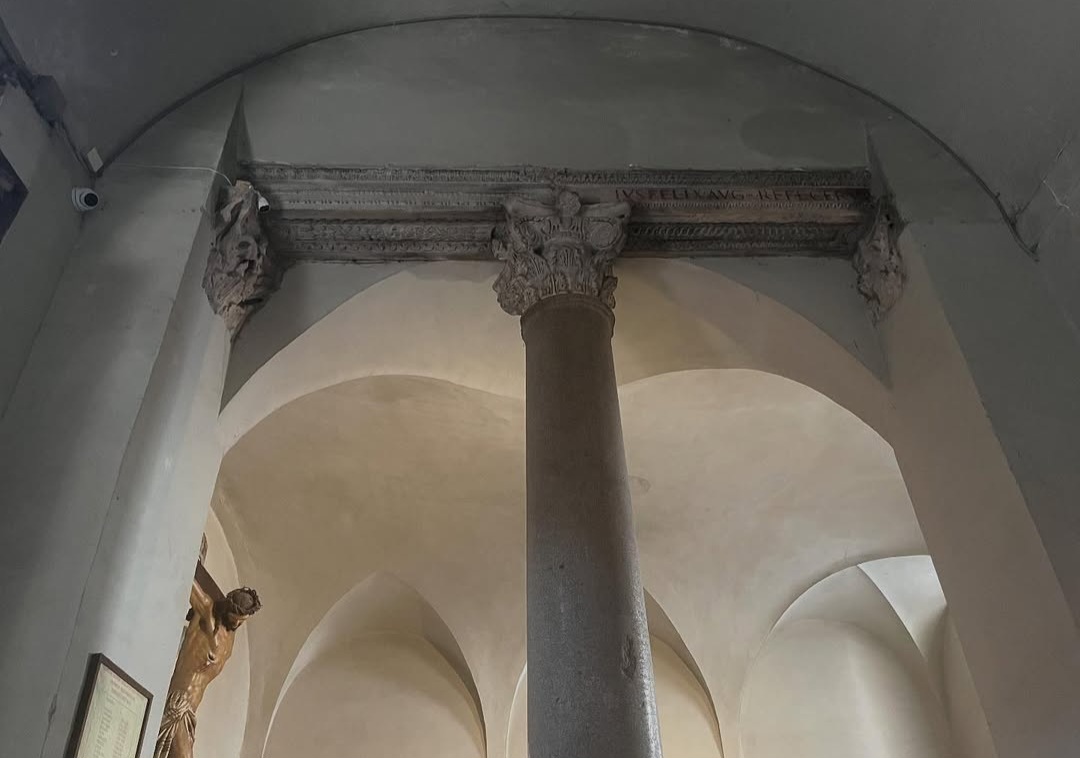
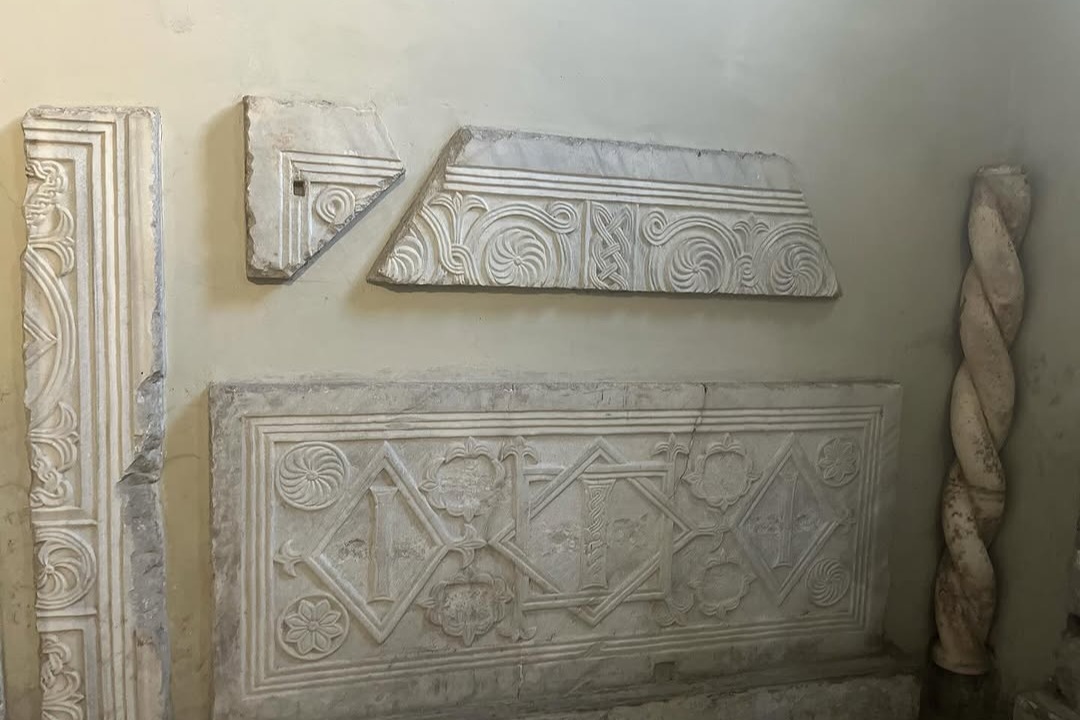
Santa Prassede also preserves architectural fragments whose value lies in their material survival. Carved marble, columns and reused elements document successive phases of construction and intervention.
Some pieces have been associated with the building activity of the age of Paschal I, while other elements reflect the longer history of the site and the reuse of earlier Roman material.
Read together, these fragments show that the history of the basilica was not created in a single moment. It accumulated through rebuilding, relocation, reuse and preservation.
Reading the site
Santa Prassede remains an active place of worship. Access and visiting conditions can change, particularly during religious services.
The value of the site for the Underground Rome Atlas lies in the relationship between the basilica, its crypt, funerary spaces, relics and surviving early medieval fabric.

Go further below the city.
Underground Rome designs private journeys focused on the archaeological spaces, structures and material history that survive below and within the modern city.
Design Your JourneyUnderground Rome is a specialist project by Rome Private Experience .