
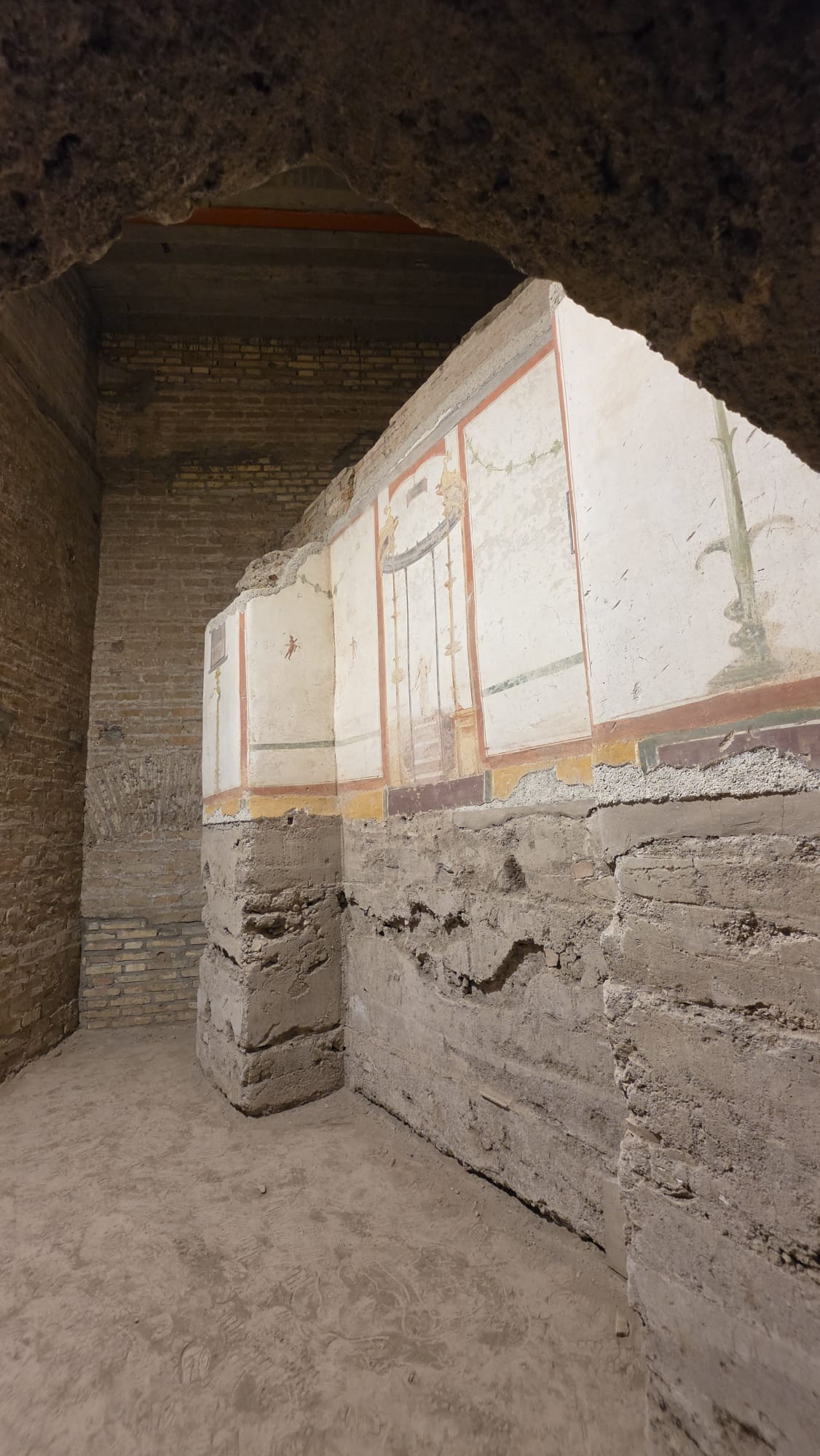
Archaeology Beneath
St John Lateran
Rome
Vatican Archaeological Area
Before the cathedral, this was another part of imperial Rome.
The archaeological area beneath St John Lateran preserves three major stages in the physical transformation of the site.
During the early Imperial period, high-status houses occupied the area. Their surviving remains include paintings, mosaics, marble decoration and architectural elements.
In AD 193, those buildings were partly demolished when Septimius Severus established the new barracks of the Equites Singulares, the mounted imperial bodyguard.
After Constantine abolished the unit in the early fourth century, the site was transformed again through the construction of the Basilica of the Saviour — the predecessor of the Lateran basilica above.
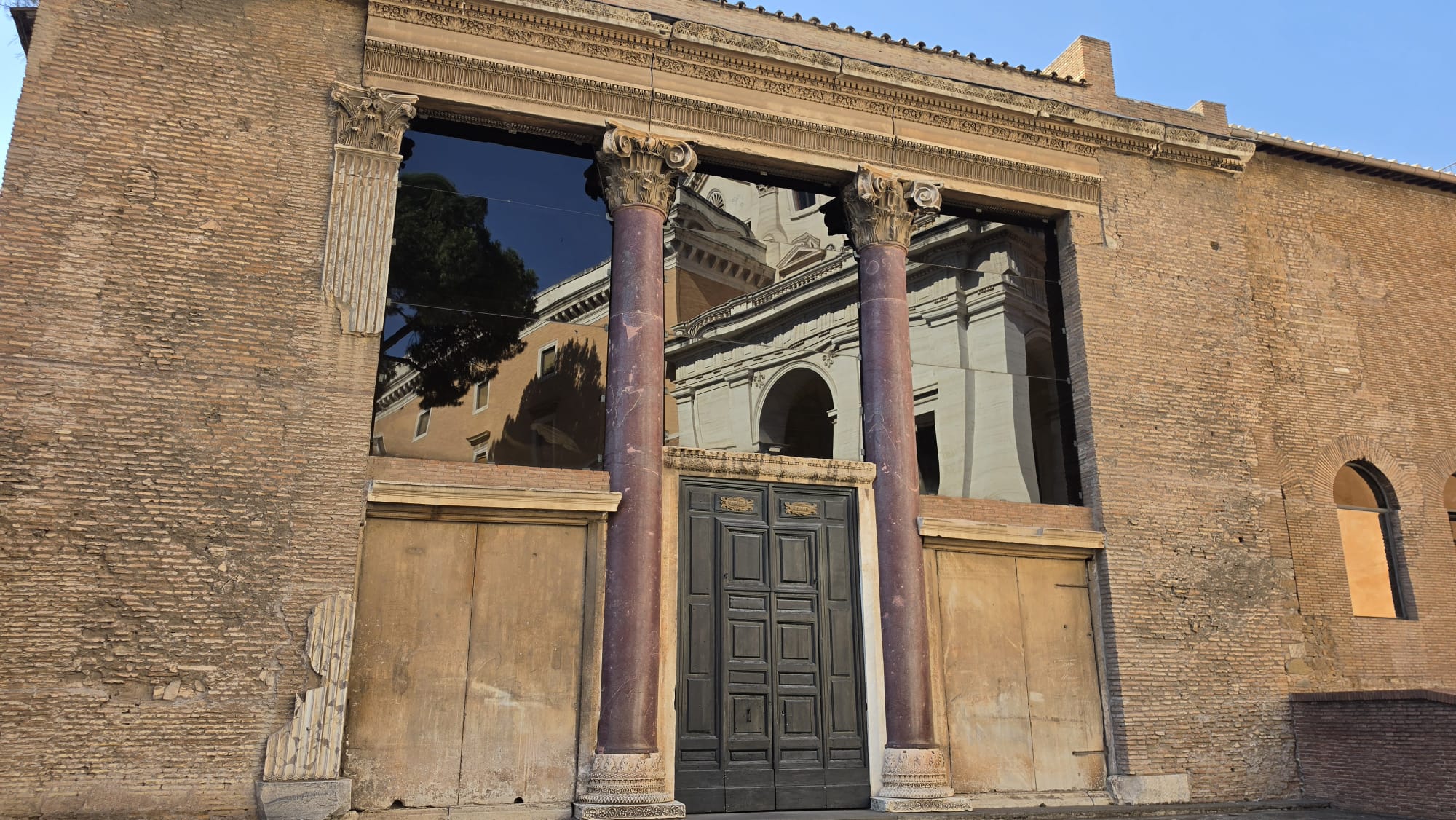
The monument above conceals an earlier urban landscape.
The archaeological rooms were not originally underground.
They belonged to buildings that occupied the Lateran area before the Christian basilica changed the organisation and architectural meaning of the site.
Three major building phases occupy the same ground.
Here, urban stratigraphy is created by replacement as much as by accumulation.
Residential architecture was interrupted by an imperial military project. The military complex was then superseded by one of the defining monuments of Christian Rome.
Residential Architecture
High-status houses occupied the area, decorated with paintings, mosaics and marble.
Imperial Barracks
Septimius Severus constructed the Castra Nova for the Equites Singulares, incorporating and replacing earlier structures.
Christian Basilica
After the dissolution of the mounted guard, Constantine established the Basilica of the Saviour on the site.
Domestic architecture survives beneath the military complex.
The earliest major phase visible along the route belonged to affluent Roman residences.
These structures preserve evidence of the quality of their interiors: painted walls, mosaic pavements, marble elements and a staircase whose steps remain remarkably intact.
The houses are important not simply because they are old, but because the Severan barracks physically altered the residential landscape that preceded them.
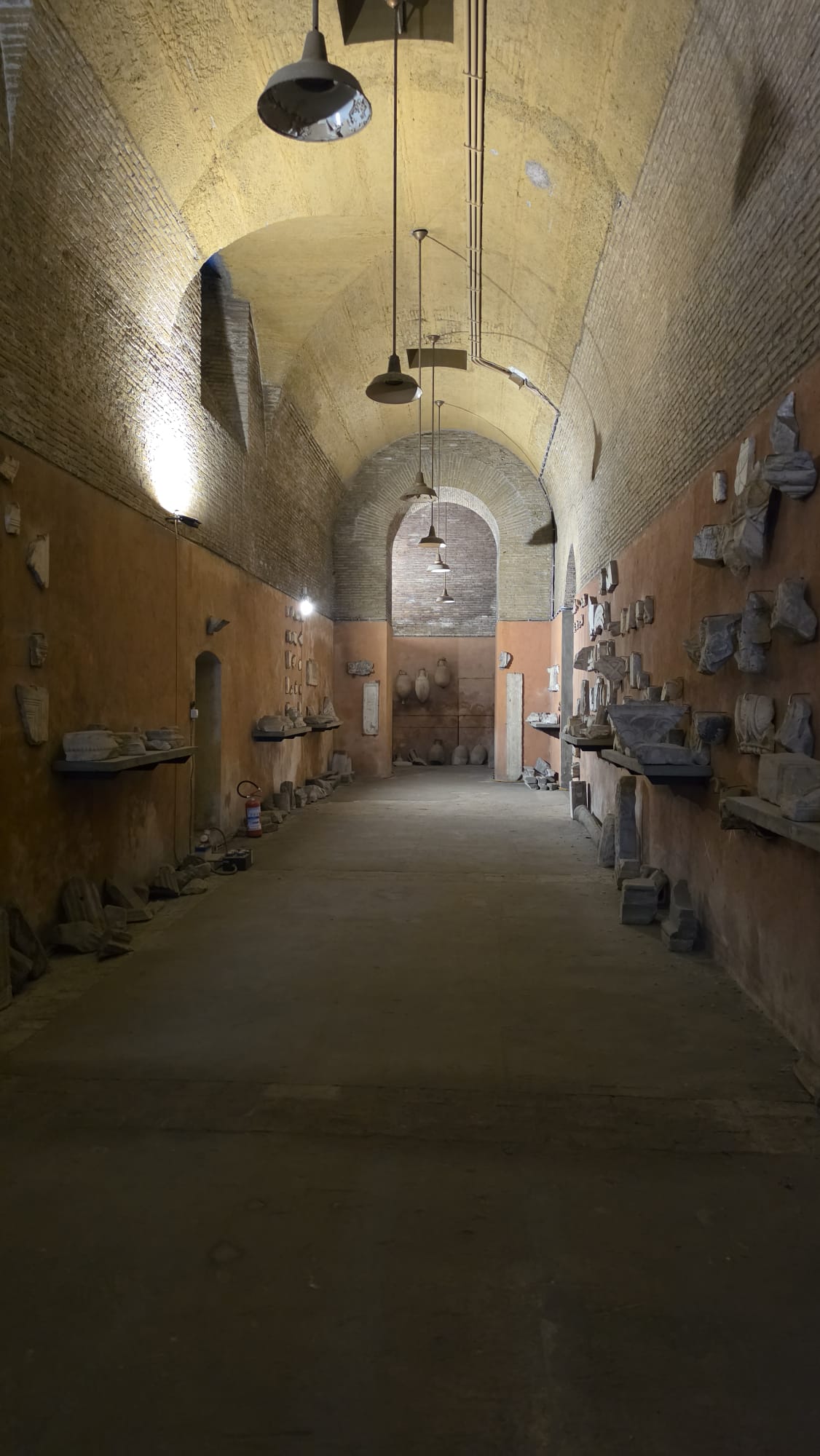
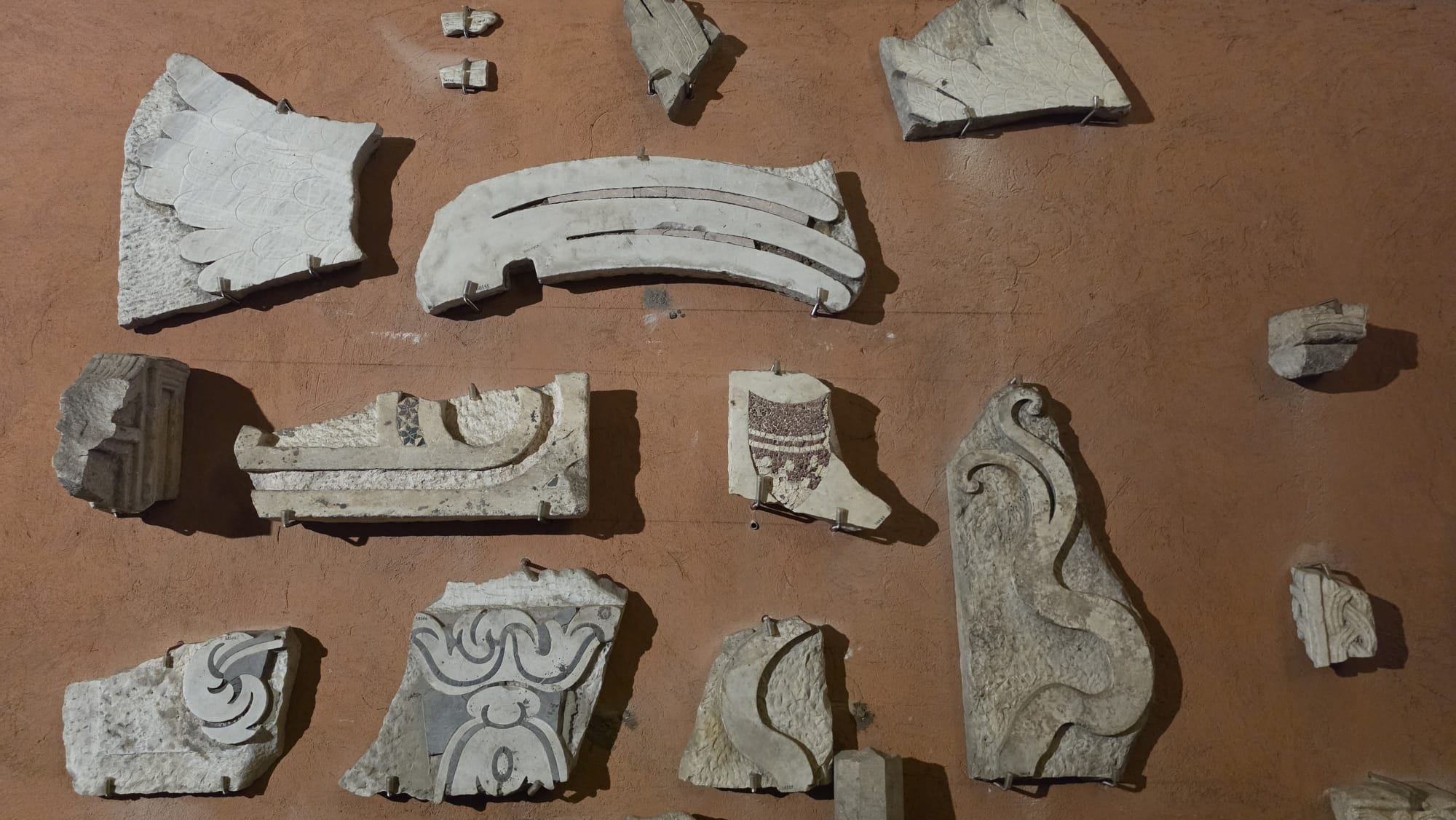
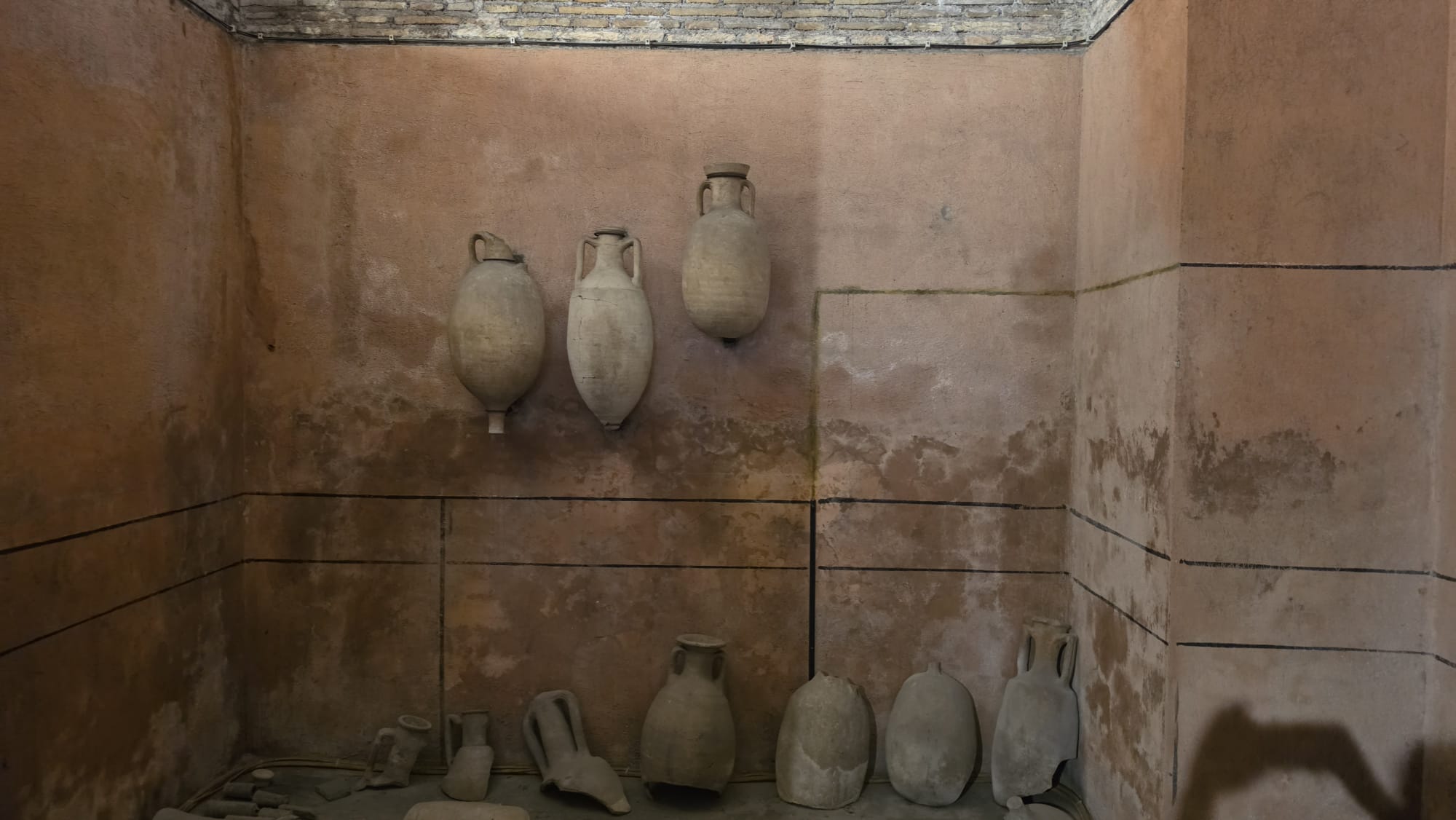
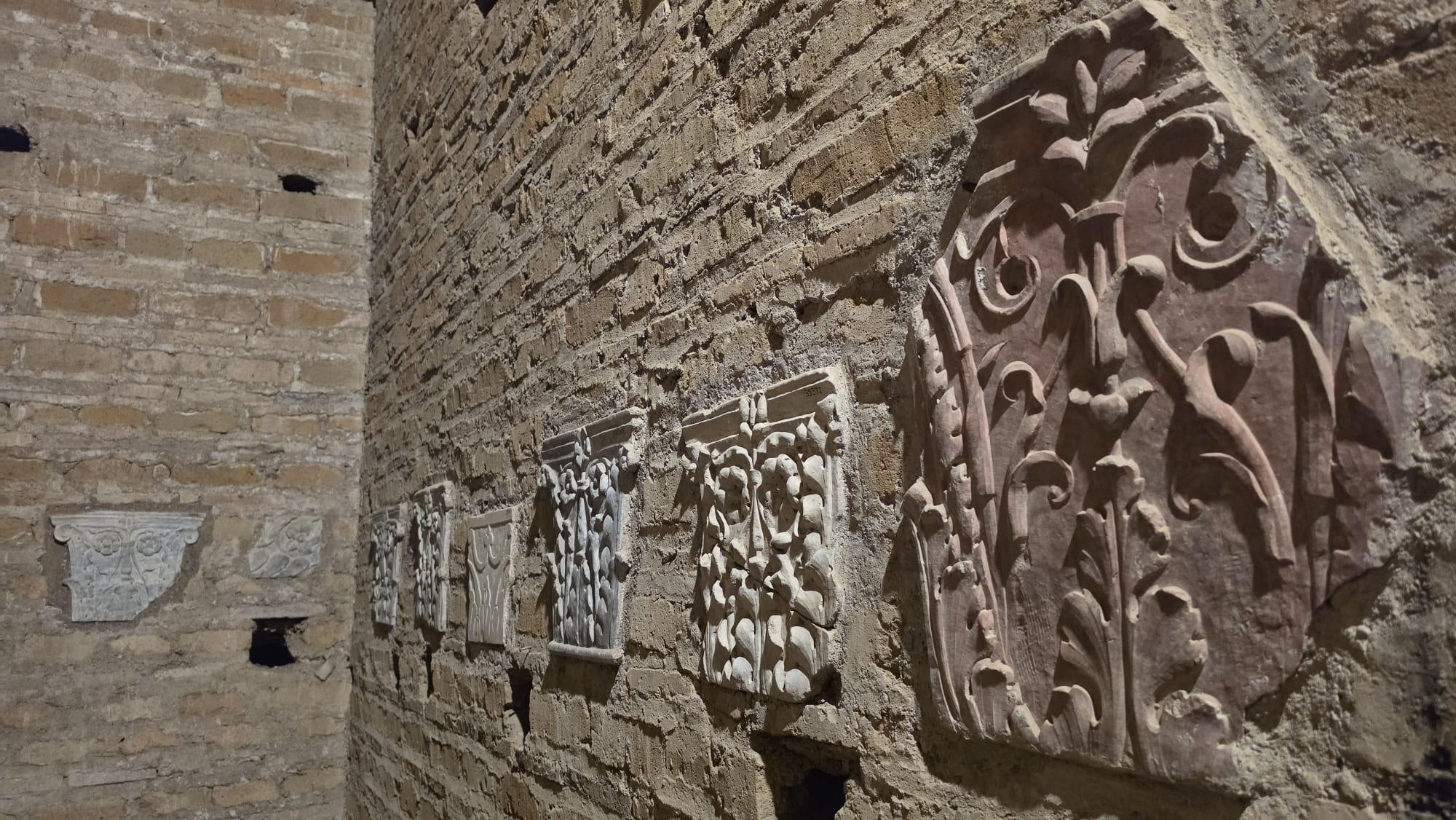
Architecture survives together with the objects used to interpret it.
Masonry, architectural fragments and excavated material allow the different phases beneath the Lateran to be studied as parts of a single archaeological sequence.
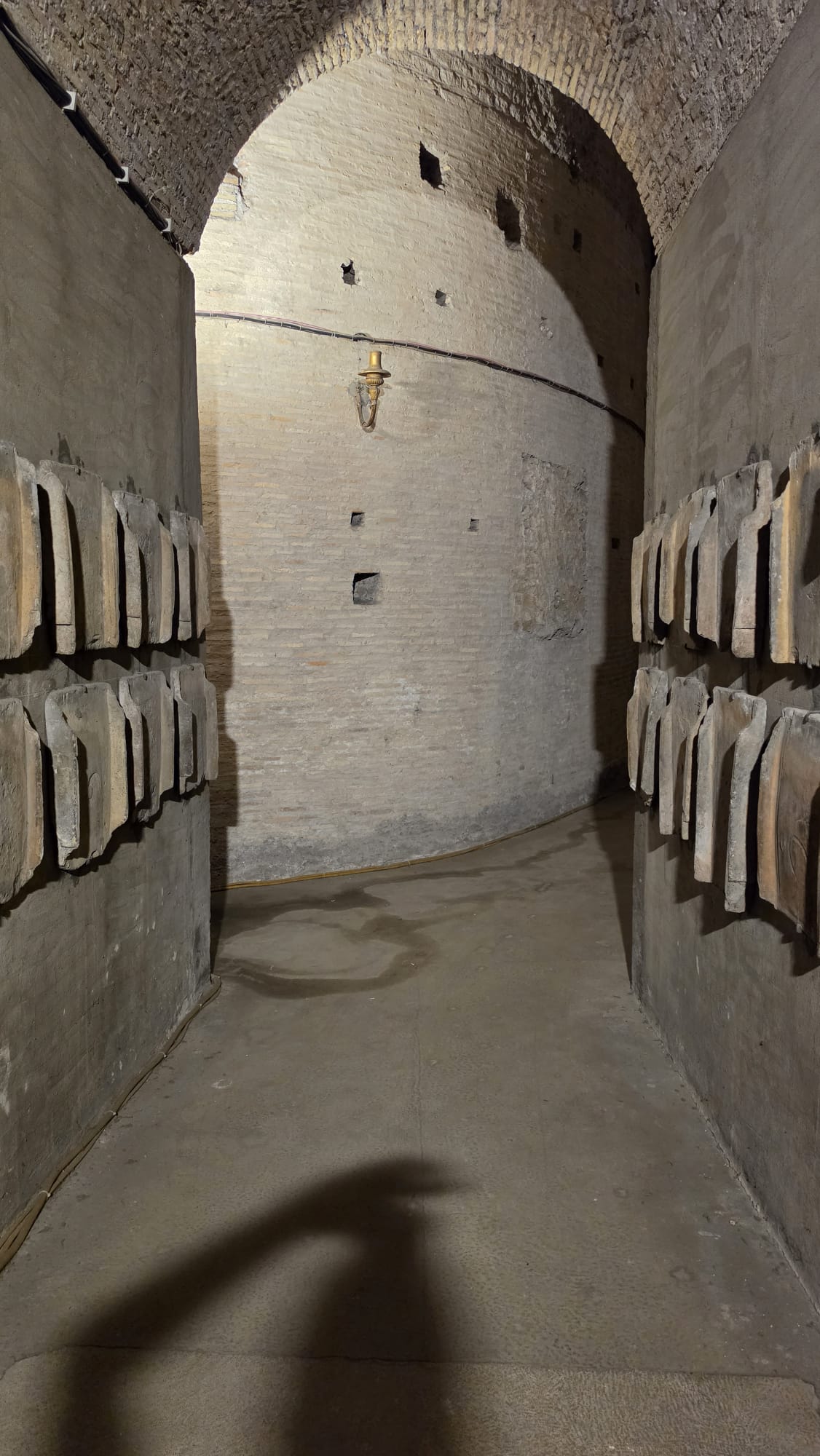
The residential landscape became an imperial barracks.
Septimius Severus established the new headquarters of the Equites Singulares on the Lateran site.
The Equites Singulares were selected cavalrymen who served as the emperor's mounted bodyguard.
Their new barracks — the Castra Nova Equitum Singularium — replaced or incorporated parts of the earlier residential buildings and created a fundamentally different use of the area.
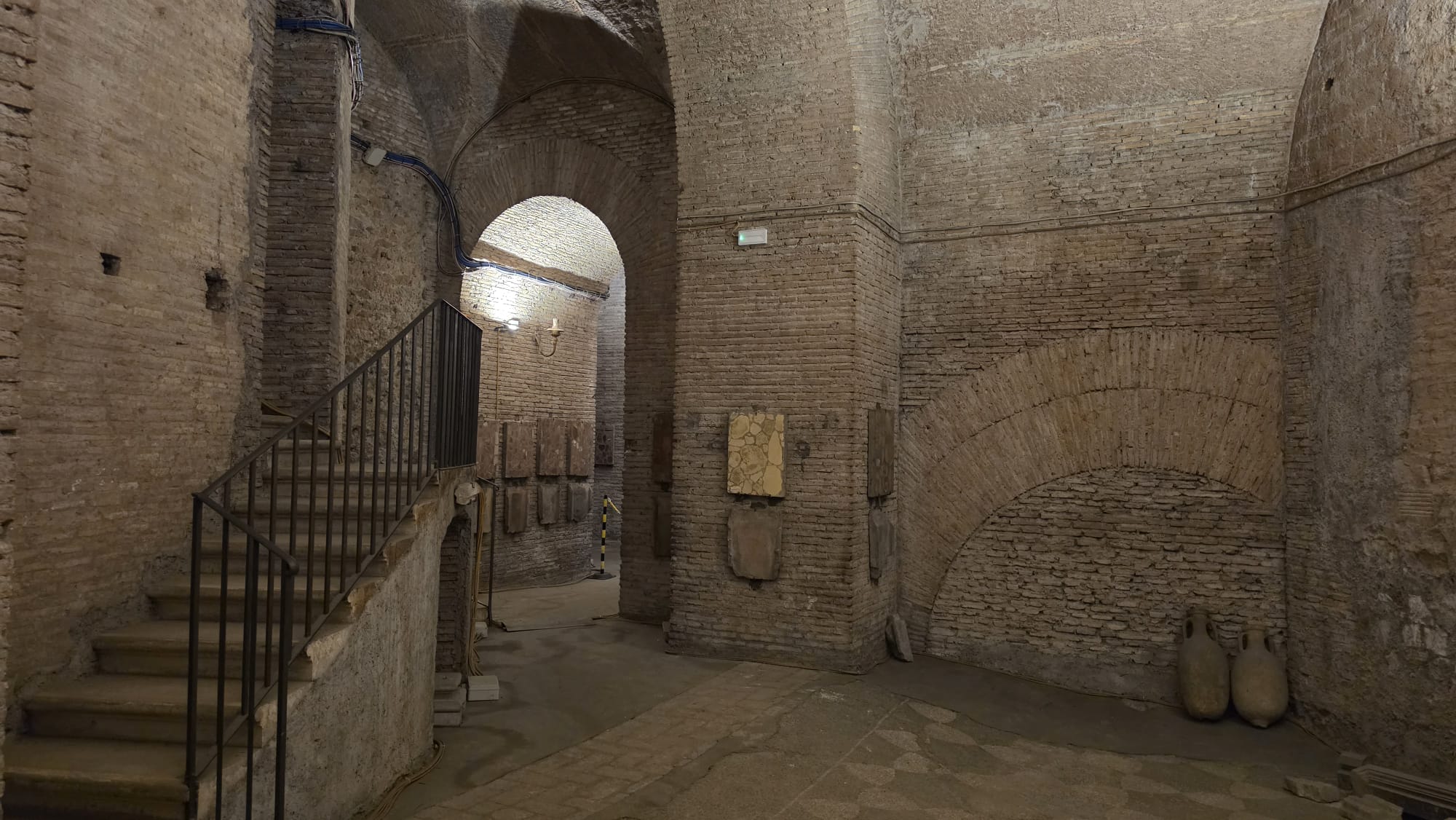
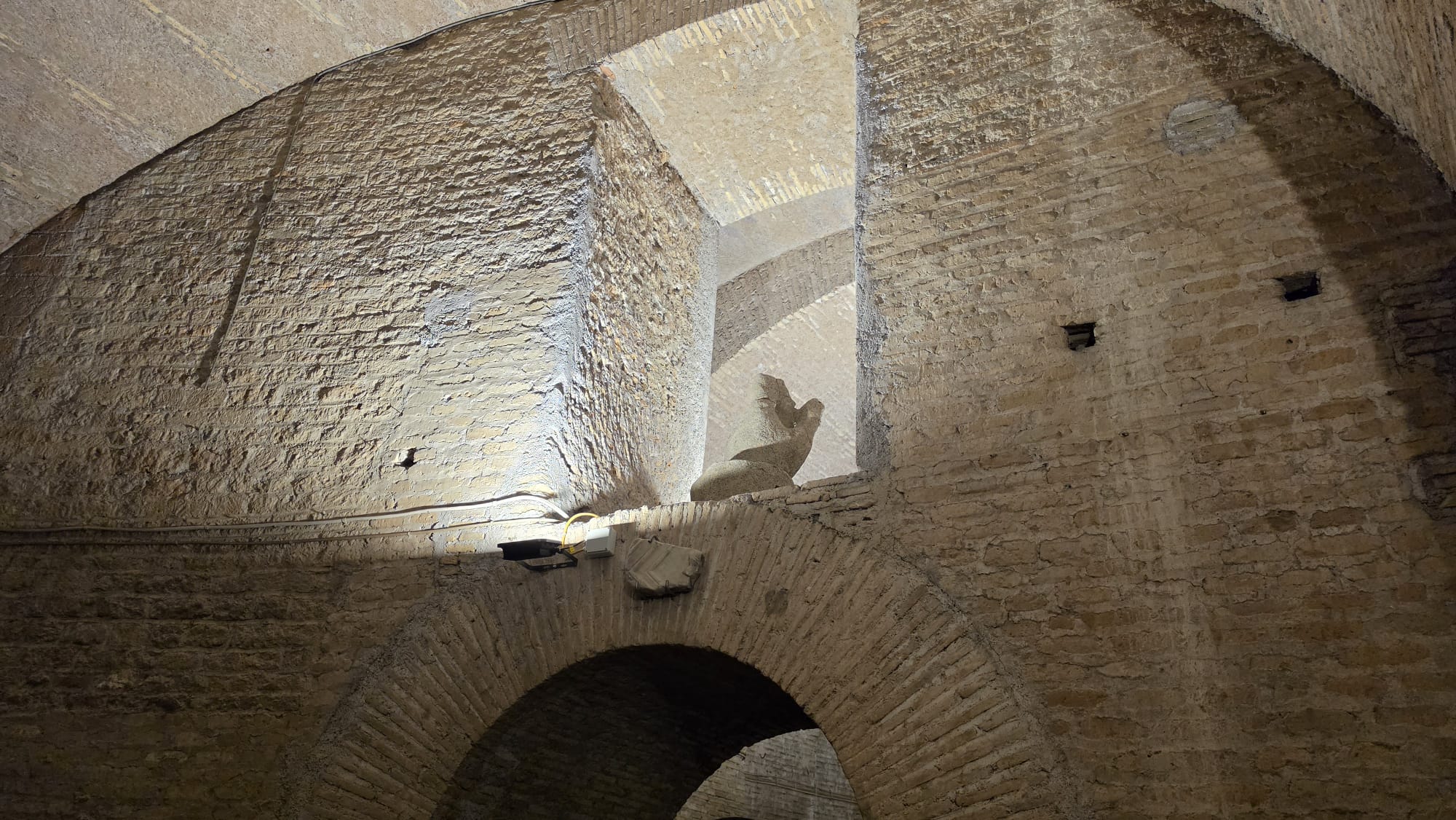
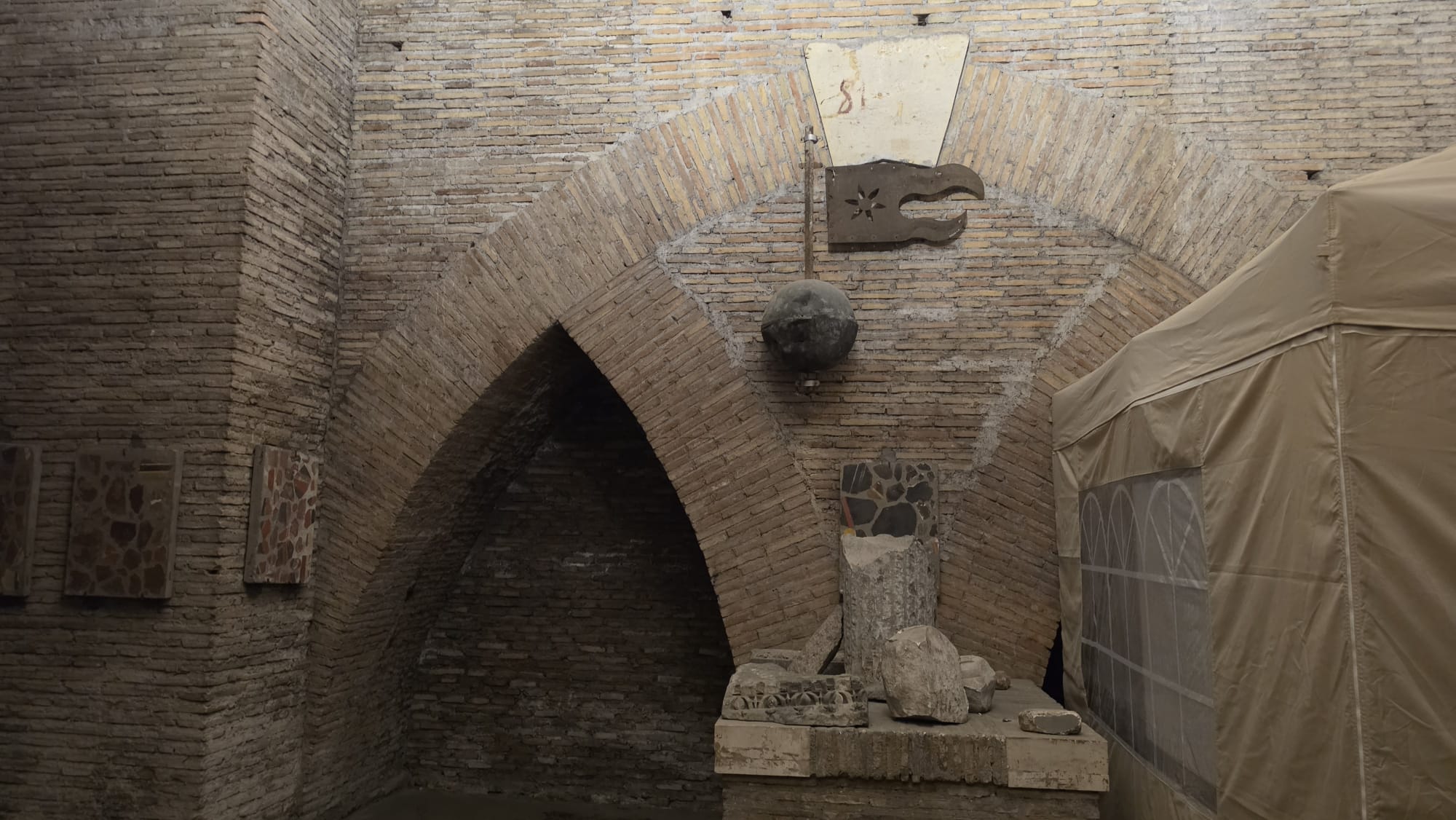
Small rooms preserve the organisation of military life.
The soldiers' quarters survive through walls, thresholds and door jambs.
The Vatican Museums specifically record rooms with surviving red wall plaster, while a central area of the barracks was associated with the imperial cult.
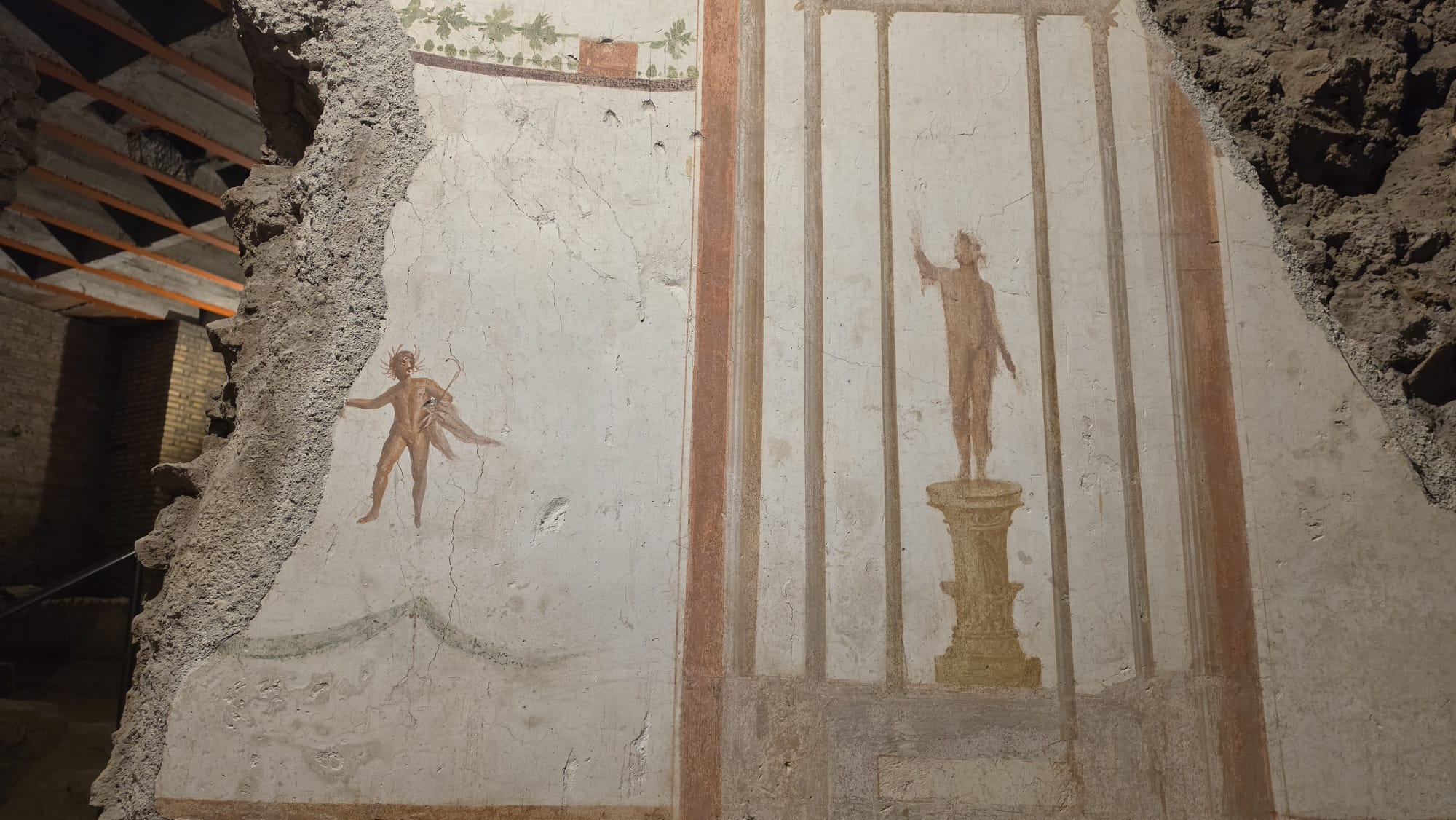
Colour survives inside the archaeological sequence.
The Lateran excavations preserve more than foundations.
Painted surfaces provide evidence for interiors that would otherwise be understood primarily through masonry and floor levels.
Conservation of these surfaces makes it possible to read architecture and decoration together rather than reducing the site to structural remains alone.
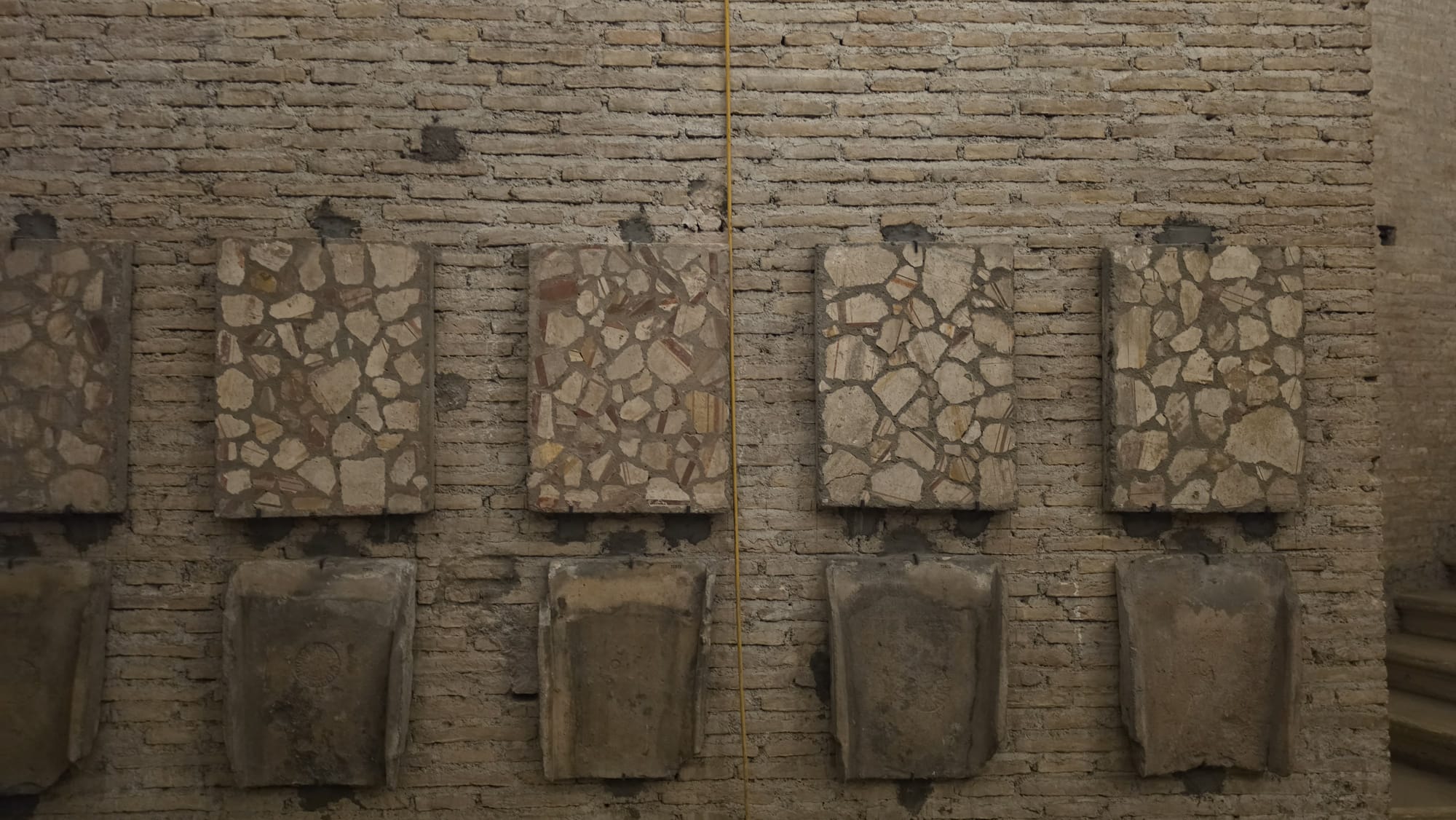
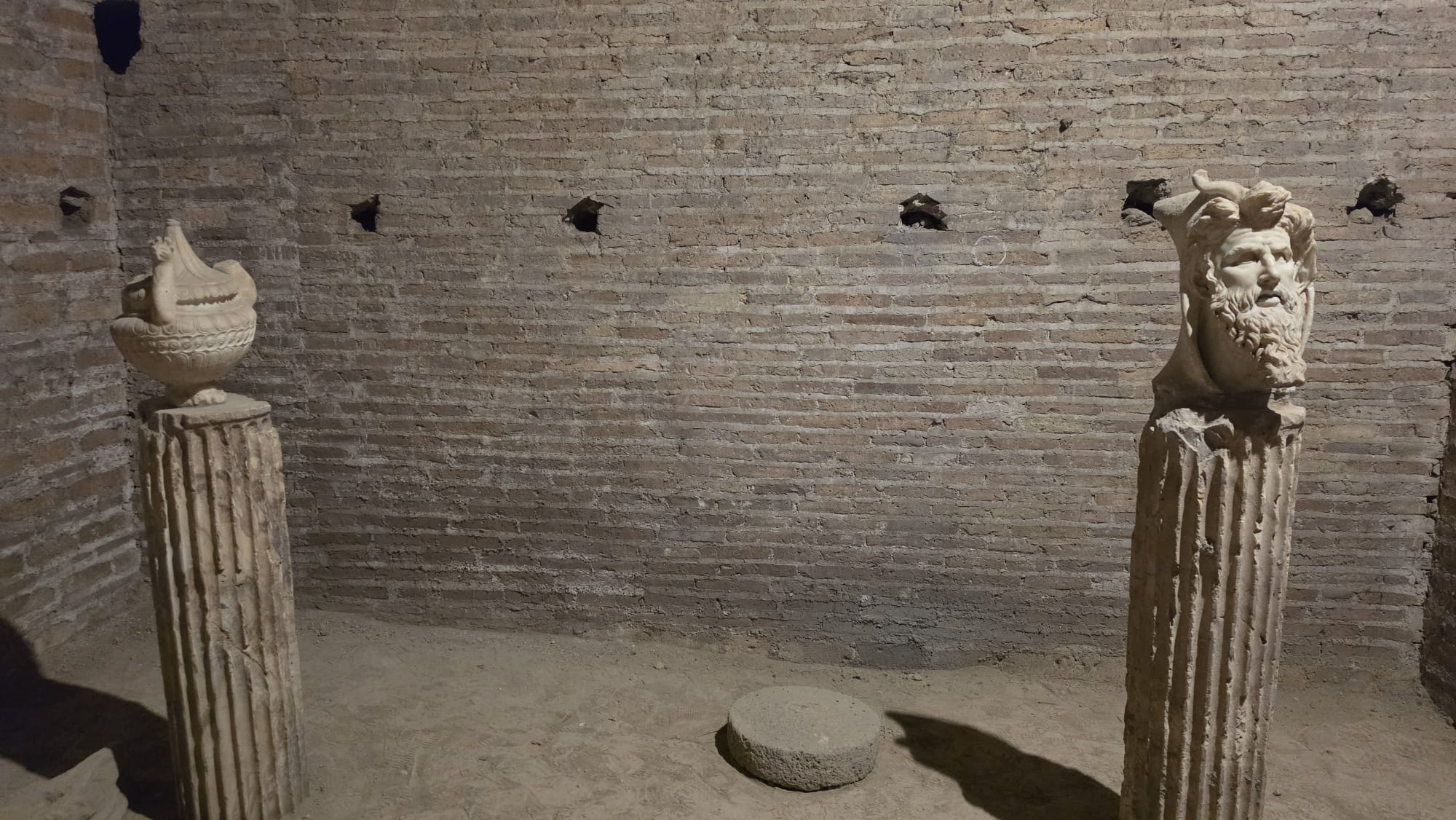
Fragments become evidence when their context is understood.
Excavated objects and architectural elements contribute to the reconstruction of the site's changing functions.
They complement the surviving buildings rather than existing as a separate collection detached from them.
The military function ended. A new monument occupied the site.
After the Battle of the Milvian Bridge, Constantine abolished the Equites Singulares.
The Lateran area was then selected for the construction of the Basilica of the Saviour, creating one of the most consequential changes in the history of the site.
Buildings associated with imperial military power were replaced by monumental Christian architecture.
Earlier buildings did not simply vanish.
Parts of them survived because later construction enclosed, cut through or built over what was already there.
This is what makes the Lateran particularly useful for understanding urban archaeology.
The archaeological sequence records decisions: what was demolished, what was retained, what was filled, and what became structurally useful to the next building phase.
Urban change can be read through replacement.
Beneath the Lateran, three different forms of power occupied the same physical ground: elite residence, imperial military organisation and monumental Christian architecture.
Archaeology allows those transitions to be studied through surviving structures rather than through historical narrative alone.
A controlled archaeological itinerary.
The archaeological area beneath St John Lateran is managed within the archaeological heritage of the Vatican Museums.
Visits have been offered through a controlled, pre-arranged itinerary. Because schedules, group conditions and booking procedures can change, current arrangements should always be checked directly with the Vatican Museums before visiting.
Explore more places below Rome.
Follow the physical transformation of Rome.
Underground Rome designs private archaeological journeys around structures below street level, selecting sites according to your interests, available time and the access genuinely available during your stay.
Design Your Journeyby Rome Private Experience
Underground Rome is dedicated specifically to the archaeological and historic city below street level.
For broader private programmes across Rome, corporate experiences and complex group arrangements, visit Rome Private Experience .