
San Martino
ai Monti
Rione Monti
Rome
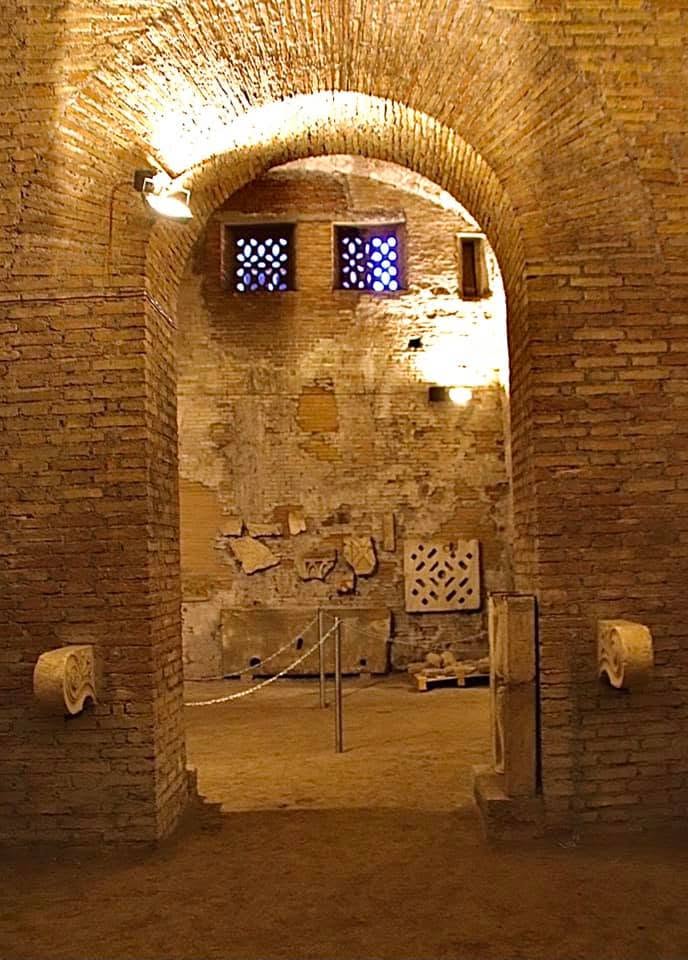
Below the basilica, a Roman building.
San Martino ai Monti is traditionally connected with one of Rome's early Christian tituli. Archaeology, however, begins with the physical building.
Beneath the present church are substantial remains of a Roman structure dating to the third century AD. Its surviving architecture includes a large central hall and a vestibule that originally communicated with an ancient street.
The relationship between these remains and the early Christian history of the site has long shaped the way San Martino ai Monti has been interpreted.
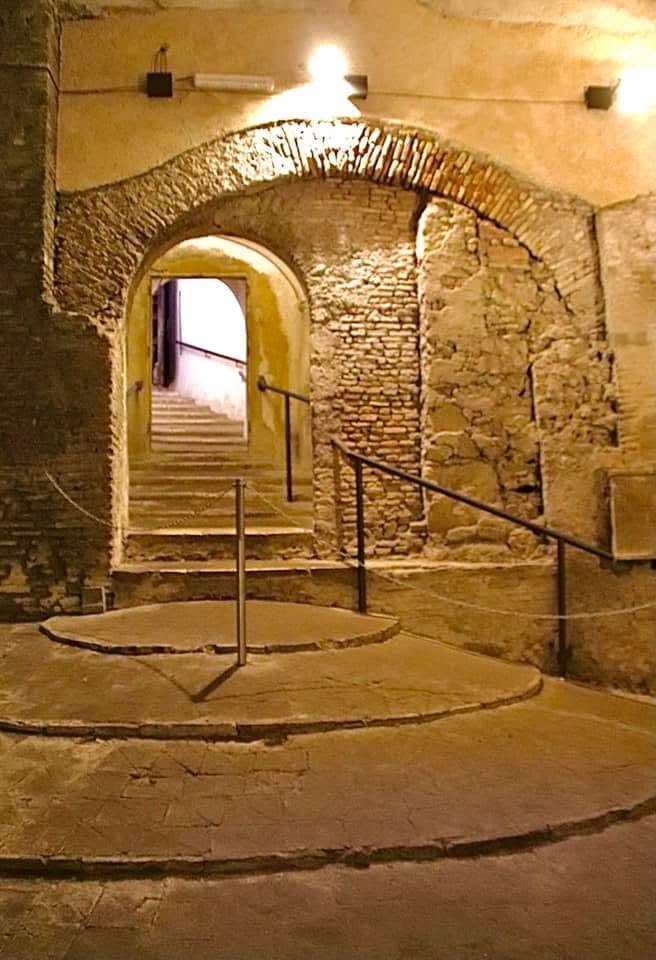
An architecture older than the church above.
The surviving underground structure belongs to Roman imperial Rome.
Rather than treating the space simply as a crypt, it is more useful to read it as an archaeological building with its own plan, entrances and relationship to the ancient urban environment.
Hall, vaults and street access.
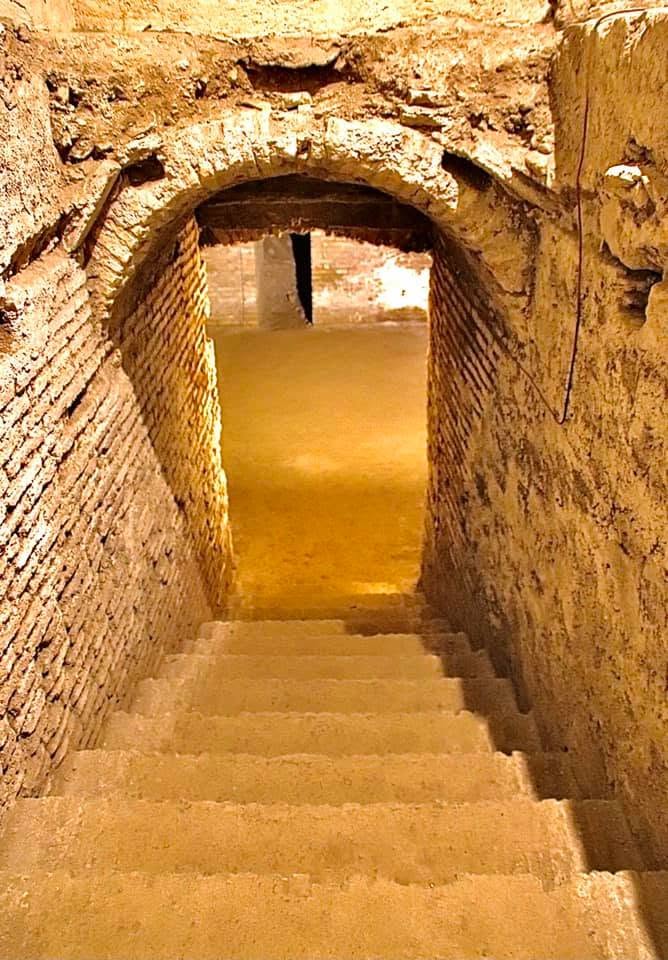
The underground remains still preserve enough architecture to reconstruct the organisation of the Roman building.
The surviving spaces are therefore evidence not simply of depth, but of an earlier urban level with its own circulation and architectural logic.
Central Hall
A large central space forms the principal surviving element of the Roman complex.
Cross Vault
The hall is characterised by vaulted construction supported on substantial piers.
Street Vestibule
A vestibule opened toward the ancient street through three doorways, preserving evidence of the building's original relationship with the city outside.
A building connected to a lost street level.
The simplified diagram translates the principal architectural elements into a spatial relationship. It is conceptual and not an archaeological survey.
Three doors toward the city.
The vestibule was not an isolated underground chamber. Its openings faced an ancient street.
Today that relationship is archaeological: what once belonged to the accessible urban fabric survives below the modern level.
This change in context is central to understanding why Roman architecture can now appear subterranean.
The Roman structure in detail.
Tradition and archaeology are not the same thing.
San Martino ai Monti has long been associated with the early Christian Titulus Equitii.
The tradition connects the site with an early Christian community and with the name of Equitius.
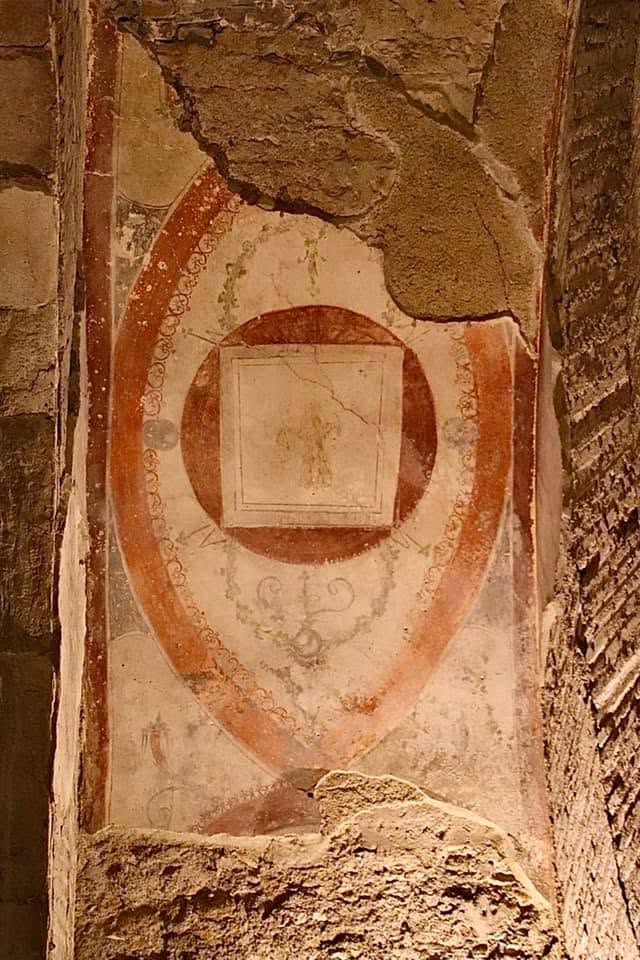
The Roman rooms beneath the basilica provide the physical archaeological context, but the historical tradition and the surviving architecture should not automatically be treated as identical evidence.
Reading the site means keeping both forms of evidence visible while distinguishing between them.
before
assumption.
Underground Rome separates surviving architecture, historical documentation and later tradition rather than collapsing them into a single narrative.
A former street-level building becomes underground archaeology.
The importance of San Martino ai Monti lies not only in what survives, but in the changed relationship between the Roman building and the city around it.
Doors that once communicated with an exterior street are now encountered beneath a later basilica. The architecture therefore records both an ancient building and the transformation of Rome's urban level.
Check access before planning a descent.
The Basilica of Santi Silvestro e Martino ai Monti is an active religious building, while access conditions to the archaeological spaces should be confirmed before a visit.
Opening arrangements can change according to religious, organisational and conservation requirements.
Explore more places below Rome.
Follow Rome's earlier architecture below the modern city.
Underground Rome designs private archaeological journeys according to your interests, available time and the access genuinely available during your stay. Tell us your dates and group size; we’ll check site access and prepare a private route proposal with a clear quote.
Request a private archaeological journeyby Rome Private Experience
Underground Rome is dedicated specifically to the archaeological city below street level.
For broader private programmes across Rome, corporate experiences and complex group arrangements, visit Rome Private Experience .