
San
Crisogono
Piazza Sidney Sonnino
Rome
A church below a church.
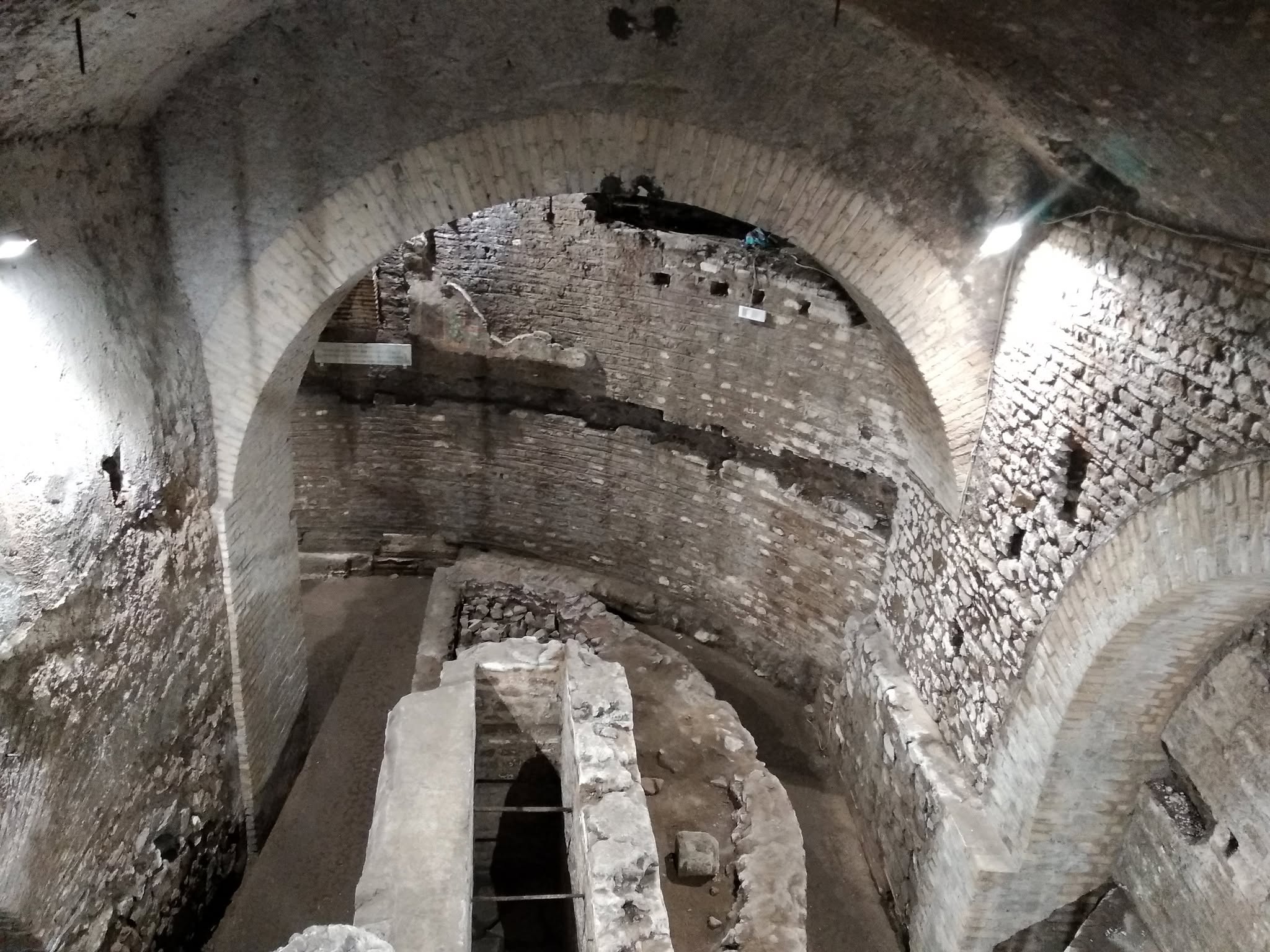
Beneath the present Basilica of San Crisogono survives an earlier Christian building whose architecture belongs to a very different level of Rome.
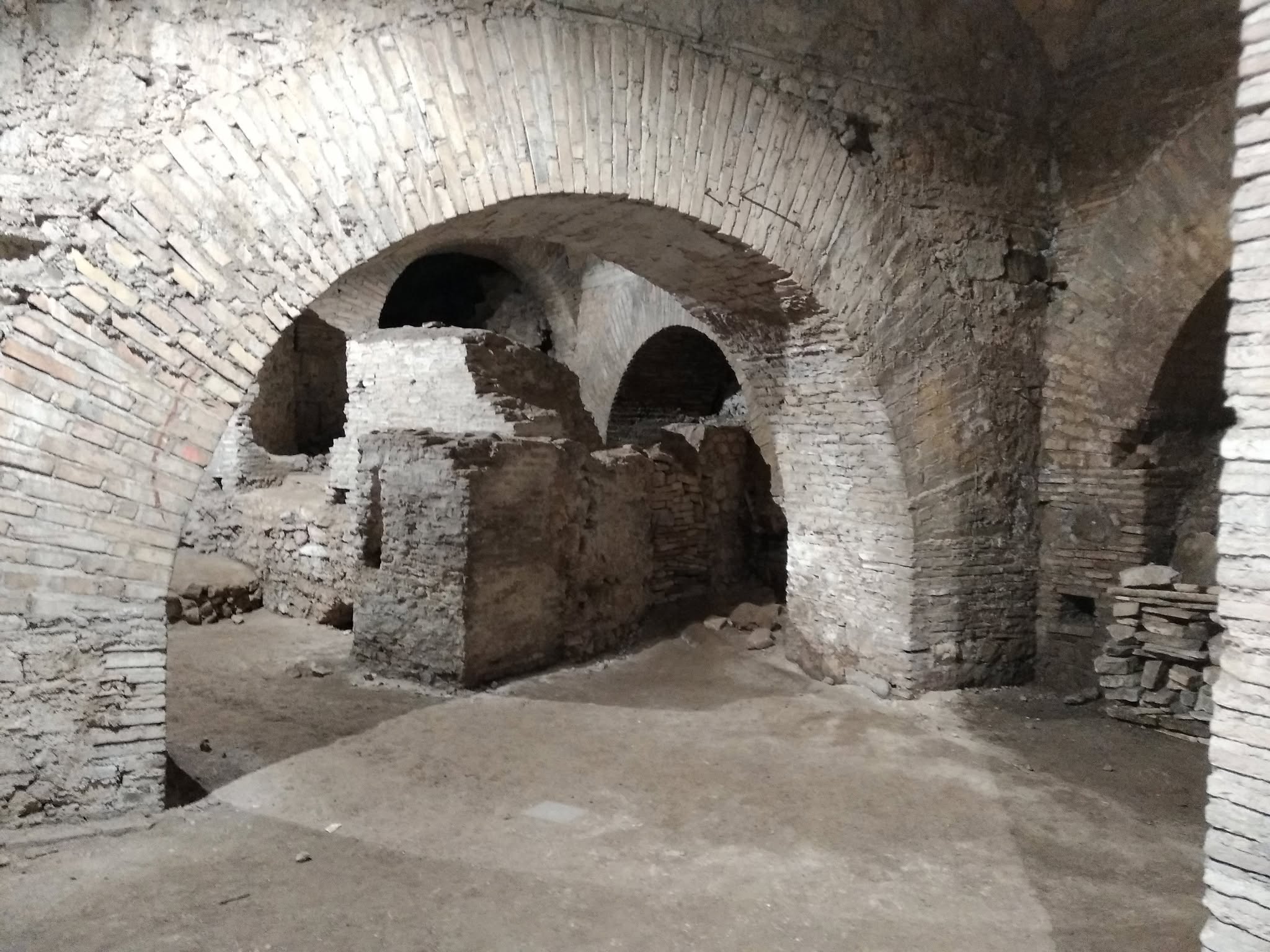
The archaeological area preserves the remains of an early Christian basilica constructed over pre-existing Roman masonry.
Its surviving plan includes a single nave, an apse and spaces associated with the organisation of early Christian worship. Later foundations cut through the earlier building, creating the complex architectural relationships visible today.
Six metres between two Romes.
The earlier church lies approximately six metres below the level of the present basilica.
The difference in height is a local archaeological measurement, not a standard depth for ancient Rome. It records the long physical transformation of this particular part of Trastevere.
Before, below and within the basilica.
San Crisogono preserves more than one architectural moment.
Roman masonry preceded the Christian building. The early basilica reorganised this earlier context, and subsequent construction transformed the site again.
Earlier Masonry
The early Christian complex was established over pre-existing Roman structures, preserving evidence of an earlier phase of occupation.
The Titulus
An early Christian place of worship developed on the site before the monumental basilical arrangement visible archaeologically today.
A Basilical Plan
The titulus Chrysogoni acquired a single-nave basilical layout with a narthex, presbyterial area and apse.
Architecture Above Architecture
Later construction altered the earlier building and introduced foundations that now intersect its original spatial organisation.
Reading the earlier basilica.
Although later foundations interrupt the original spatial continuity, several principal elements of the early church remain identifiable.
Apse, service space and baptistery.
The semicircular apse is accompanied by two spaces with distinct functions.
To one side was the secretarium; to the other, the baptistery. Together they help reconstruct the organisation of the early Christian complex.
The presbyterial area was later raised, creating a crypt associated with the veneration of relics.
Fragments of an earlier sacred landscape.
The significance of the site comes from the relationship between architecture, decoration and changing religious use.
Apse
The curved termination of the earlier basilica remains one of the clearest elements of its original plan.
Secretarium
A service space beside the apse formed part of the functional organisation of the Christian building.
Baptistery
The space associated with baptism helps identify the liturgical organisation of the early complex.
Earlier Walls
Roman masonry beneath the Christian phase demonstrates that the basilica itself was already part of a longer architectural sequence.
The later church does not simply replace the earlier one.
The two buildings occupy different levels, but they remain physically connected.
Foundations belonging to the upper church pass through the earlier basilica and alter the way its original interior can now be perceived.
This is precisely what makes the archaeological area useful for understanding Rome: different periods are not neatly separated. They intersect.
One archaeological sequence.
Continuity does not mean immobility.
San Crisogono remained a place associated with Christian worship while its architecture changed dramatically.
The archaeological remains show how continuity of place can coexist with physical transformation: earlier structures are reused, new buildings alter old ones and the level at which the city is experienced changes.
A site returning to public access.
The archaeological area is preparing to reopen to visitors following conservation, safety and visitor-access works.
The intervention is designed to improve the archaeological itinerary, visitor safety and the presentation of the remains, while respecting the conservation requirements of the underground environment.
Explore more places below Rome.
Explore Rome below street level.
Underground Rome designs private journeys around the archaeological city, selecting sites according to your interests, available time and the access genuinely available during your stay. Tell us your dates and group size; we’ll check site access and prepare a private route proposal with a clear quote.
Request a private archaeological journeyby Rome Private Experience
Underground Rome is dedicated specifically to the archaeological city below street level.
For broader private programmes across Rome, corporate experiences and complex group arrangements, visit Rome Private Experience .