
The Roman Latrine
on Via Garibaldi
Janiculum · Rome
A collapse exposed a room hidden behind the city wall.
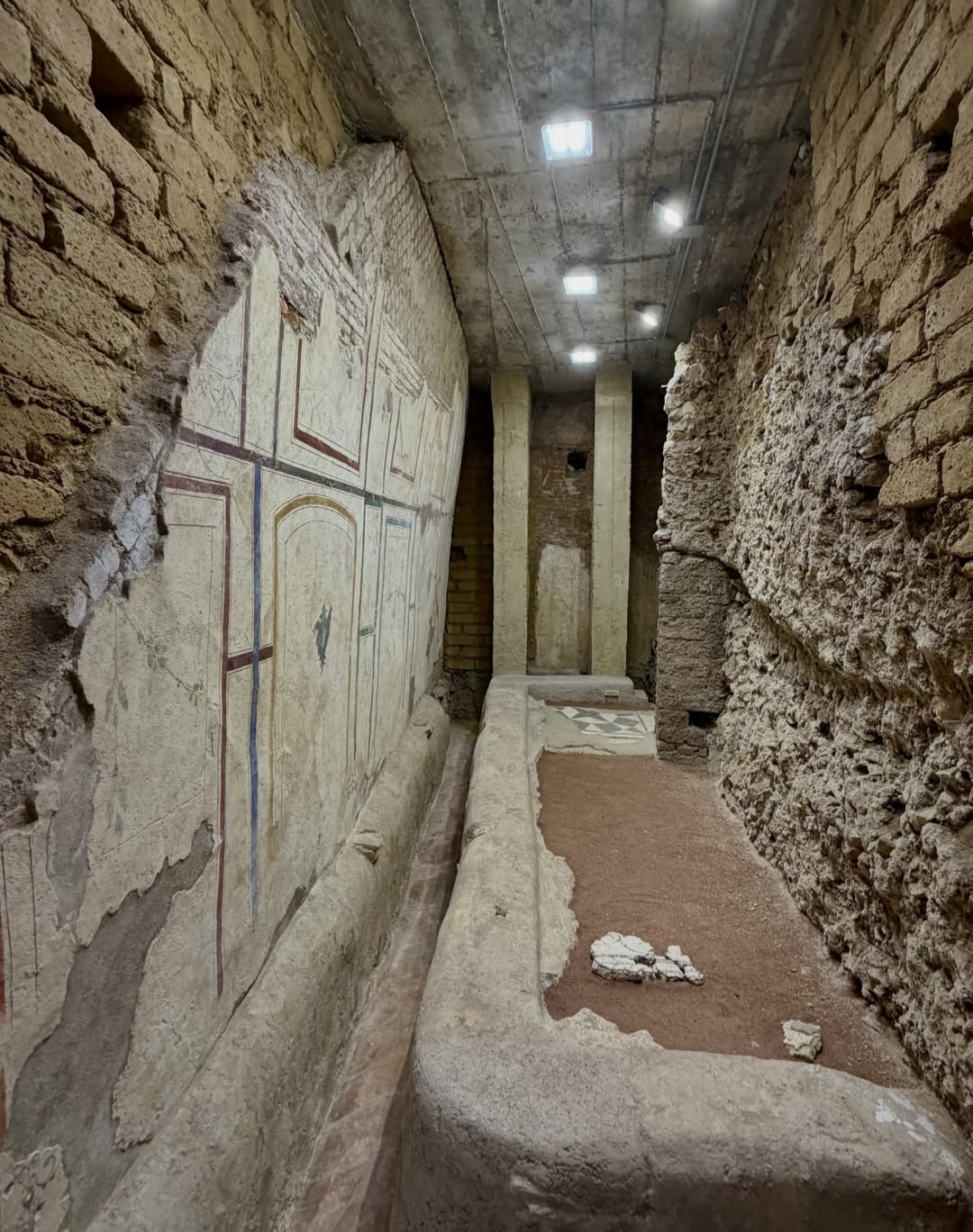
The Roman latrine on Via Garibaldi came to light in 1963, after part of the retaining wall above it collapsed.
The remains lie near San Pietro in Montorio, on the Janiculum. They belong to a compact room that once formed part of a larger architectural setting, much of which has not survived or has not been excavated.
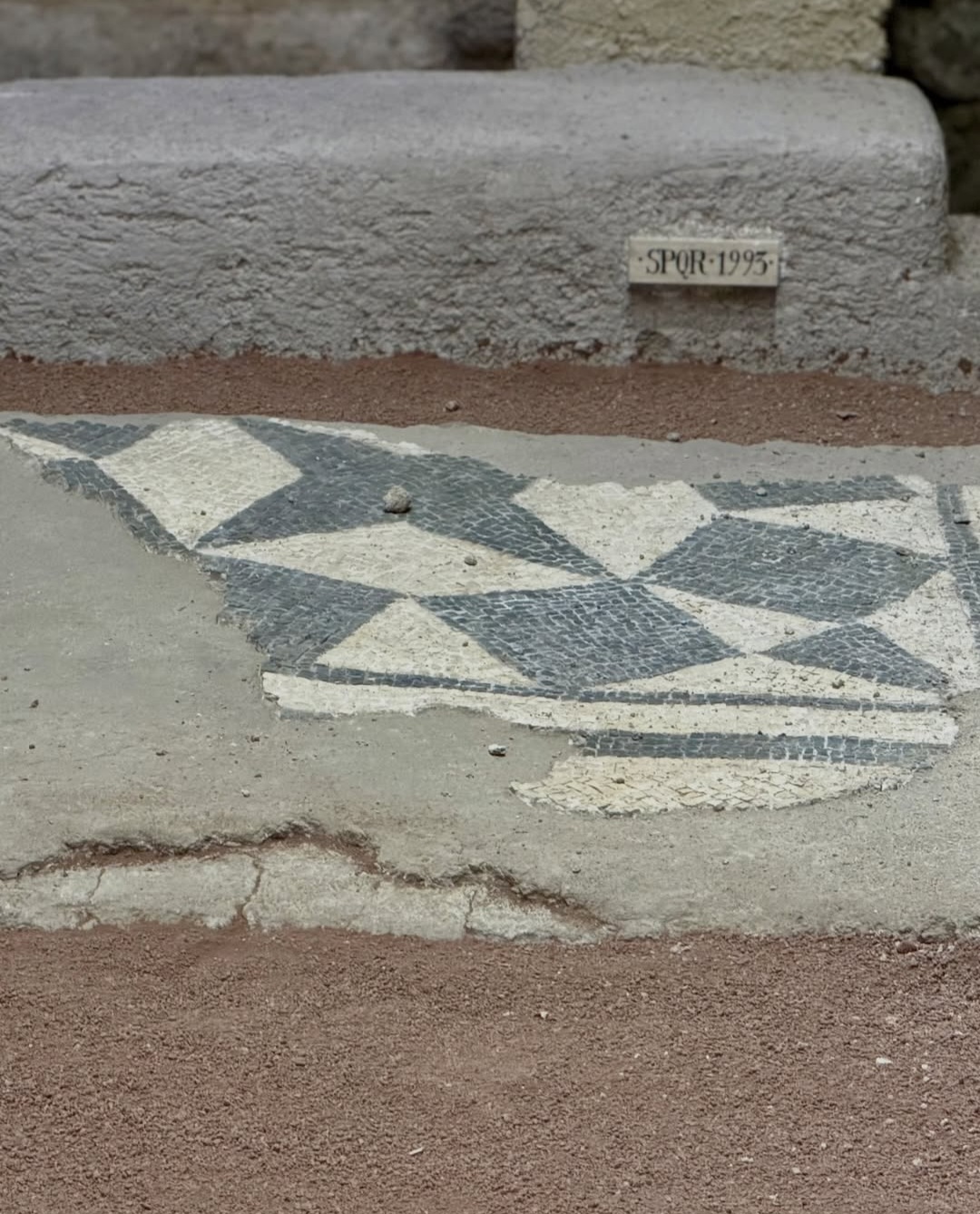
The visible remains include two perpendicular walls, a geometric mosaic floor and a channel running along three sides of the room. Together, these features preserve evidence of how water and waste were managed in this Roman space.
Its exact original setting and fittings cannot be reconstructed with certainty from the surviving remains alone.
A mosaic set apart from the walls by a water channel.
The room’s arrangement combined a decorated floor with a channel running along its perimeter.
The channel survives on three sides. It was approximately 40 centimetres wide and 80 centimetres deep. Its floor was made with large brick tiles, while its sides were coated in cocciopesto, a waterproof mortar commonly used in Roman construction.
A second, narrower channel ran parallel to it and served cleaning. Most of that feature has disappeared.
A system designed around flowing water.
The channel was central to the room’s operation.
Roman latrines commonly placed seats above a water channel. At Via Garibaldi, however, no stone seats have been found. The published interpretation suggests that removable perforated boards may have rested on supports along the wall.
This remains a reconstruction, not a surviving feature. Two projections on the western wall are among the details that have informed the hypothesis.
The evidence lets us study the room’s water management, while leaving some details of its furnishings unresolved.
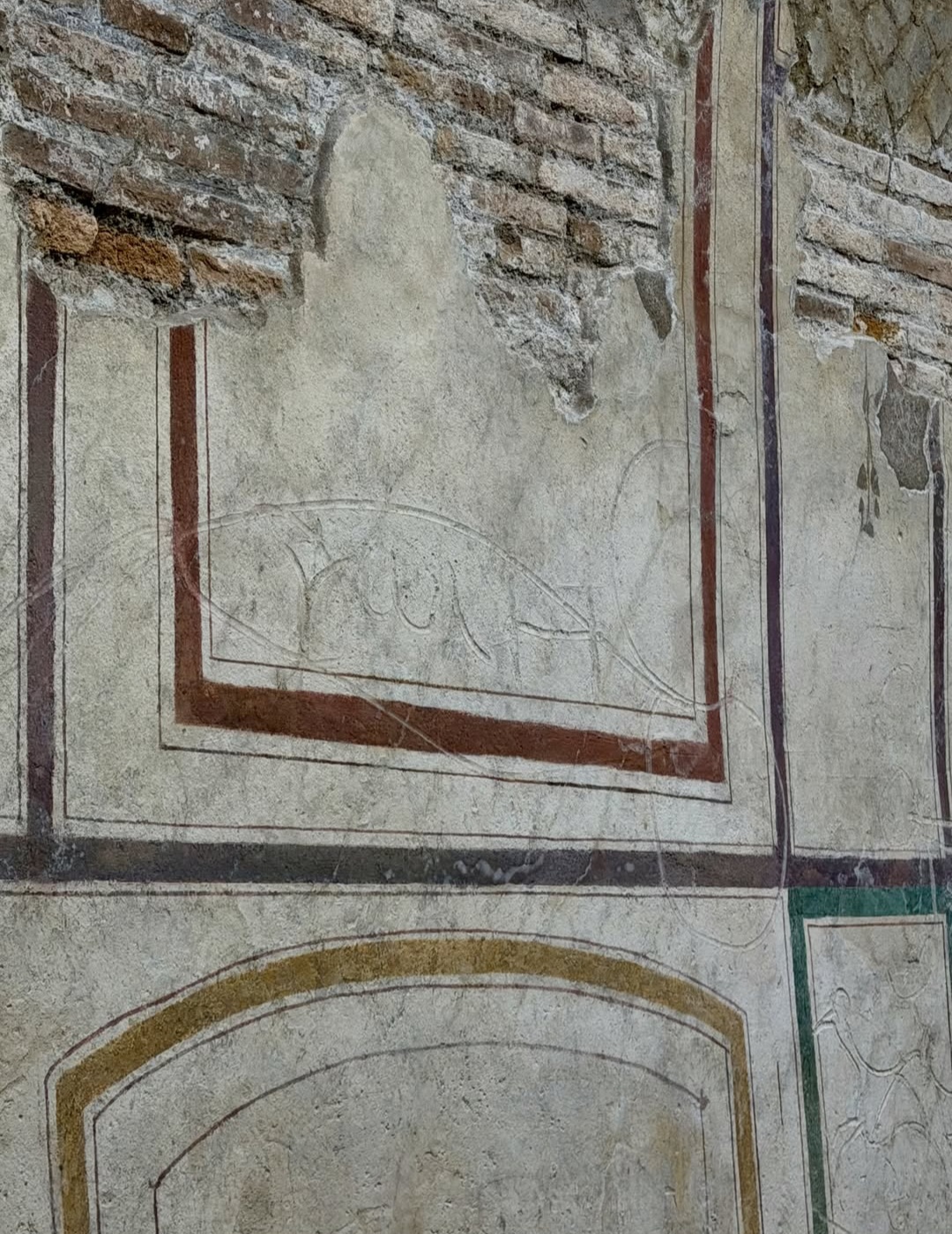
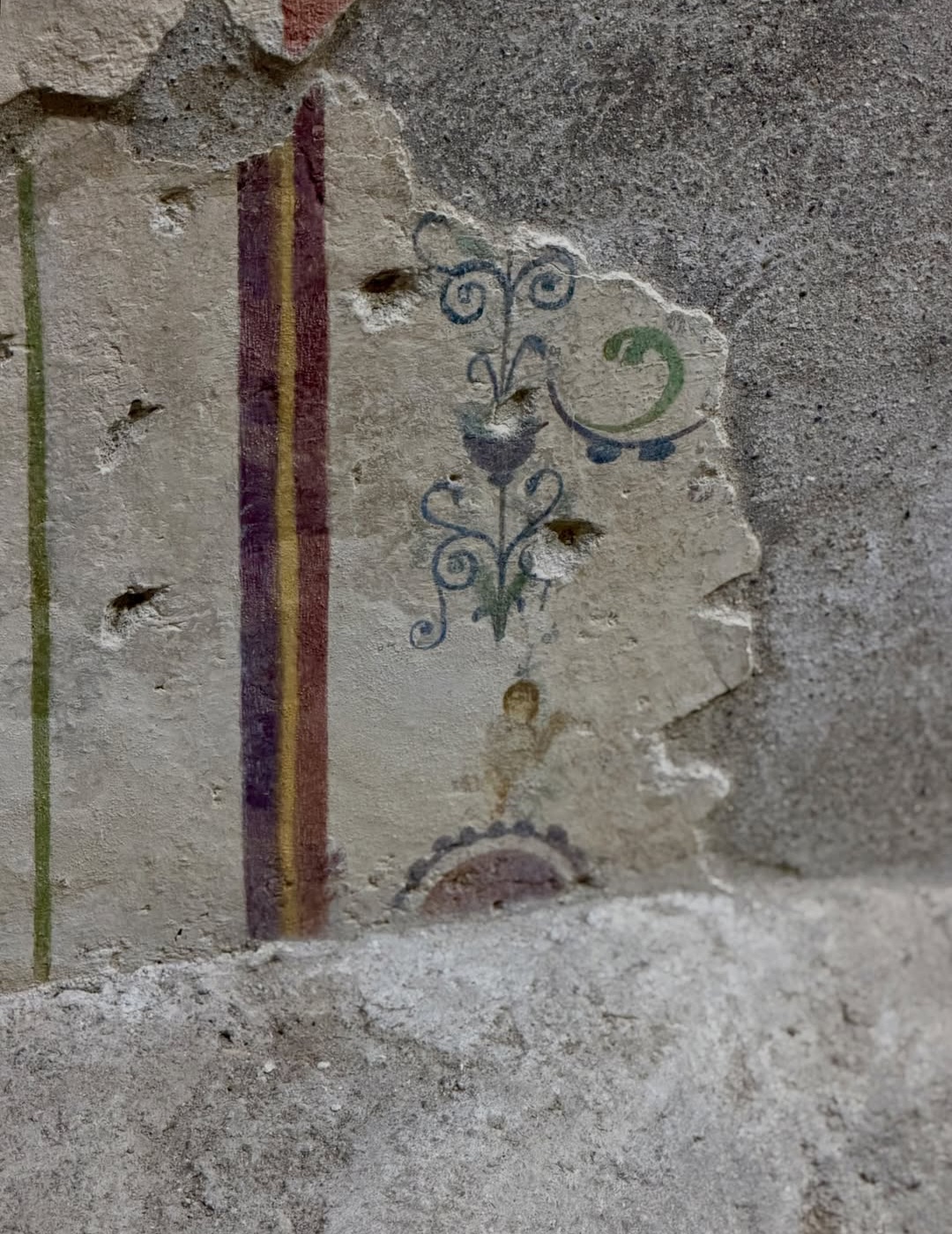
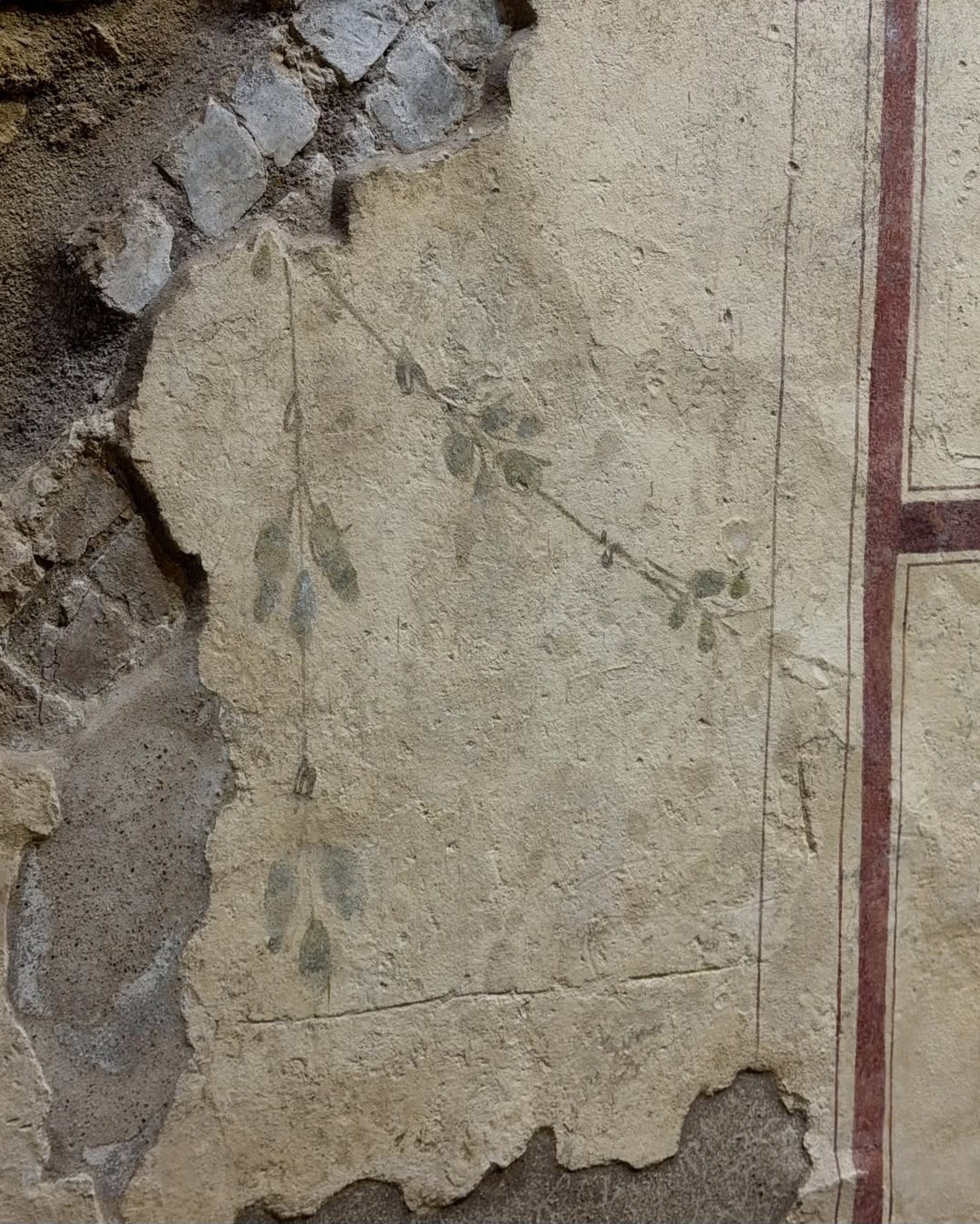
Fragments of decoration helped date the room.
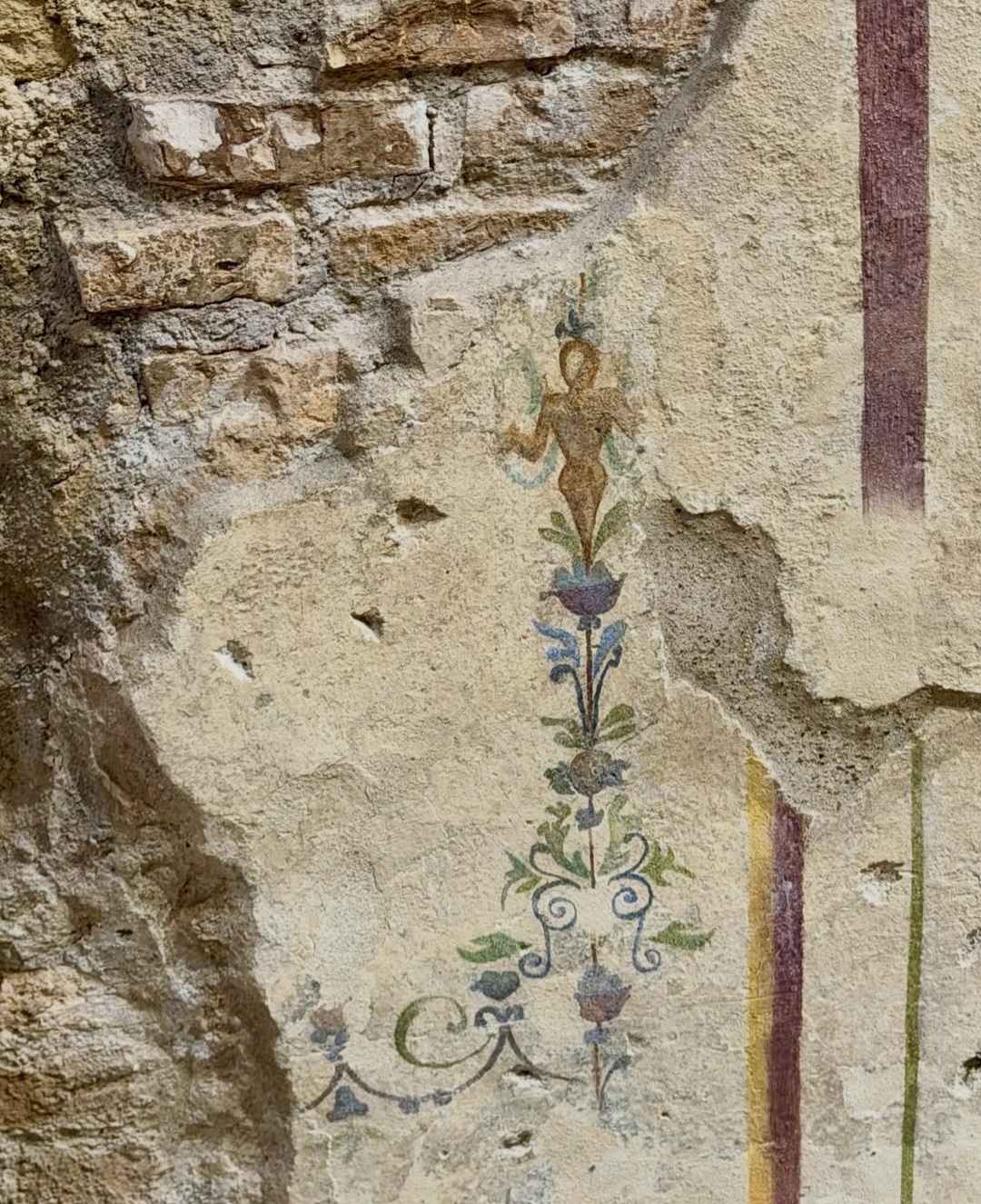
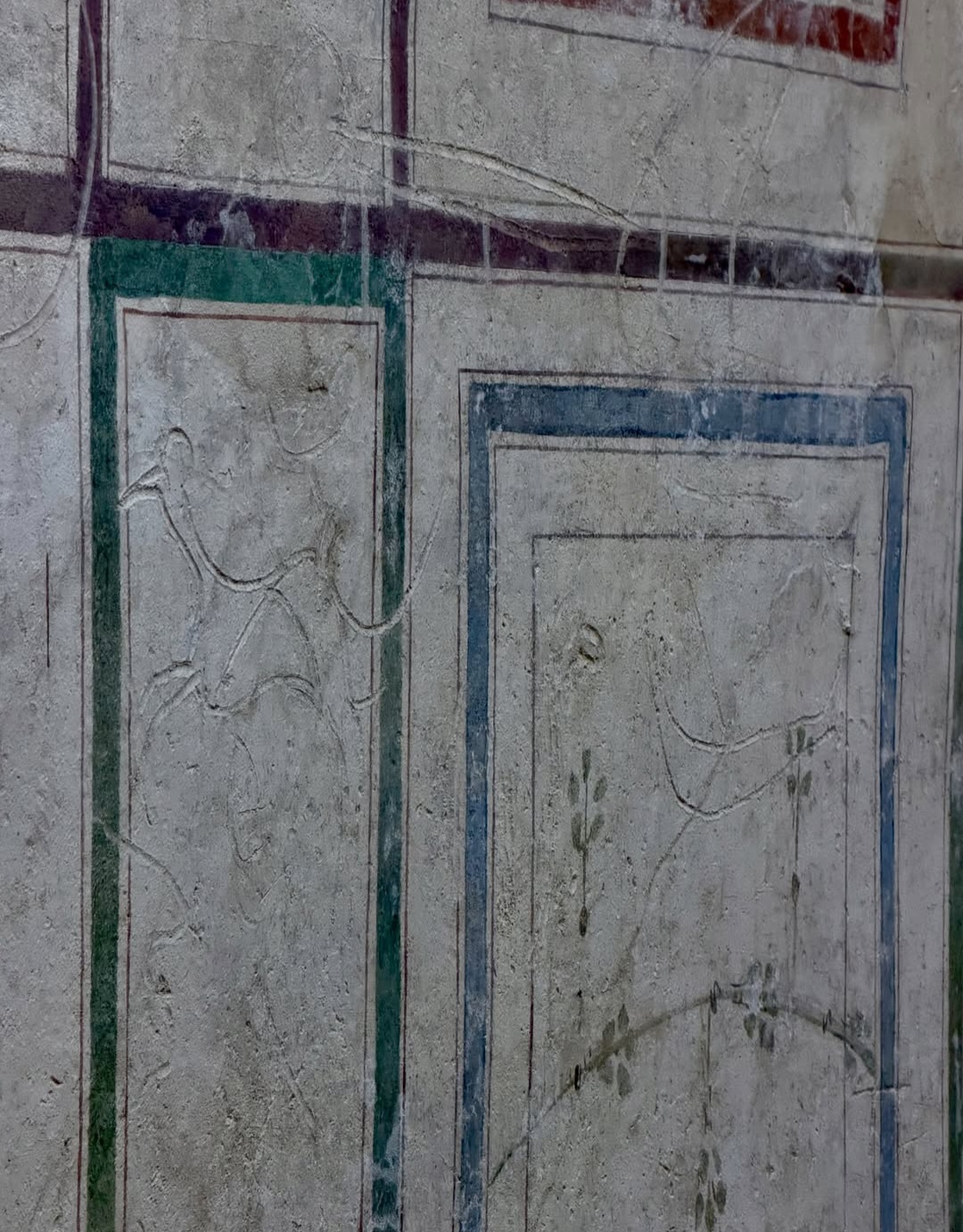
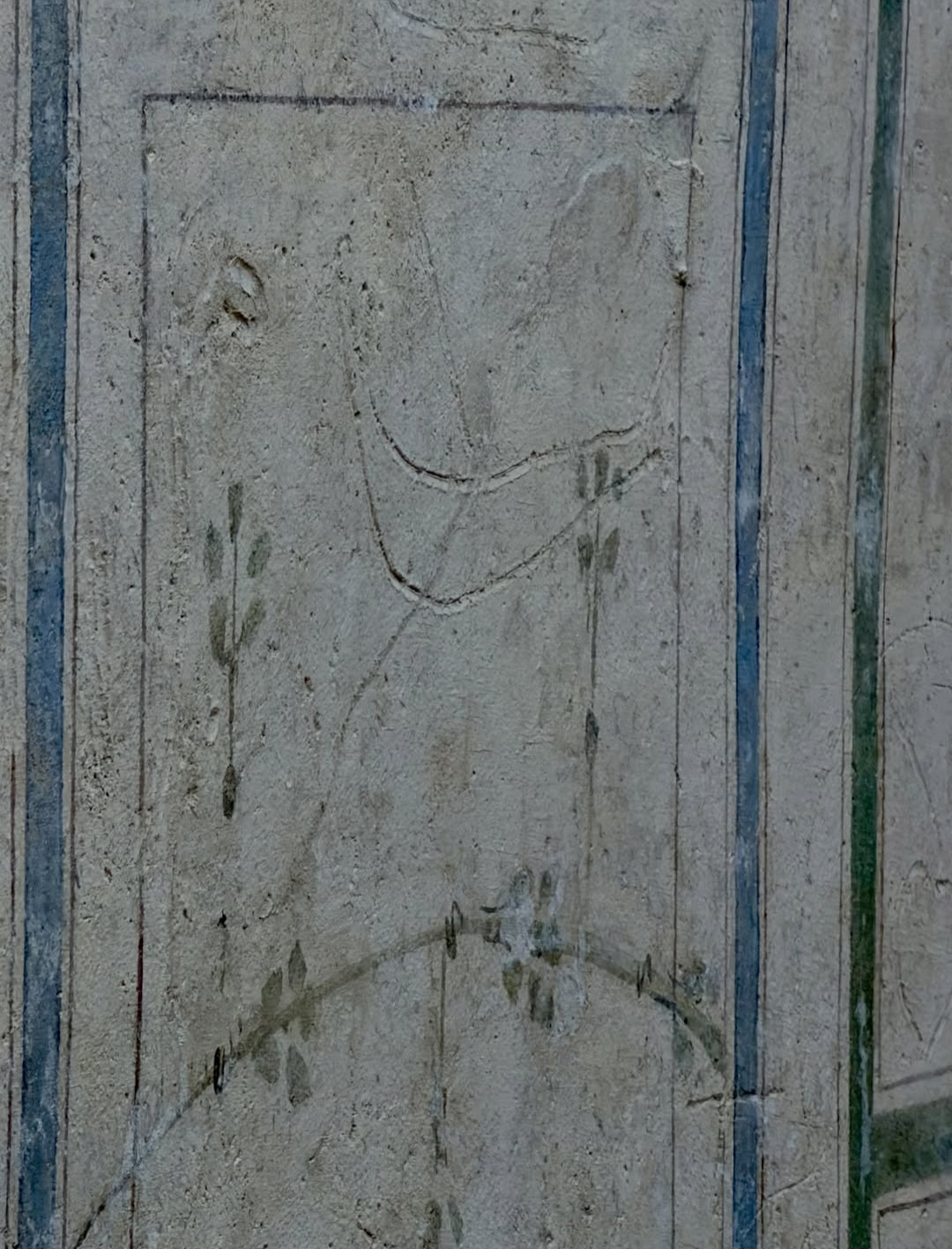
Part of the western wall retains plaster and traces of a linear painted scheme.
The style has been compared with contemporary examples elsewhere in Rome, including a domus on Via Eleniana and a villa beneath the apse of the Basilica of Saint John Lateran.
On this basis, the latrine has been dated to the final decades of the second century or the beginning of the third century AD.
The walls also bear the marks of later construction. Work on the retaining wall damaged parts of the ancient room, and two large concrete supports were placed against its northern wall.
What the remains can—and cannot—tell us.
A small archaeological space brings together durable evidence and unanswered questions.
The Roman room survived beneath later construction.
The ancient structure was partly damaged when the Janiculum’s built landscape changed.
The retaining wall was built in 1605, when the approach to the church of San Pietro in Montorio was also rearranged. Its construction removed the eastern side of the Roman room and damaged other sections.
In 1963, the collapse of part of the wall exposed the latrine. Its discovery was therefore linked to the very structure that had concealed and partly altered it.
An archaeological site to understand from the evidence.
The Roman latrine is not currently listed as an open visitor attraction.
Turismo Roma lists the site as closed to the public. Do not plan a visit on the assumption that the archaeological room can be entered, and check with the responsible institution for any change in access arrangements.
Explore archaeological and historic places across Rome.
Explore Rome through places that can actually be visited.
Underground Rome designs private archaeological journeys around your interests, available time and the sites that can be accessed during your stay.
Design Your Journeyby Rome Private Experience
Underground Rome explores the archaeology and historic subsurface of the city.
For private programmes across Rome, corporate experiences and complex group arrangements, visit Rome Private Experience .