
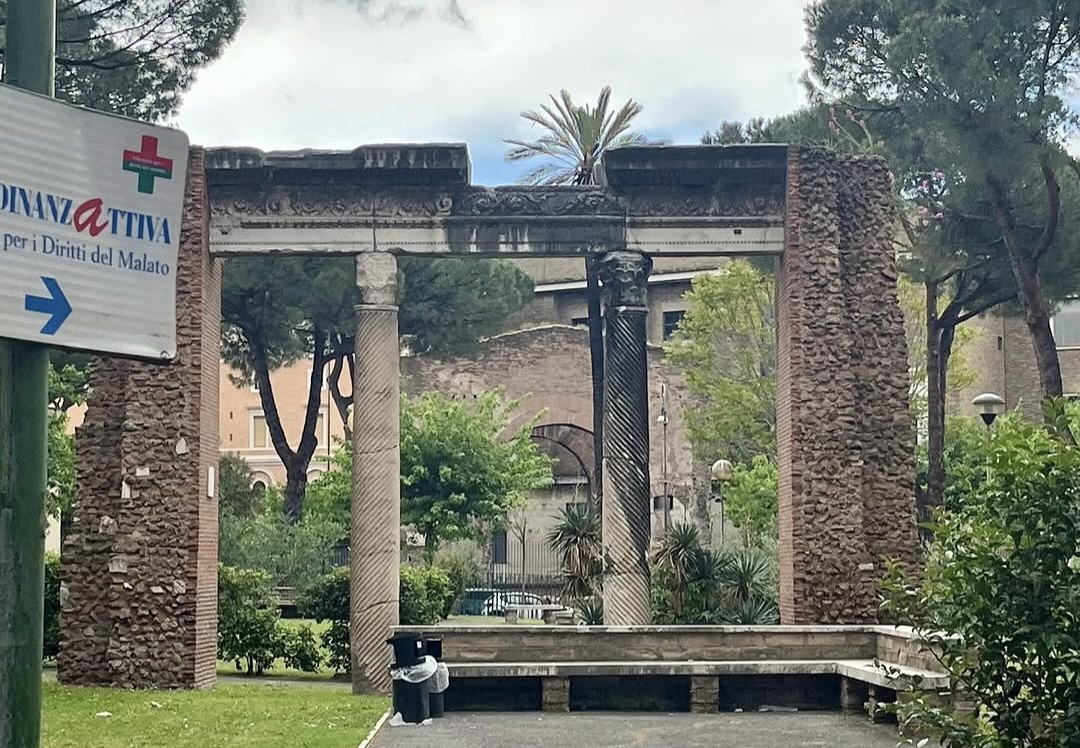
Archaeology of San Giovanni Addolorata
The archaeology extends across the hospital complex, not through a single ancient building.
At San Giovanni Addolorata, the lower levels preserve substantial evidence for a Roman residential landscape occupied and transformed over several centuries.
Archaeological remains survive under historic hospital buildings, within later structures and across the grounds of the modern medical complex.
Research has identified multiple high-status residences, productive areas, courtyards, water installations, shops and sections of ancient road.
One of the principal complexes belonged to the family of Marcus Aurelius.
Archaeological structures under the historic hospital have been associated with the Domus Anniorum, the property of the family of Annius Verus, maternal grandfather of the emperor Marcus Aurelius.
Inscribed lead water pipes provide important evidence for identifying the ownership of parts of this extensive estate.
The complex developed through different phases between the first and fourth centuries AD and included residential architecture together with gardens and service areas.
The surviving remains demonstrate the scale of elite property on the Caelian and Lateran margins during the Imperial period.
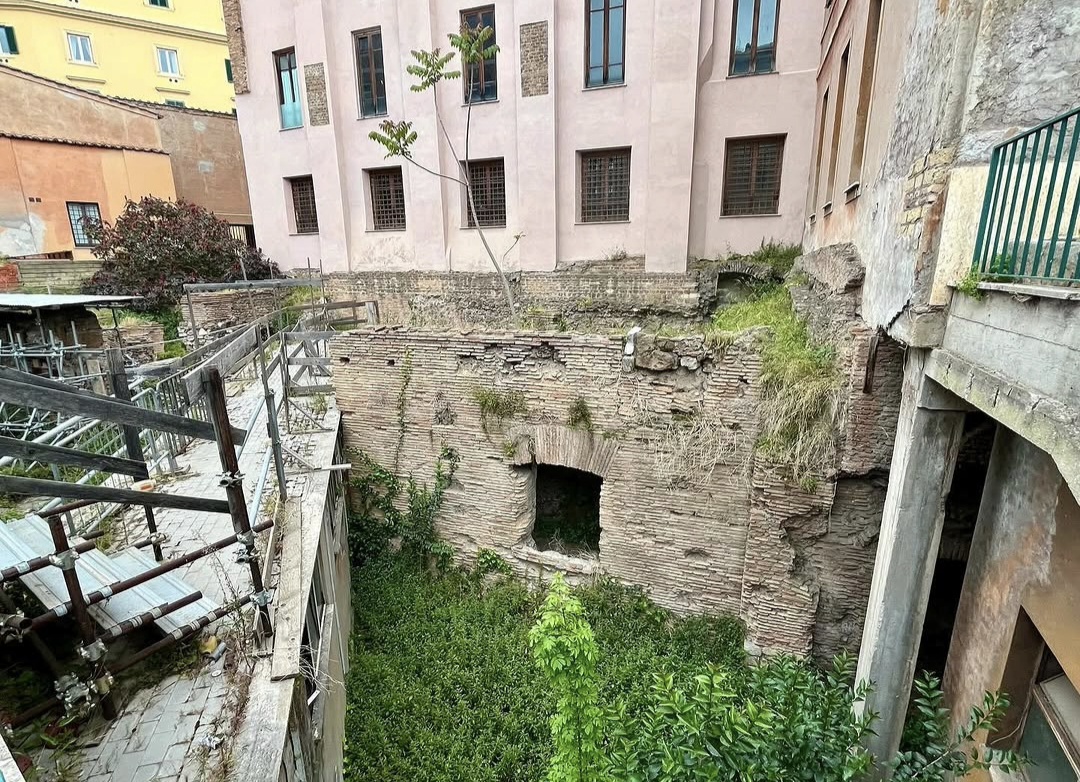
Architecture, gardens and hydraulic infrastructure occupied the same residential landscape.
Under the area of Corsia Mazzoni, archaeological remains include a peristyle organised according to the orientation of the ancient road system rather than the later hospital.
A circular basin occupied an open area enclosed by a portico with pillars.
Parts of the portico preserve refined flooring in opus sectile, including coloured stones such as cipollino and giallo antico.
Additional basins, water conduits and lead pipes illustrate the importance of controlled water supply within the estate.
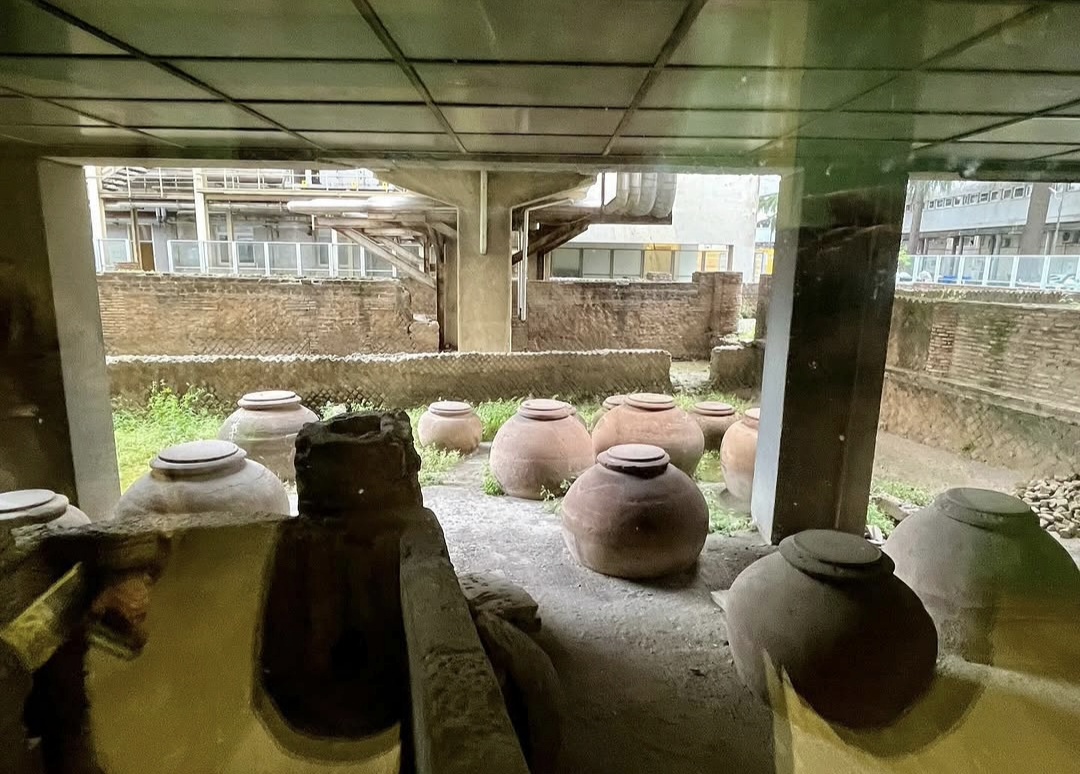
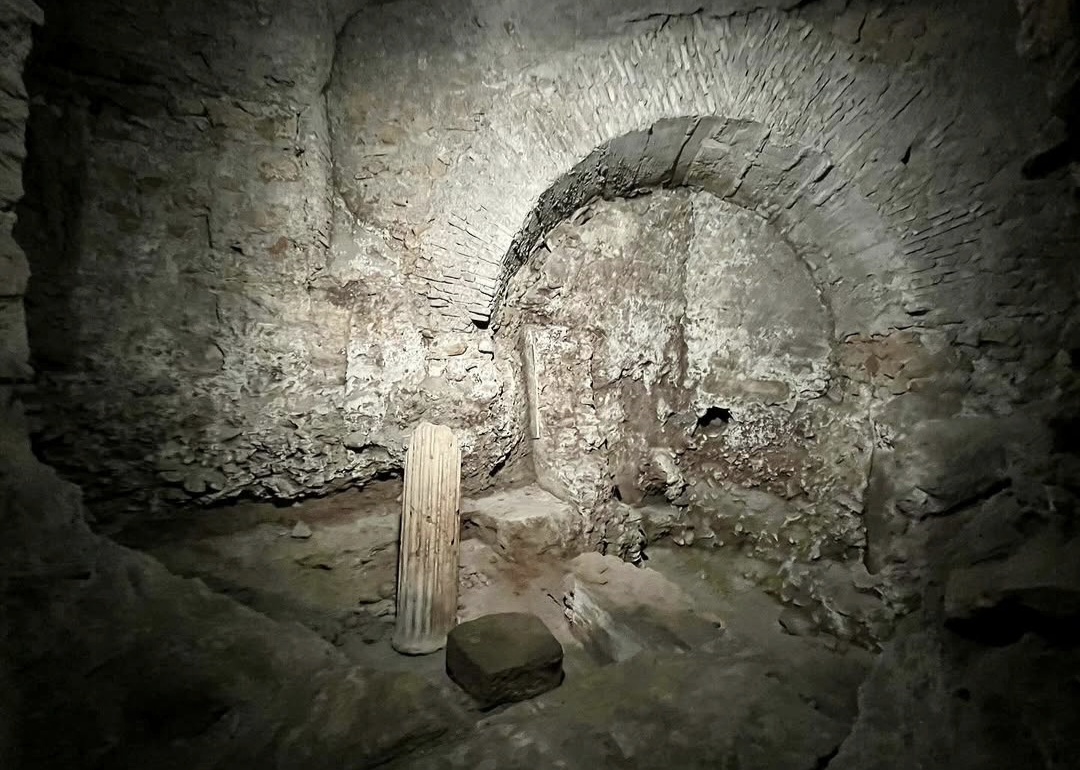
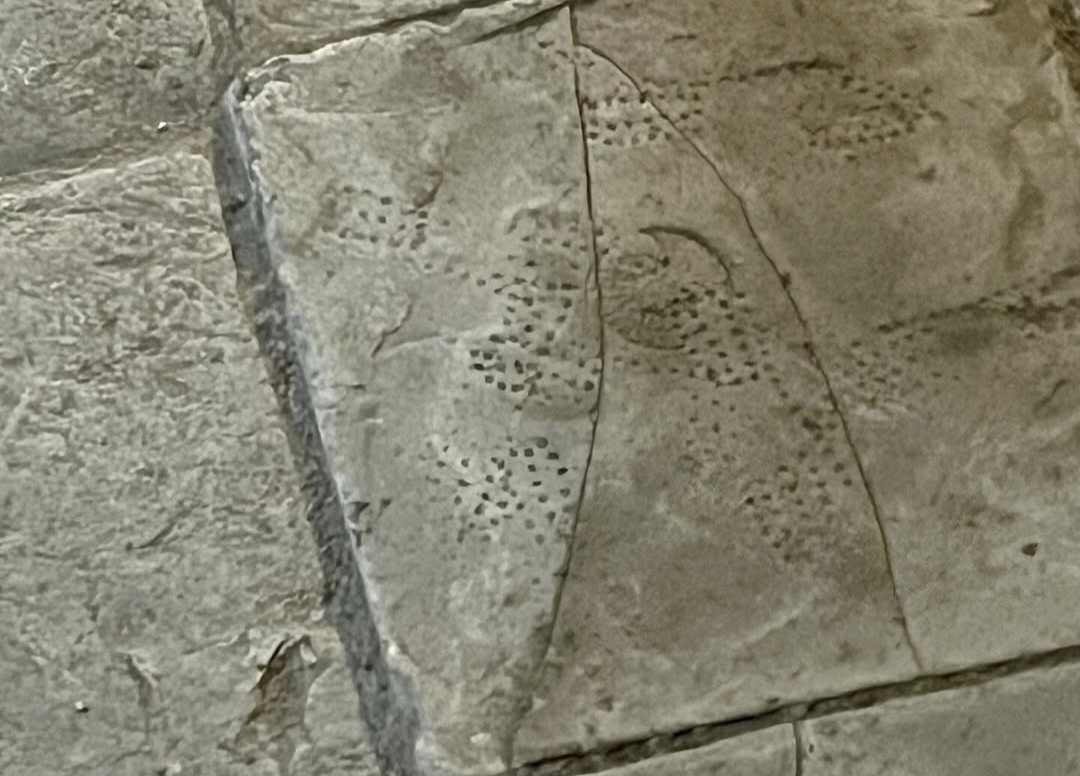
A prestigious residence also required a productive landscape.
Part of the archaeological complex has been identified with the property of Domitia Lucilla, mother of Marcus Aurelius.
The surviving horti represent the productive sector of the residence rather than simply ornamental gardens.
Peristyle courtyards, basins, storage areas and commercial spaces reveal the organisation required to support a large Roman estate.
This is not one Roman house under one hospital. It is a fragment of an ancient urban district.
Residential rooms, gardens, production, commerce, roads and hydraulic systems survive across different sectors of the San Giovanni Addolorata complex.
The estate changed from an elite residence into a more complex economic landscape.
Archaeological evidence indicates that areas initially associated with high-status residential use were progressively adapted to accommodate productive and commercial functions.
Installations connected with the preparation and storage of wine formed part of this later organisation.
A series of tabernae opened towards an ancient basalt-paved road, integrating the estate into the economic life of the surrounding district.
Among the activities identified in the complex is a fullonica, a workshop associated with the treatment and cleaning of textiles.
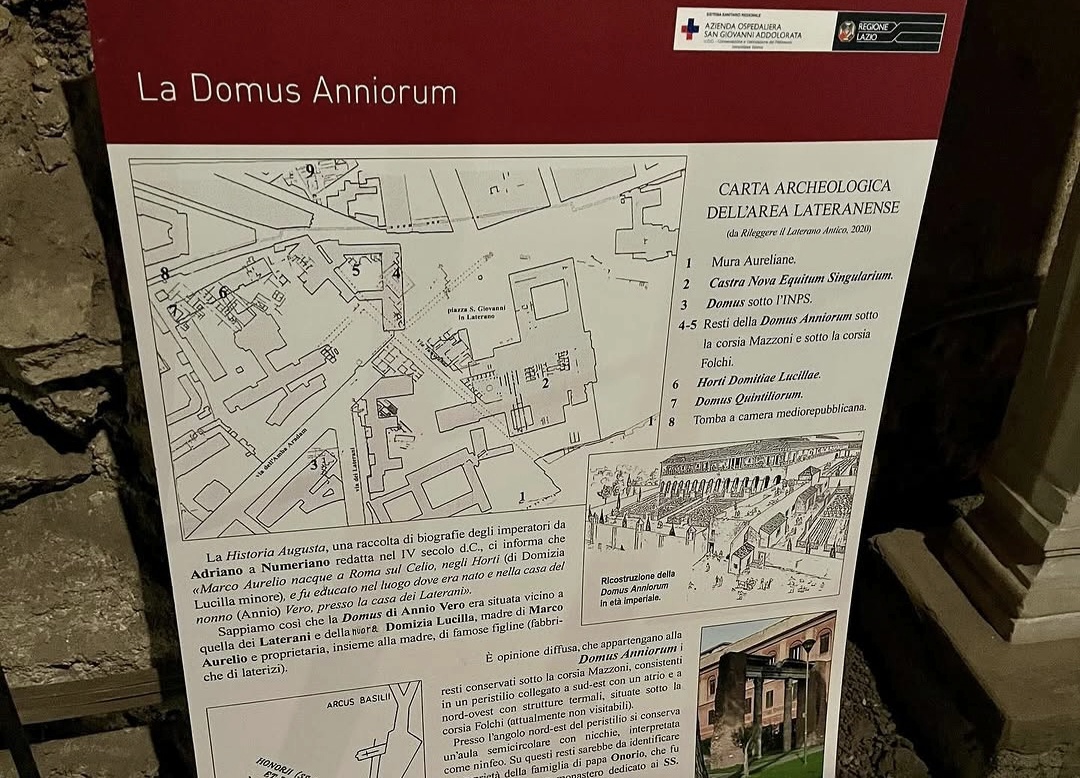
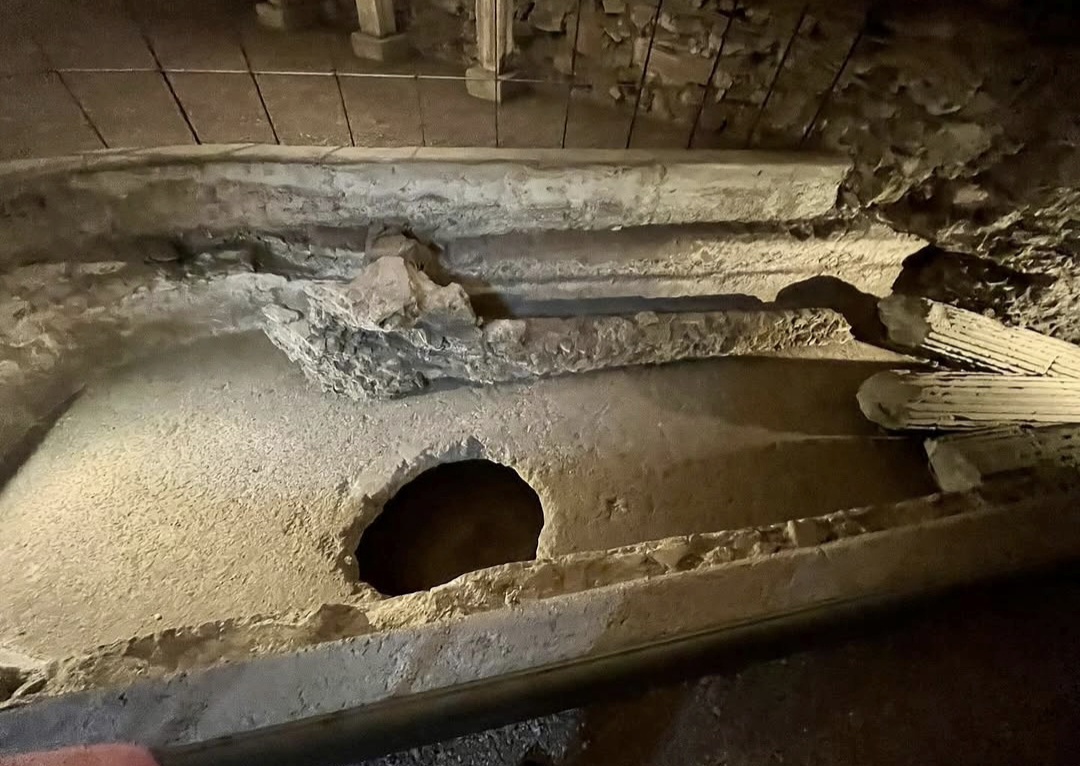
The archaeology preserves circulation as well as architecture.
A basalt-paved Roman road survives within the archaeological landscape and helps reconstruct the organisation of the surrounding district.
Commercial spaces faced directly onto this route, connecting productive areas with urban circulation.
The orientation of the Roman buildings does not always correspond to the alignment of the later hospital structures.
These differences preserve evidence for a street system that organised this part of ancient Rome long before the medieval and modern institutions were constructed.
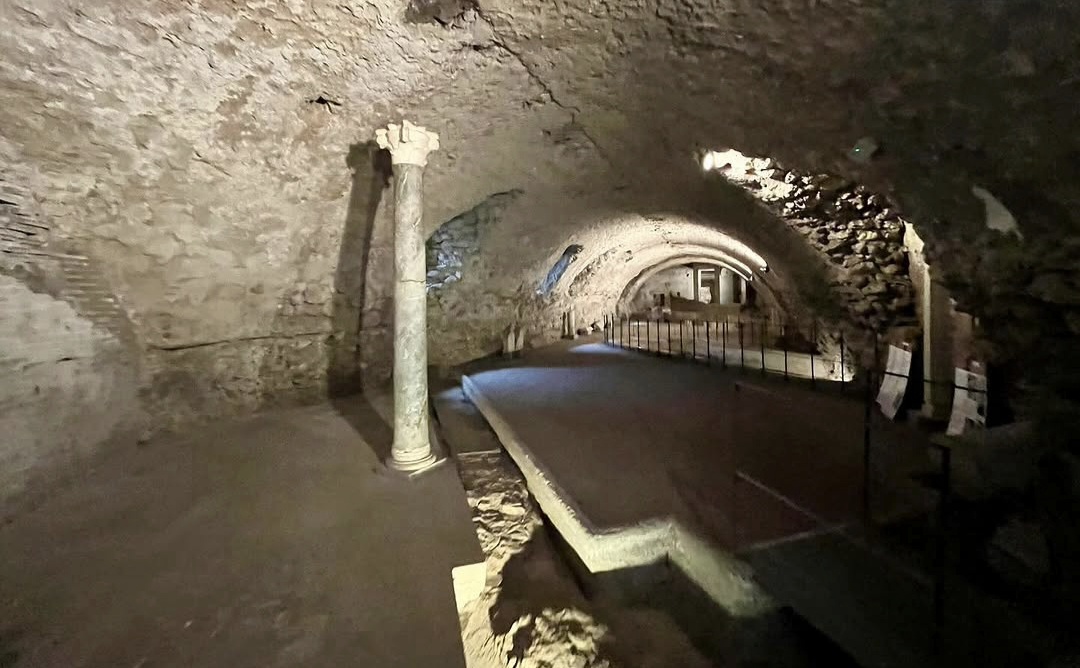
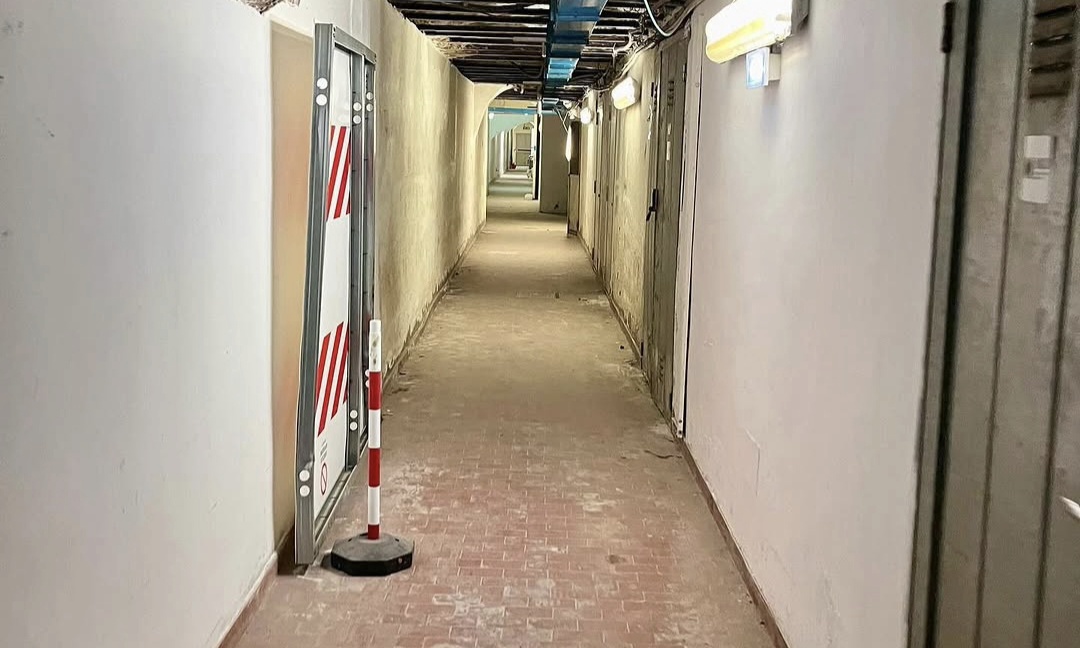
Another elite residence survives in a separate sector of the hospital estate.
Archaeological remains preserved in the area of the former women's hospital have traditionally been associated with Licinius Sura, an influential senator and close associate of the emperor Trajan.
The archaeological sector was investigated extensively between 1969 and 1971.
Much of the excavated area was subsequently covered again, while part remained visible within the modern hospital complex.
Together with the Domus Anniorum and the Horti of Domitia Lucilla, this sector demonstrates that the surviving archaeology belongs to several distinct Roman properties and phases.
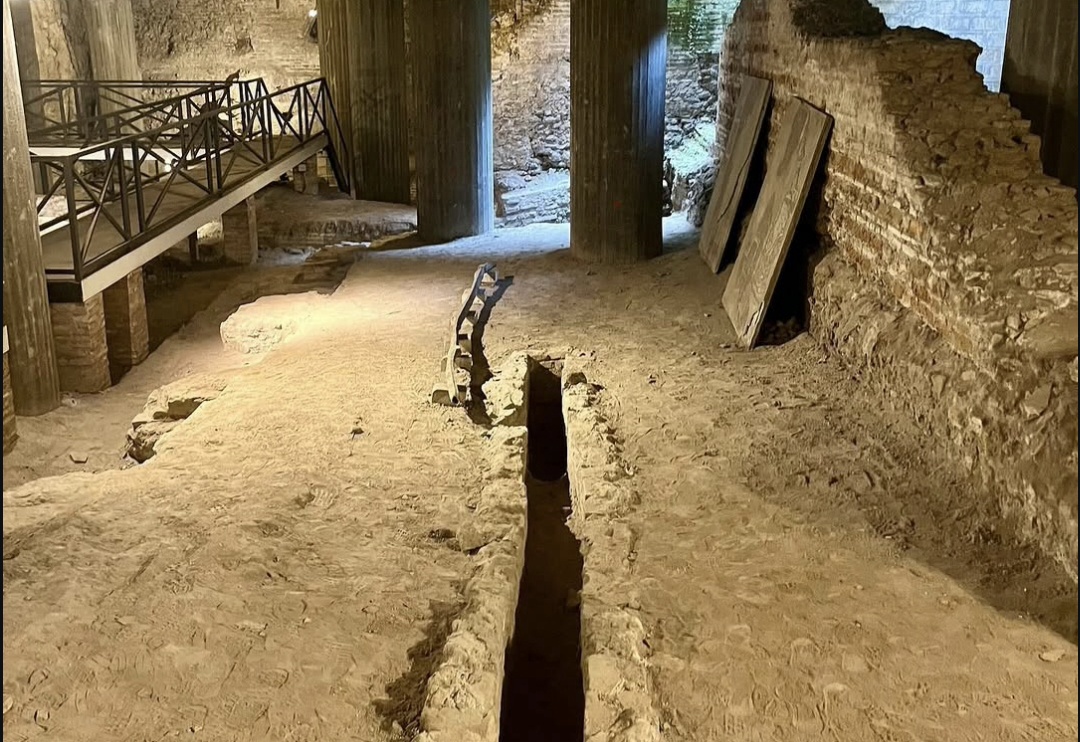
Centuries of medical history occupy the same physical coordinates as the Roman district.
Later buildings did not simply erase the Roman landscape. They incorporated it into a new architectural sequence.
Historic hospital structures, religious spaces and modern medical buildings now occupy different elevations above and around the archaeological remains.
The result is an unusual form of urban stratigraphy: an institution that remains in active use while substantial archaeological spaces survive inside its lower levels.
Modern research continues to examine these separate sectors as parts of a much larger ancient topographical system.
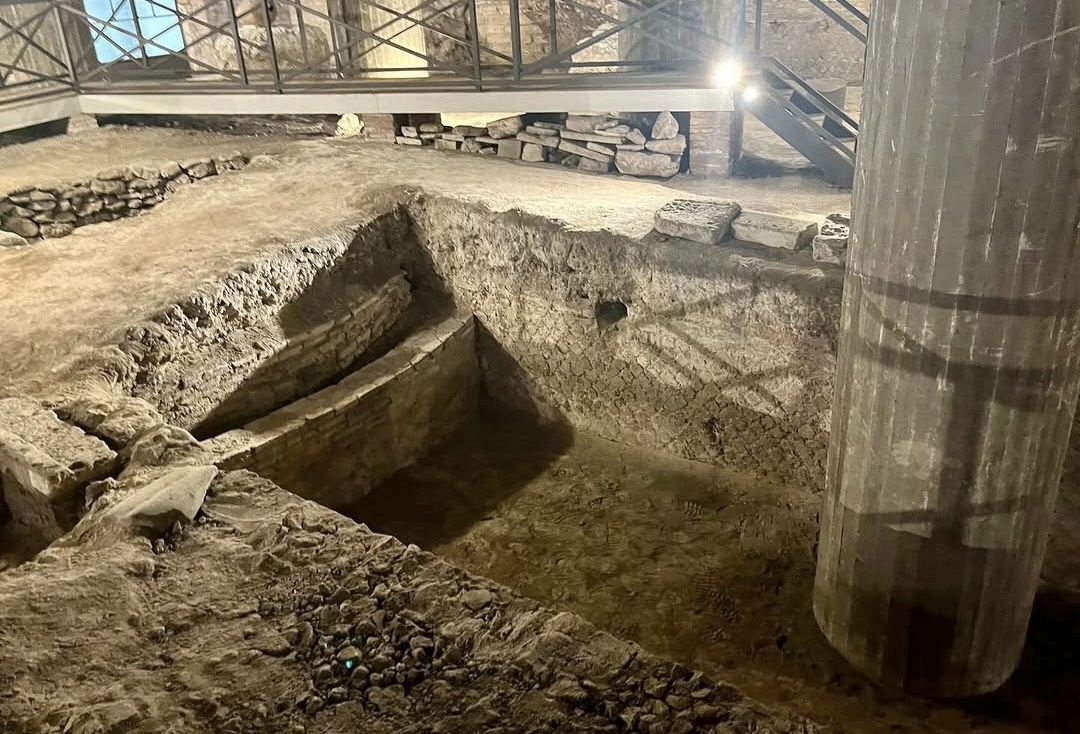
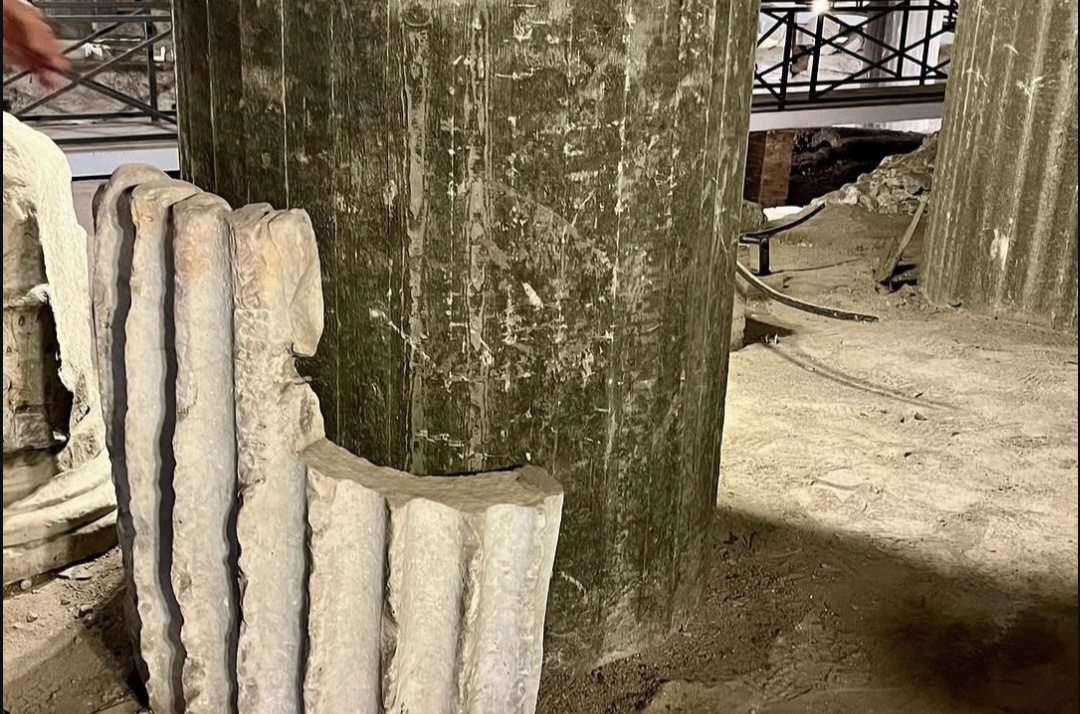
An archaeological complex inside a functioning hospital.
The archaeological areas of San Giovanni Addolorata are not presented as a conventional museum with unrestricted continuous access.
Public visits are organised on selected dates and for special openings, generally with guided access and advance reservation.
Because different archaeological sectors may be included in different programmes, the exact route should always be verified when booking.
Sources
Alessandro Tanzilli
Photography documenting the archaeological areas of San Giovanni Addolorata on this page is by Alessandro Tanzilli. @alessandrotanz_
Design Your Journey
Underground Rome creates private archaeological journeys selected around your interests, available access and time in the city.
Design Your Journey →Underground Rome is a specialist project by Rome Private Experience .