
Nymphaeum of Via degli Annibaldi
A new street cut directly through an ancient room.
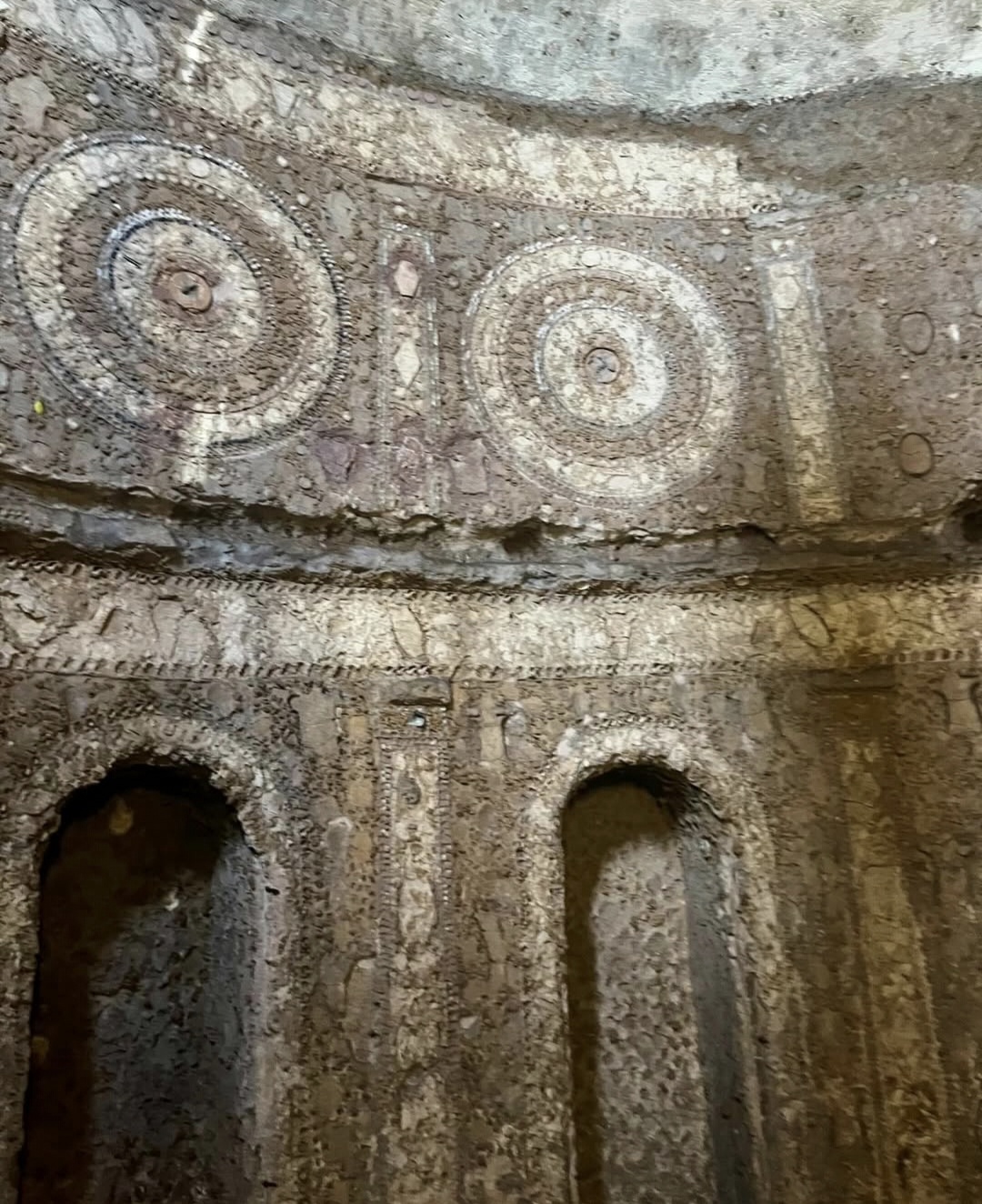
In 1895, construction of Via degli Annibaldi exposed an elaborately decorated Roman nymphaeum close to the Colosseum.
The discovery was also destructive. The modern road crossed the ancient structure, dividing the room and leaving only approximately half of its original architecture preserved.
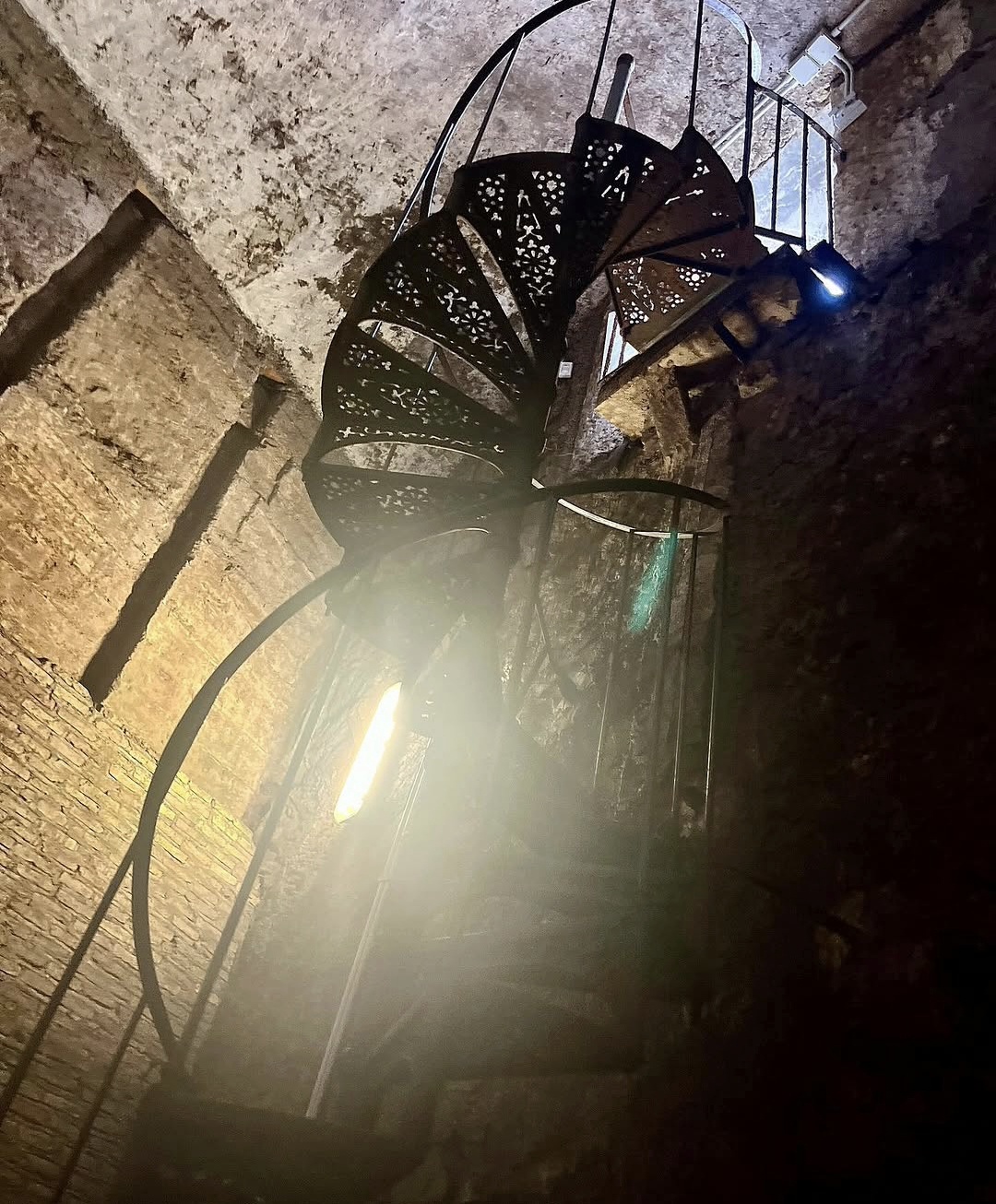
What survives today lies around six metres below street level, reached through a narrow entrance and spiral staircase beside the retaining wall of the modern road.
Water occupied the centre of a carefully constructed interior landscape.
The nymphaeum originally formed a semi-elliptical space belonging to a wealthy aristocratic residence.
A basin occupied the interior while the curved wall was articulated by niches and pilasters. The architectural surfaces were then covered by an exceptionally complex decorative programme.
Water entered the room from a conduit positioned partway up the wall and collected in the basin below.
The basin itself was originally faced with marble. Architecture, moving water and reflective materials were therefore conceived as parts of the same visual environment.
A Roman interior constructed to evoke the material character of a grotto.
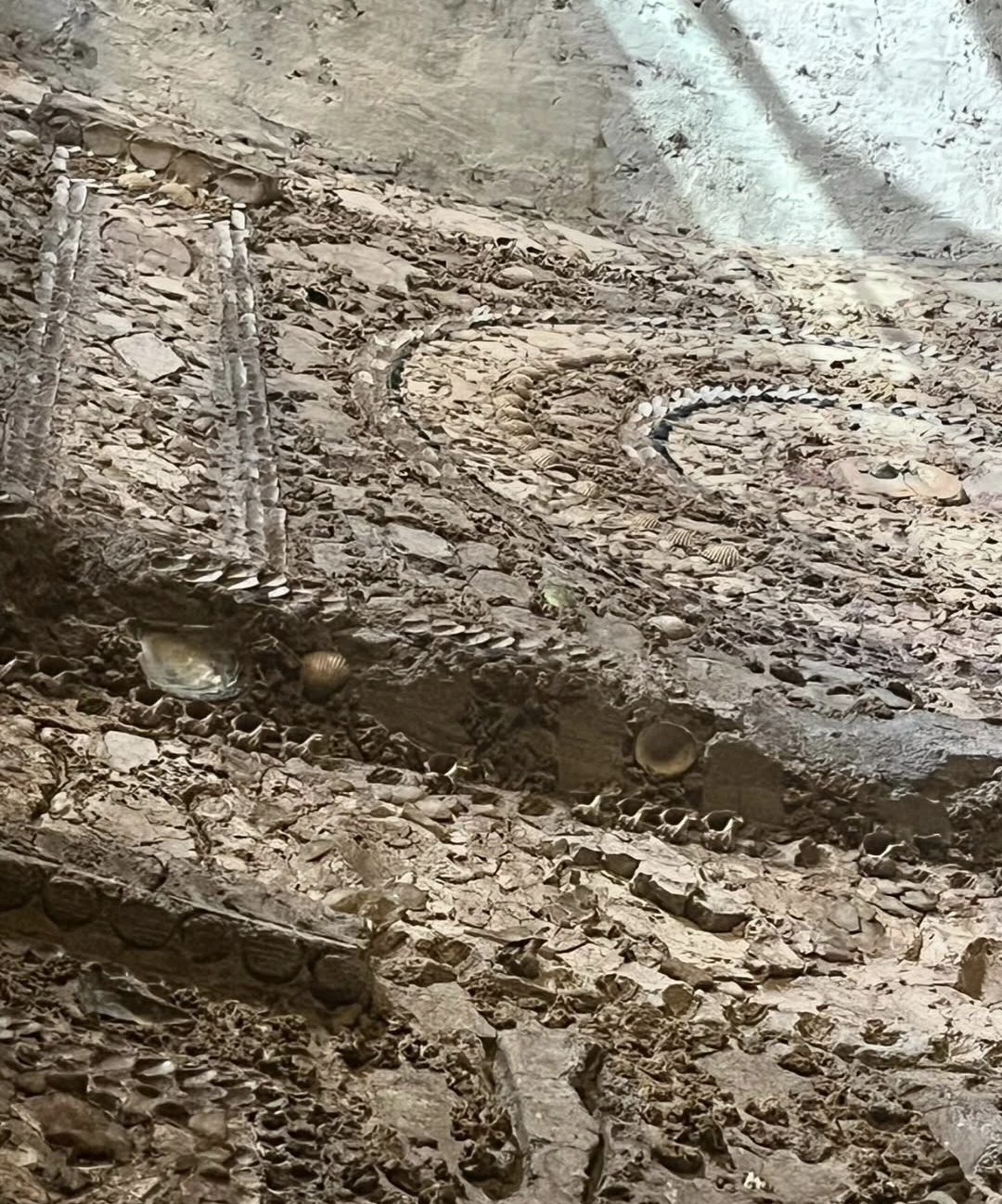
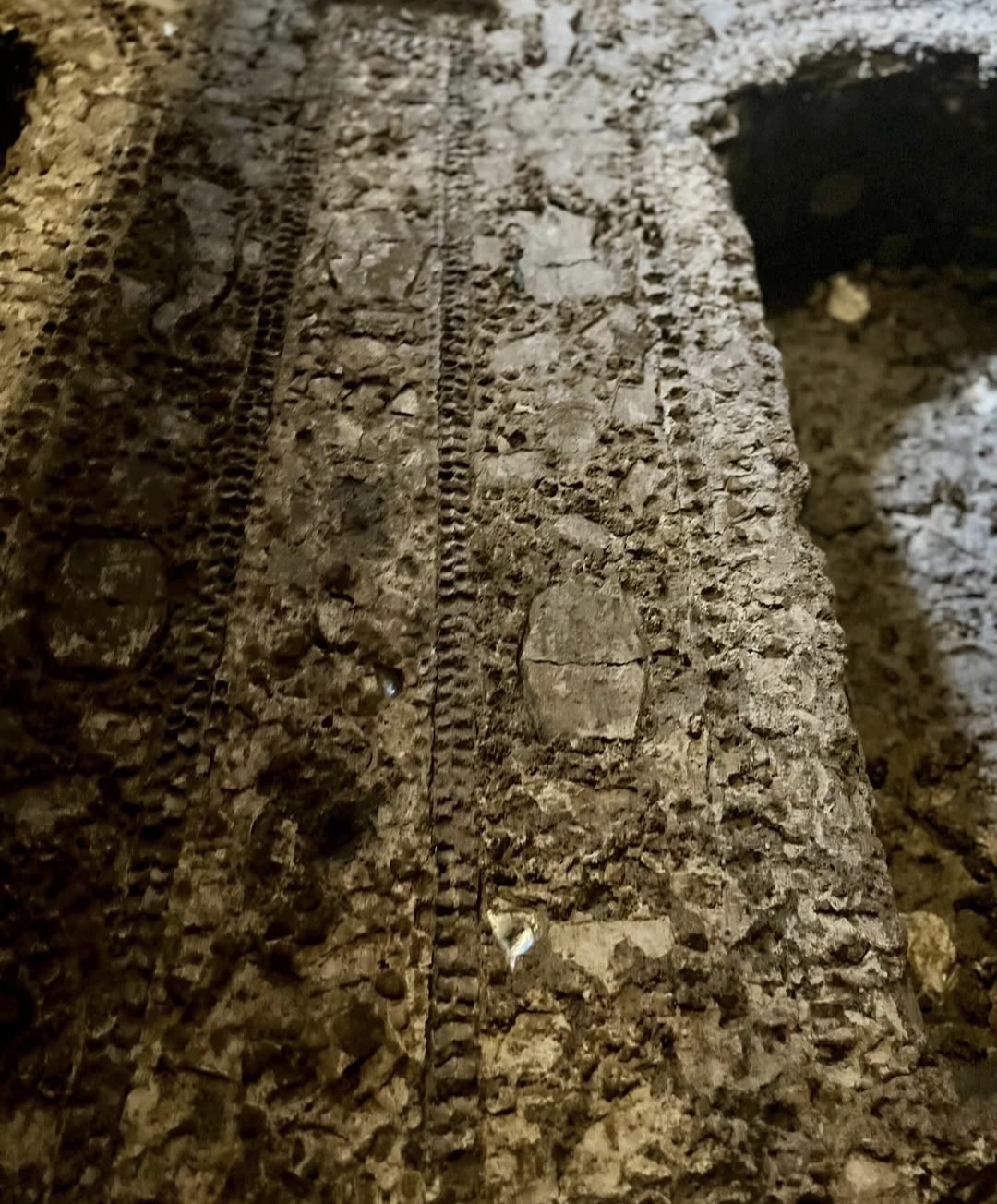
The curved wall was covered with intentionally textured decoration rather than a smooth conventional mosaic surface.
Tiny shells were arranged along the pilasters. Larger shells were inserted into the centre of the composition, while mother-of-pearl and pieces of coloured material introduced reflective surfaces.
Pumice, breccia, glass paste and enamel contributed different textures and colours.
Combined with flowing water, these materials created an artificial environment recalling the irregular surfaces associated with natural grottoes and marine settings.
The decoration was designed to work with water.
The materials chosen for the walls were not arbitrary. Shells, glass, mother-of-pearl and enamel respond differently to changing light and moisture.
In antiquity, the visual effect would have been amplified by the presence of water within the basin and by the movement of the fountain.
What now appears as archaeological decoration was originally part of a dynamic architectural composition.
The nymphaeum belonged to a house that disappeared.
The monument is dated between the end of the Roman Republic and the Augustan period and formed part of a wealthy private residence occupying this sector of the city.
The richness of the decoration indicates that this was not simply a functional water installation but a highly designed space within an elite domestic complex.
The residence did not survive the enormous transformations that later affected this area of Rome.
The Sovrintendenza notes that the nymphaeum was subsequently obliterated, probably during the Neronian period. The broader area was radically reorganised with the construction of Nero's Domus Aurea.
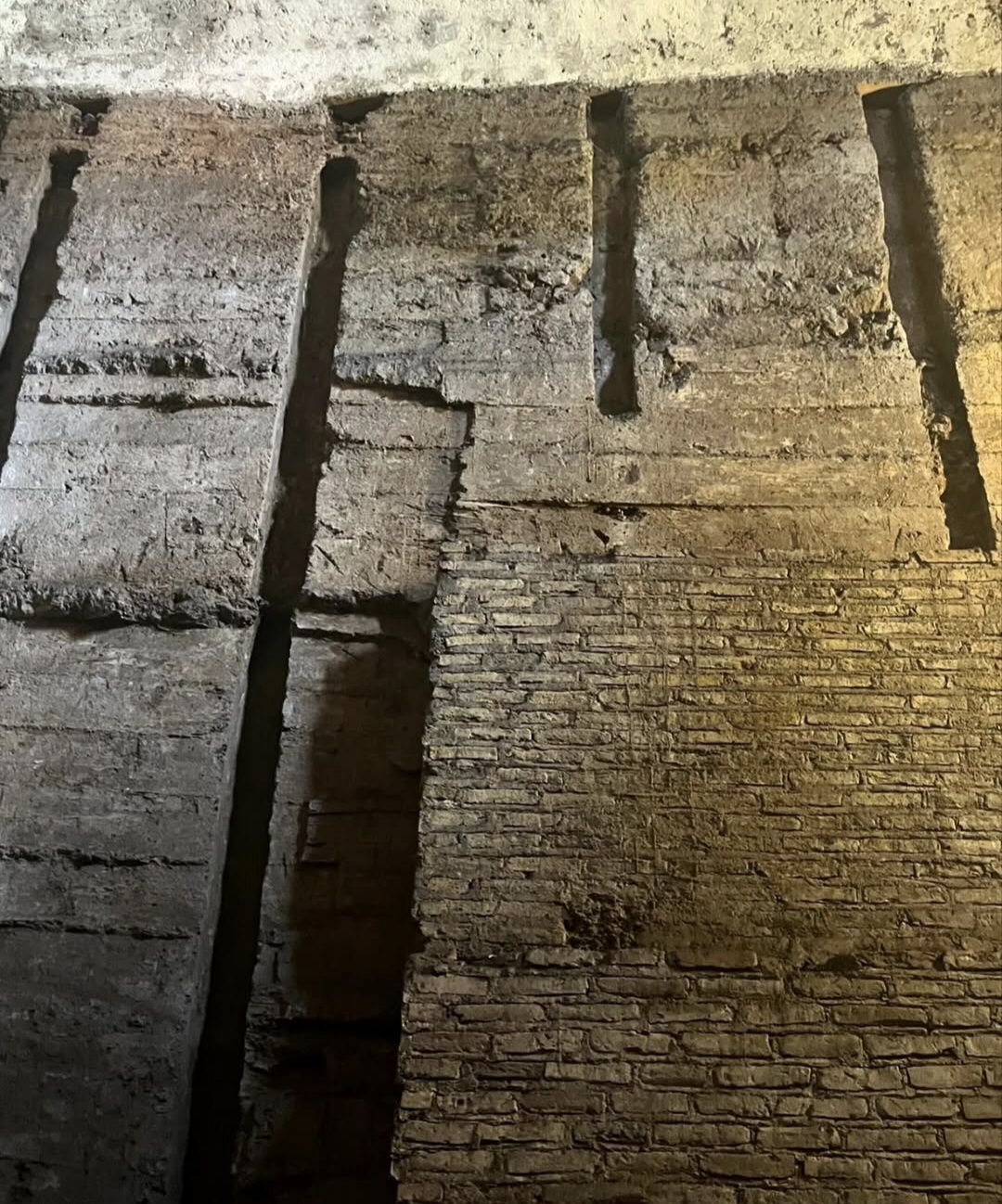
The modern road did not simply cover the monument. It cut it in two.
The surviving half of the nymphaeum is therefore both an ancient interior and a physical record of Rome's nineteenth-century transformation.
Modern infrastructure created the archaeological section visible today.
Via degli Annibaldi was created during the major urban transformations that reshaped Rome after it became the capital of unified Italy.
Cutting the new road through the slope exposed the ancient structure at depth.
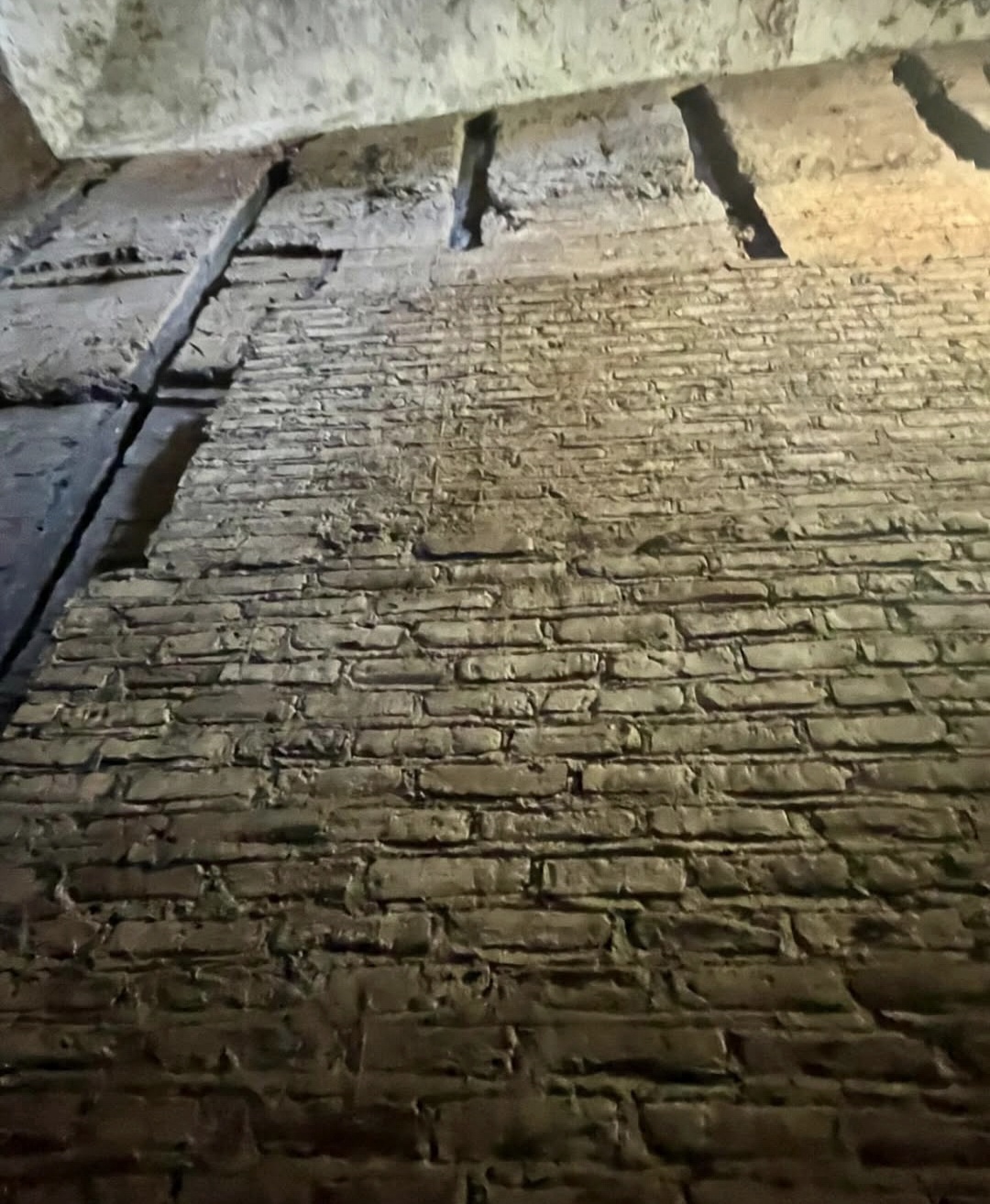
The retaining wall of the modern street now intersects the archaeological monument. Only one part of the original semi-elliptical room remains accessible.
The relationship is unusually direct: ancient architecture and nineteenth-century engineering occupy the same physical section through the hill.
Six metres separate the ancient room from today's street.
The present depth of the monument is one of the clearest features experienced during a visit.
Entry begins at modern street level before a narrow spiral staircase descends toward the surviving ancient structure.
But the six-metre difference should not be interpreted simply as six metres of archaeological accumulation.
The nineteenth-century road cutting fundamentally altered the slope itself. Modern excavation, retaining structures and ancient topography all contribute to the physical relationship visible today.
Eight people at a time.
The Nymphaeum of Via degli Annibaldi is an exceptionally small archaeological space.
Current institutional information allows groups and associations with their own guide to access the monument by reservation through Roma Capitale's 060608 service. Individual visits are also scheduled on specific dates.
The maximum group size is eight people. The monument is hypogeal and access is via a narrow spiral staircase. Current arrangements should always be checked before visiting.
Alessandro Tanzilli
Photography documenting the Nymphaeum of Via degli Annibaldi on this page is by Alessandro Tanzilli. @alessandrotanz_
Design Your Journey
Underground Rome creates private archaeological journeys selected around your interests, available access and time in the city.
Design Your Journey →Underground Rome is a specialist project by Rome Private Experience .