
Doria Pamphilj
Funerary Crypt
Giardino del Teatro · Rome
A family chapel designed on two levels.
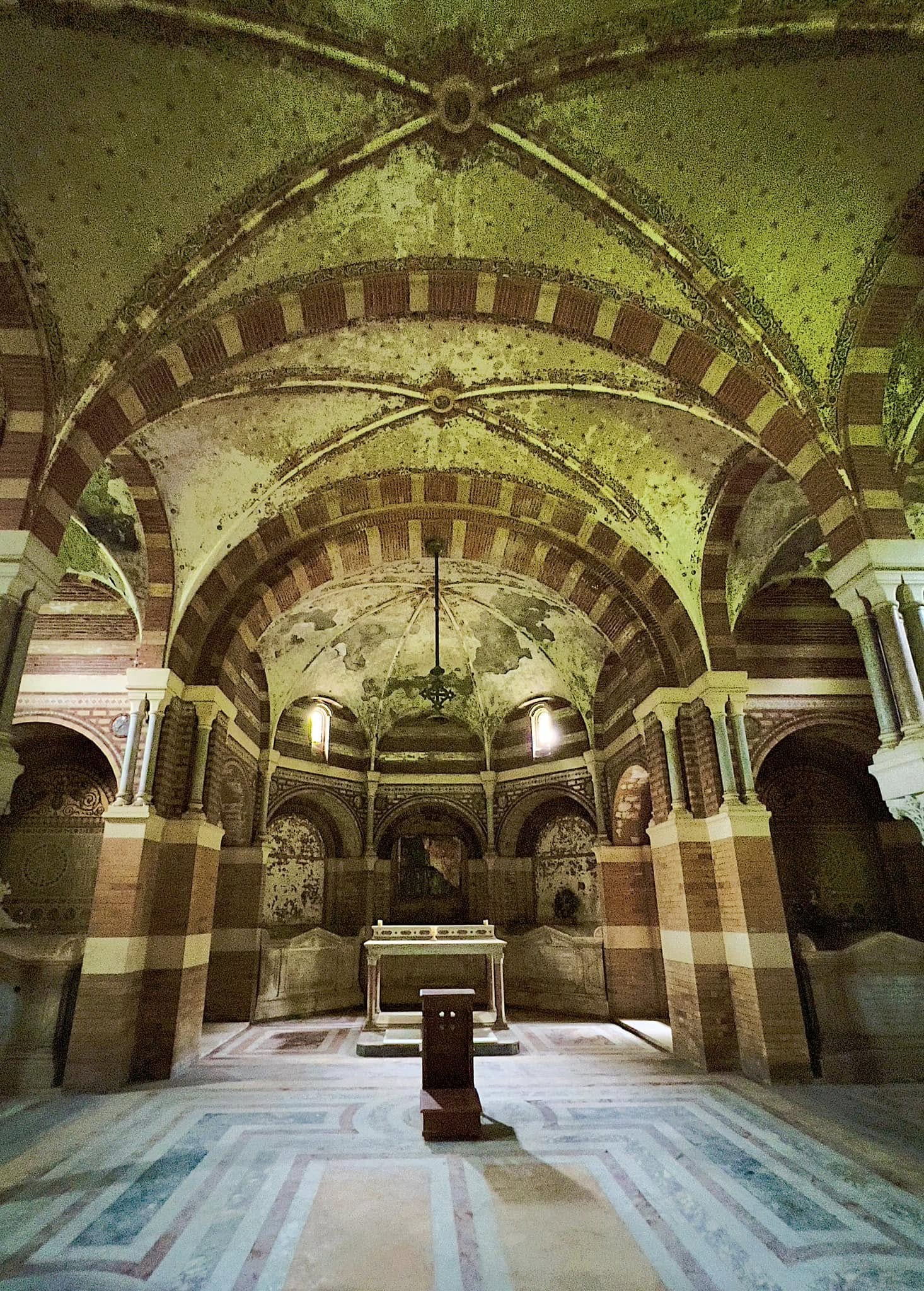
The Doria Pamphilj Chapel is one of the last major architectural additions made to the historic villa. Its religious and funerary functions were separated vertically.
The upper level was conceived as a space for prayer and liturgical celebration. The lower level served as the funerary mausoleum of the Doria Pamphilj family.
This arrangement makes the monument particularly relevant to Underground Rome: the architecture expresses two related functions through elevation itself.
Unlike many sites in the Atlas, this is not ancient archaeology. It belongs to the modern history of Rome and demonstrates that the city's use of subterranean funerary space continued long after antiquity.
Prayer above. Burial below.
The relationship between the two levels is fundamental to understanding the building.
Above ground, the chapel provides the ceremonial and religious space associated with the family.
Below it, the mausoleum establishes a permanent funerary level within the same architectural composition.
The division is functional, symbolic and spatial: the living occupy the liturgical room above while the family dead are commemorated in the lower level.
A funerary monument at the end of the nineteenth century.
The chapel was commissioned within the Doria Pamphilj family and designed by the Bolognese architect Edoardo Collamarini.
Construction began in 1896. By 1902 the principal architectural work was substantially complete, while decorative work continued afterwards.
The monument was placed in the Giardino del Teatro, becoming a new architectural focal point within the historic landscape of the villa.
Its construction belongs to a period in which the Roman aristocracy was adapting inherited estates while simultaneously reinforcing family memory through architecture.
Commission & Construction
Main Architectural Work
Decorative Completion
A modern building looking deliberately toward the past.
Collamarini designed the chapel using an eclectic neo-medieval architectural vocabulary.
The building combines references associated with Romanesque and early Christian architecture rather than adopting the language of contemporary industrial Rome.
Mosaic decoration contributes strongly to this historical character, including the decoration of the façade.
The result is therefore not an archaeological survival. It is a modern monument intentionally using earlier architectural traditions to construct family memory.
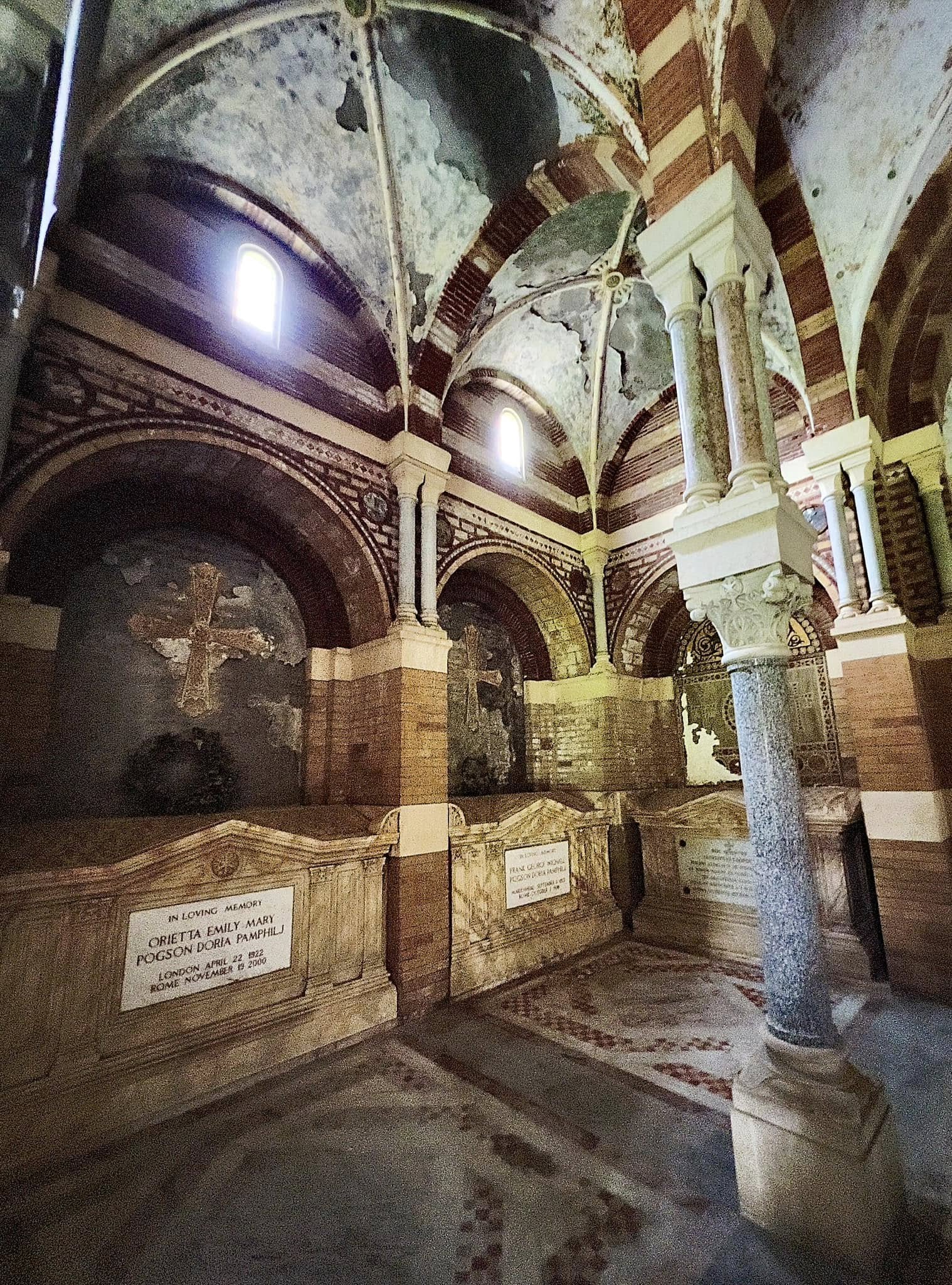
The lower level gives the building its second function.
The chapel was not designed only for religious ceremony. It was also conceived as a permanent family funerary monument.
The lower mausoleum transforms the chapel into an architectural connection between worship, commemoration and burial.
That distinction matters when reading the monument. The visible chapel and the funerary level are not two unrelated spaces: they form a single architectural programme.
The final monumental addition to a much older villa.
The chapel belongs to the final phase of monumental development within Villa Doria Pamphilj.
Not archaeology — but part of Rome's subterranean history.
Underground Rome extends beyond the ancient city. The Doria Pamphilj crypt demonstrates how underground space continued to acquire ceremonial and funerary meaning in modern Rome.
A monument inside a public park that remains private.
The location of the chapel inside Villa Doria Pamphilj should not be interpreted as regular public access to the chapel or its funerary level.
The surrounding historic park is public, but the Doria Pamphilj funerary chapel remains property of the family.
Sources relating to the villa record occasional religious use of the chapel. Underground Rome therefore does not present the monument as a normally open visitor attraction.
Explore more archaeological and historic places across Rome.
Explore Rome through places that reveal how the city changed over time.
Underground Rome designs private journeys around archaeological and historic spaces according to interests, access conditions and the places that can genuinely be visited.
Design Your Journeyby Rome Private Experience
Underground Rome is dedicated specifically to Rome's archaeological and historic subsurface.
For broader private programmes across Rome, corporate experiences and complex group arrangements, visit Rome Private Experience .