Capuchin Crypt
Rome
Not an archaeological ruin, but a deliberately constructed space of memory.
The Capuchin Crypt belongs to a different chapter of Rome's subsurface history.
It was created as part of the Capuchin complex associated with the church of Santa Maria della Concezione, whose seventeenth-century foundation was closely connected with the Barberini family.
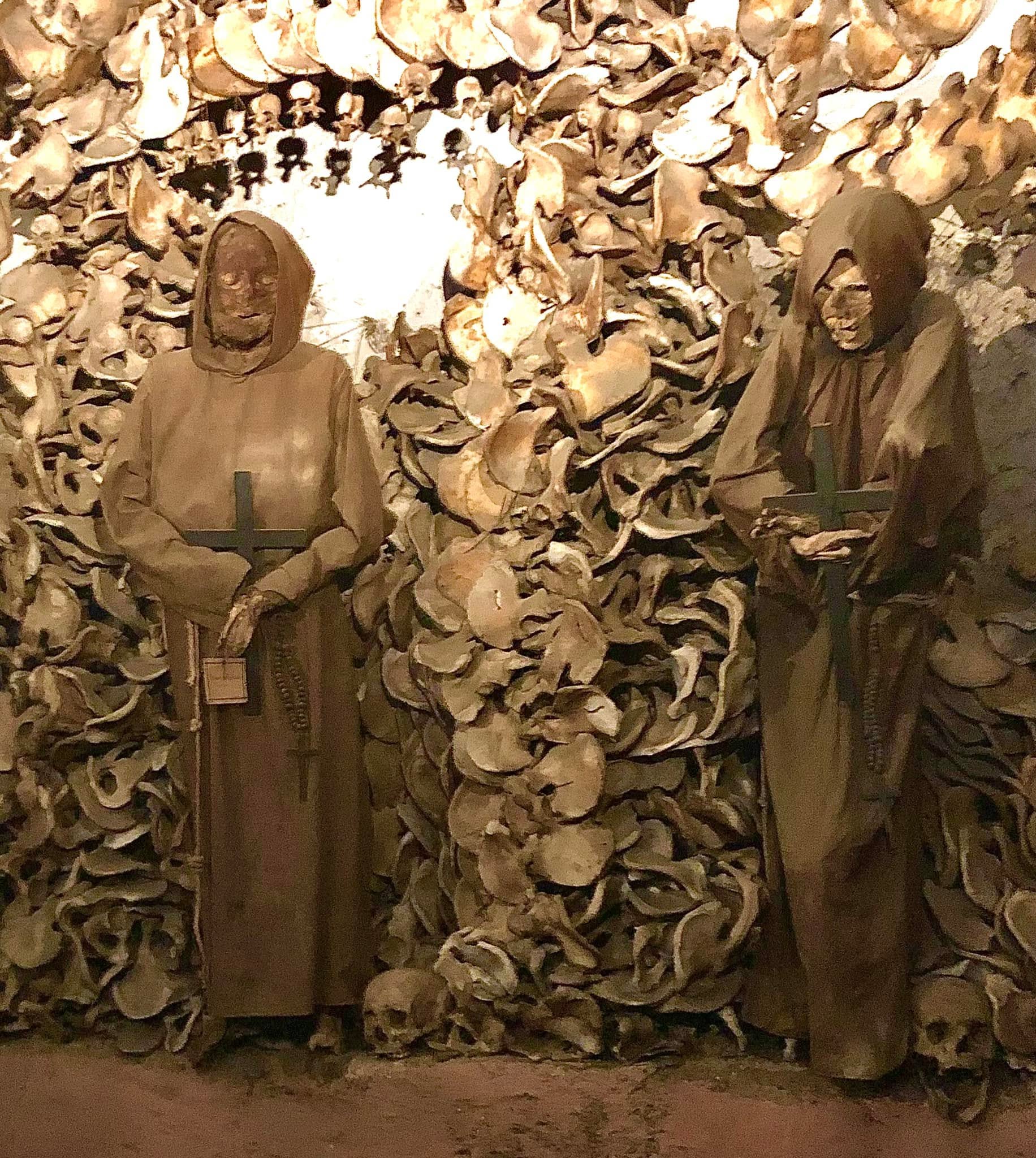
Here, the human remains of generations of Capuchins were not simply buried. Over time, bones became part of an elaborate visual and architectural composition concerned with mortality, remembrance and Christian resurrection.
The official museum today records the remains of approximately 3,700 deceased individuals within the crypt.
A new Capuchin centre for seventeenth-century Rome.
The crypt cannot be separated from the creation of the large Capuchin complex above it.
Construction of the convent began in 1626 under the patronage of the Barberini family. The project was entrusted to the Capuchin architect Fra Michele da Bergamo.
By 1631 the community had moved into the new complex. The remains of Capuchins previously buried at the convent of San Bonaventura were also transferred to the new cemetery.
A sequence of funerary environments.
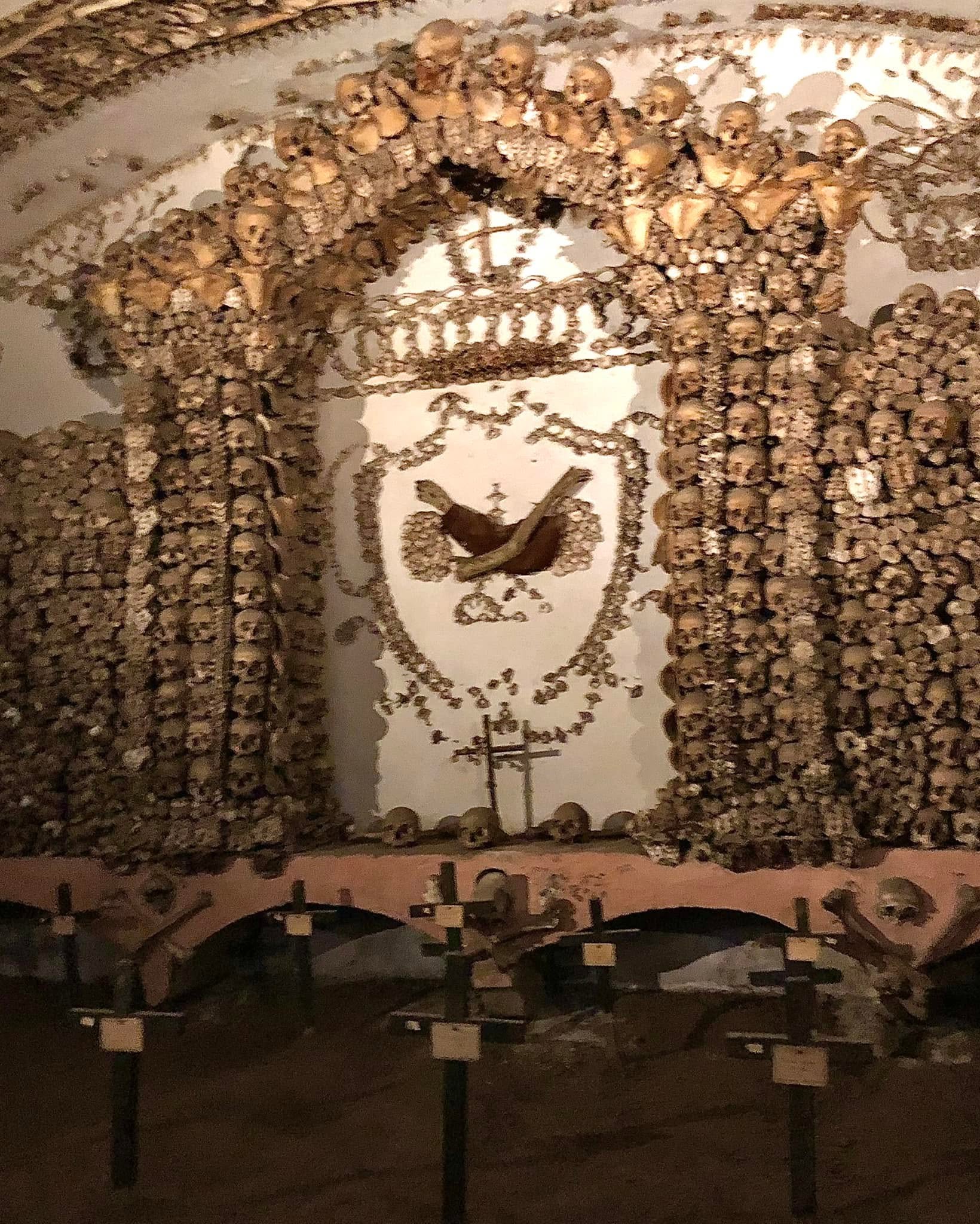
The experience of the crypt is architectural: visitors move through a sequence of connected spaces.
Walls, vaults, burial areas and decorative compositions create a continuous visual language using human remains as both material and symbol.
Different spaces emphasise related themes including death, prayer, resurrection and the collective identity of the Capuchin community.
One environment remains specifically associated with the celebration of Mass for the dead, while others develop increasingly elaborate arrangements of skulls, long bones, vertebrae and ribs.
The human body becomes part of the visual grammar.
The decoration works by reorganising anatomical elements into repeated geometric and architectural forms.
Skulls, femurs, tibias, ribs and vertebrae are combined into arches, frames, rosettes, heraldic forms and other compositions.
Their meaning is inseparable from the religious setting: the arrangement confronts the visitor with physical mortality while directing attention toward the Christian expectation of resurrection.
Repeated individually and in larger compositions across walls and architectural frames.
Femurs and tibias provide linear elements capable of forming borders and geometric structures.
Curved anatomical forms are incorporated into arches and ornamental patterns.
Small repeated elements become rosettes, borders and complex surface decoration.
A memento mori, but not a celebration of death.
The crypt is easily reduced to its most visually unusual characteristic. Its historical meaning is broader.
Within Capuchin spirituality, physical death forms part of a larger meditation on the temporary nature of earthly existence and the expectation of eternal life.
The remains therefore operate simultaneously as the material presence of deceased members of the community and as a religious language addressed to the living.
The central question is not simply why bones are displayed, but why a religious community chose to transform mortality into architecture.
The decoration contains its own counterpoint.
Mortality is visually dominant, but it is not the final subject of the crypt.
In the space identified by the museum as the Crypt of the Resurrection, skulls and long bones form architectural compositions around the remains of deceased Capuchins.
At the end of the room, an image of the resurrection of Lazarus changes the interpretation of the surrounding human remains: death is placed within a Christian narrative of resurrection and eternal life.
Rome below ground did not end with antiquity.
The Capuchin Crypt expands the chronology of Rome's subsurface far beyond the Roman and medieval city.
Part of the Museo e Cripta dei Cappuccini.
The crypt is included within the museum visit and cannot be visited separately from the museum.
Current official information lists daily opening in morning and afternoon sessions. Because opening times, group rules and admission arrangements may change, current information should always be checked before visiting.
Explore more archaeological and historic spaces across Rome.
Explore Rome through places separated by centuries.
Underground Rome designs private journeys according to your interests, available time and the sites that can genuinely be accessed during your stay.
Design Your Journeyby Rome Private Experience
Underground Rome is dedicated specifically to Rome's archaeological and historic subsurface.
For broader private programmes across Rome, corporate experiences and complex group arrangements, visit Rome Private Experience .