
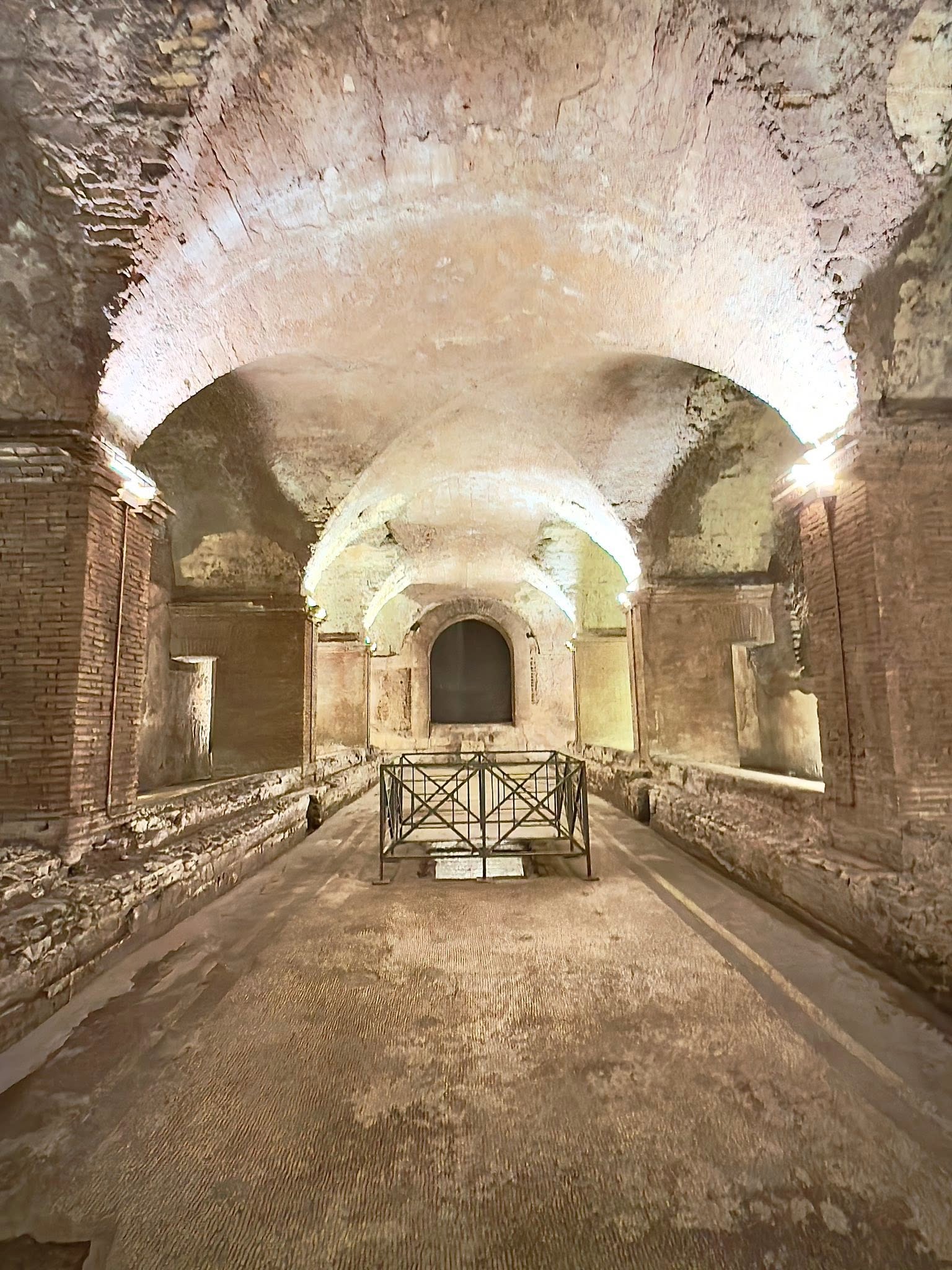
Baths of Caracalla
Underground
Southern Rome
Inaugurated 216 AD
The monument had a machine room.
The monumental halls seen above ground were only the public face of the Baths of Caracalla.
Beneath them extended a large service network where the practical work required to operate an imperial bath complex took place.
Fuel had to arrive. Water had to be distributed. Furnaces and boilers had to operate. Supplies and workers had to move without interfering with the monumental spaces used by bathers above.
The underground galleries made that separation possible.
Below the marble, an operating system.
The underground spaces were the working core of the bath complex.
Their scale reflects the logistical demands of maintaining one of the largest imperial bathing establishments in Rome.
Fuel
Wood and other supplies could be stored and transported through service areas separated from the public rooms.
Heat
Furnaces and boilers formed part of the thermal infrastructure required to heat water and the bath environments above.
Water
Hydraulic infrastructure distributed the enormous quantities of water required by pools, baths and service functions.
Movement
Wide galleries allowed workers, materials and carts to circulate beneath the public architecture.
A city of service corridors.
Around two kilometres of underground galleries are preserved beneath the complex.
They formed an interconnected service network rather than a single underground chamber.
From supply to bathing room.
The baths depended on several interconnected systems. The diagram below is a simplified functional reading, not a reconstruction of a single archaeological route.
Water
Water reached the complex through the imperial hydraulic network serving the baths.
Cisterns
Large reservoirs formed part of the system needed to manage water before distribution.
Furnaces
Fuel supported the heating installations required by the thermal complex.
Technical Network
Water and heat were directed toward the different functional areas of the baths.
The Baths
The monumental rooms above depended on the infrastructure operating below them.
An aqueduct branch for an imperial complex.
Supplying the baths required infrastructure on a scale far beyond the building itself.
A dedicated branch connected with the Aqua Marcia system supplied the Baths of Caracalla.
Known as the Aqua Antoniniana, it formed part of the hydraulic infrastructure that allowed the enormous bathing complex to operate.
Antoniniana
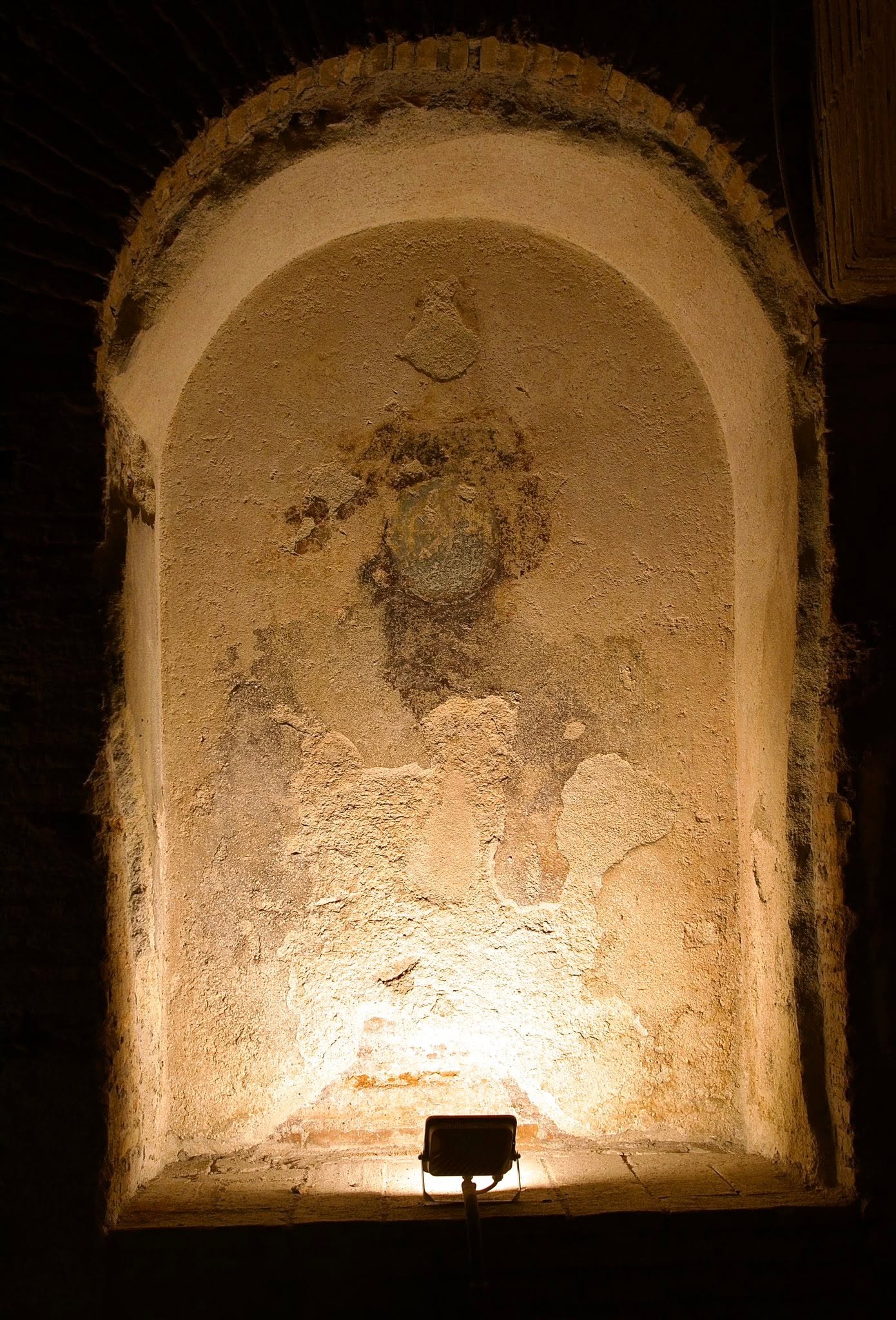
Not every underground space was technical.
Within the subterranean world of Caracalla was also a sanctuary dedicated to Mithras.
The Mithraeum is among the largest surviving examples known in Rome and demonstrates that the underground complex was not exclusively devoted to service infrastructure.
Its presence introduces a different use of space: ritual activity existed within the same subterranean environment that supported the daily operation of the baths.
One monument. Two very different environments.
The contrast between surface and subsurface explains much of the architecture of an imperial bath complex.
Monumental Rome
Frigidarium, calidarium, tepidarium, natatio, palaestrae, decoration and public circulation.
Operational Rome
Galleries, workers, fuel, heating installations, hydraulic systems, storage and movement.
The ruins above tell only half the story.
The underground galleries reveal the labour, logistics and engineering behind the monumental architecture of the Baths of Caracalla.
Seen from below, the complex becomes more than a sequence of spectacular halls. It becomes a functioning system in which architecture, water, heat, materials and human labour were interconnected.
Access to the underground areas varies.
The Baths of Caracalla archaeological complex is open to visitors, while access to the underground galleries and Mithraeum may depend on the visitor programme, special openings and conservation requirements.
The subterranean areas should therefore not be assumed to form part of every standard visit.
Explore more places below Rome.
Explore the systems that made ancient Rome work.
Underground Rome designs private archaeological journeys around the city below street level, combining sites according to your interests, available time and the access genuinely available during your stay. Tell us your dates and group size; we’ll check access and prepare a private route proposal with a clear quote.
Request a private archaeological journeyby Rome Private Experience
Underground Rome is dedicated specifically to the archaeological city below street level.
For broader private programmes across Rome, corporate experiences and complex group arrangements, visit Rome Private Experience .