
Archaeology Inside Modern Buildings
In Rome, archaeology does not survive only in excavated parks and monumental ruins. Ancient structures can remain physically embedded within buildings that belong to the contemporary city.
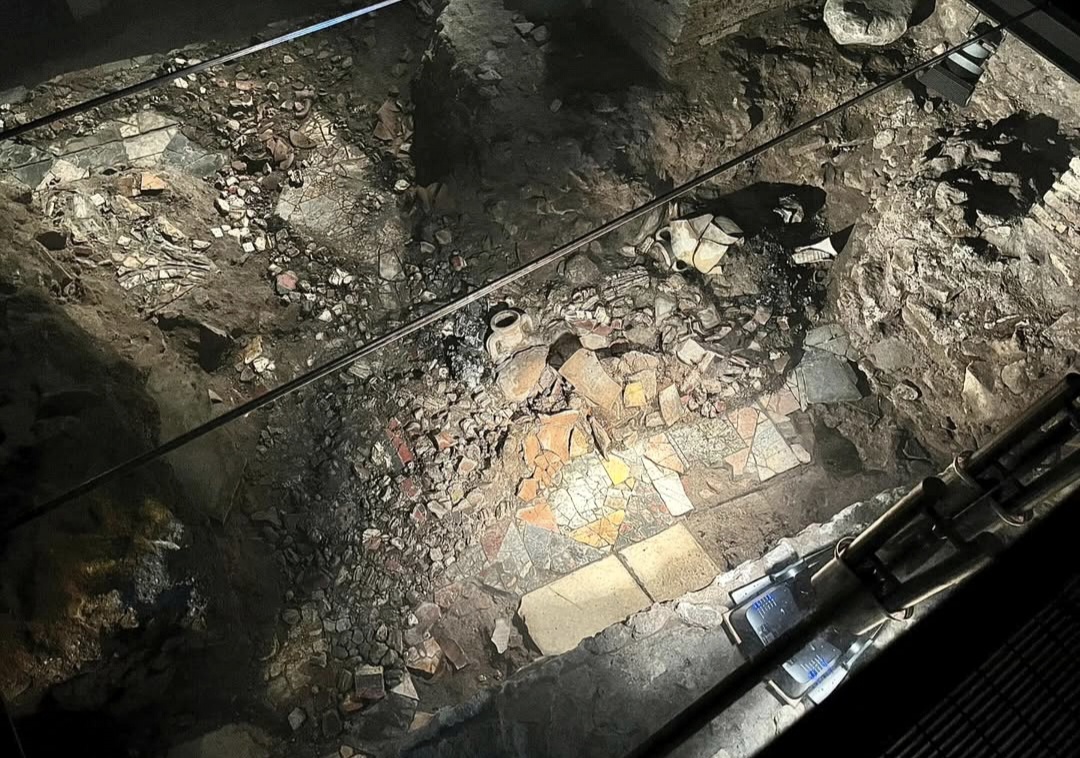 Palazzo Valentini · Rome
The ancient city is not always separated from the modern one.
The conventional image of an archaeological site is a space set apart: an excavated monument surrounded by a fence, a museum boundary or an archaeological park.
Rome frequently produces a more complicated relationship. Ancient walls, floors, tombs and occupation levels can survive within structures that acquired completely different functions centuries later.
A historic palace can contain Roman residential archaeology. A twentieth-century commercial building can preserve funerary monuments. Archaeological remains may coexist with spaces whose architecture and purpose belong entirely to another period.
This is not simply a matter of something old being located “under” something new. It is a question of how two radically different phases of the city are physically negotiated within the same site.
Preservation can take different forms.
The encounter between archaeological remains and modern architecture is not governed by a single spatial model. Each site creates a different relationship between the two.
Below
Archaeological levels remain underneath a later building and are reached by descending from its contemporary floor level.
Within
Ancient structures become part of the internal spatial organisation of a building that serves another function.
Displayed
Architecture is adapted so that archaeological remains can be observed, interpreted or incorporated into a visitor route.
Reprogrammed
A modern structure can acquire a new cultural function because archaeological discoveries change the meaning of the building itself.
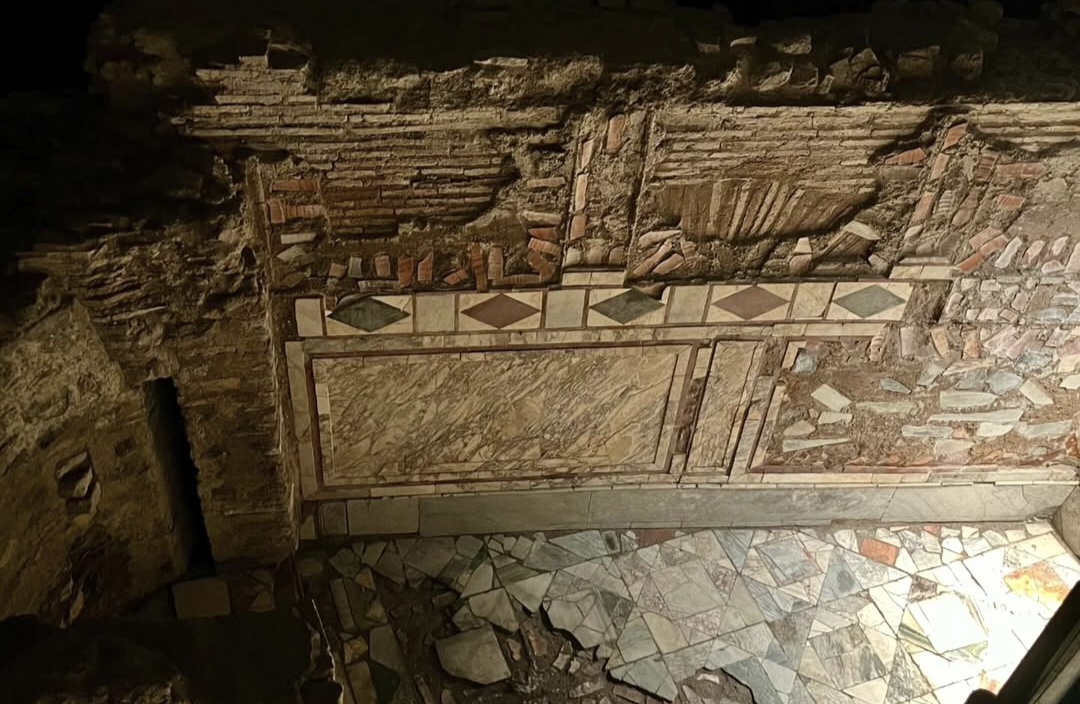 Case Study · Palazzo Valentini
A government building and Roman houses share the same site.
Palazzo Valentini demonstrates the extraordinary chronological compression possible in central Rome.
The palace developed from the late sixteenth century onward and has served as an institutional headquarters since the late nineteenth century.
Archaeological excavation begun in 2005 in its lower spaces revealed a residential quarter containing richly decorated Roman houses dating principally to the late second and third centuries AD.
Mosaics, decorated walls, polychrome floors, paved surfaces and other remains now form an archaeological visitor route inside the same architectural complex that continues to perform a contemporary institutional role.
Excavation changes the building above.
When archaeological remains are encountered within an existing structure, the problem is no longer excavation alone. The ancient evidence and the contemporary building have to coexist.
Discovery
Construction, renovation or archaeological investigation reveals structures that were previously inaccessible or unknown.
Documentation
The remains are recorded and interpreted in relation to their archaeological sequence and surrounding urban context.
Conservation
Decisions are made about how archaeological material can remain stable within an environment designed for another purpose.
Architectural Response
Floors, routes, barriers, lighting or structural elements may be designed around the surviving archaeology.
Interpretation
When public access is possible, the challenge becomes making an ancient spatial sequence understandable inside a modern one.
When the modern building becomes part of the archaeological story.
The Drugstore Museum on Via Portuense represents a very different relationship between archaeology and modern architecture. Its identity is deliberately built around the coexistence of contemporary structures and archaeological evidence.
Within the museum survive funerary monuments belonging to the Portuense archaeological landscape, together with much earlier evidence including an Eneolithic burial.
Rather than disguising the chronological contrast, the site makes that contrast central to its interpretation: ancient archaeology, twentieth-century material culture and the contemporary neighbourhood occupy the same narrative.
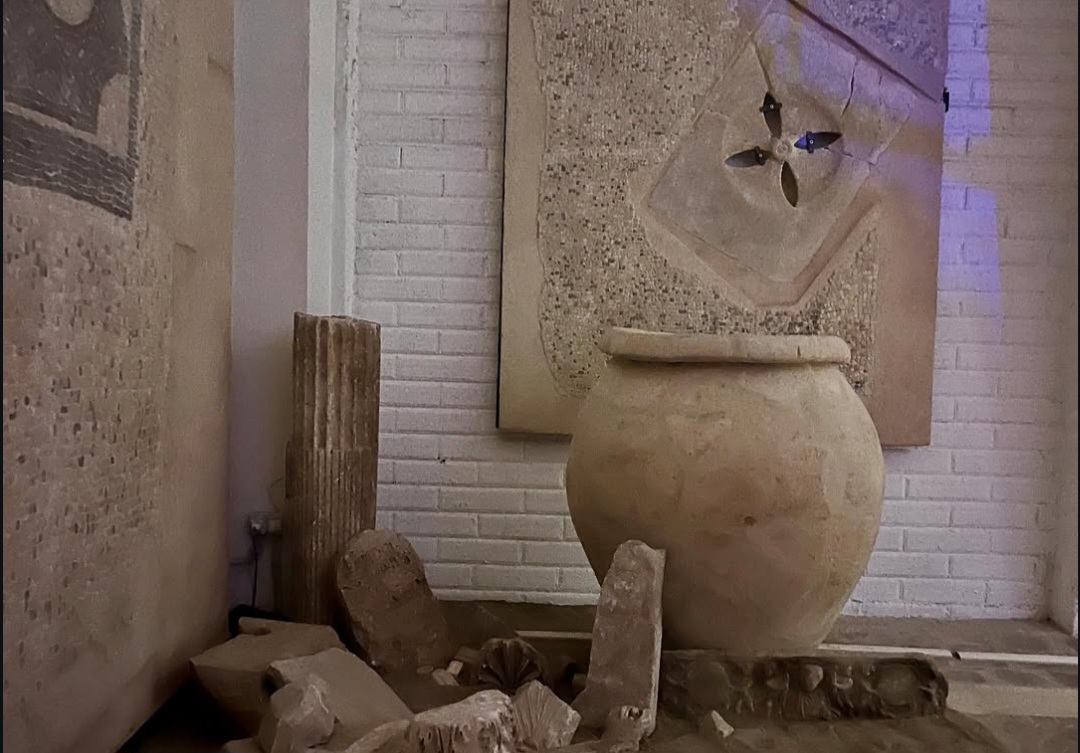
Ancient remains within a modern structure
The architecture around the archaeological remains belongs to another period, making the chronological contrast visible.
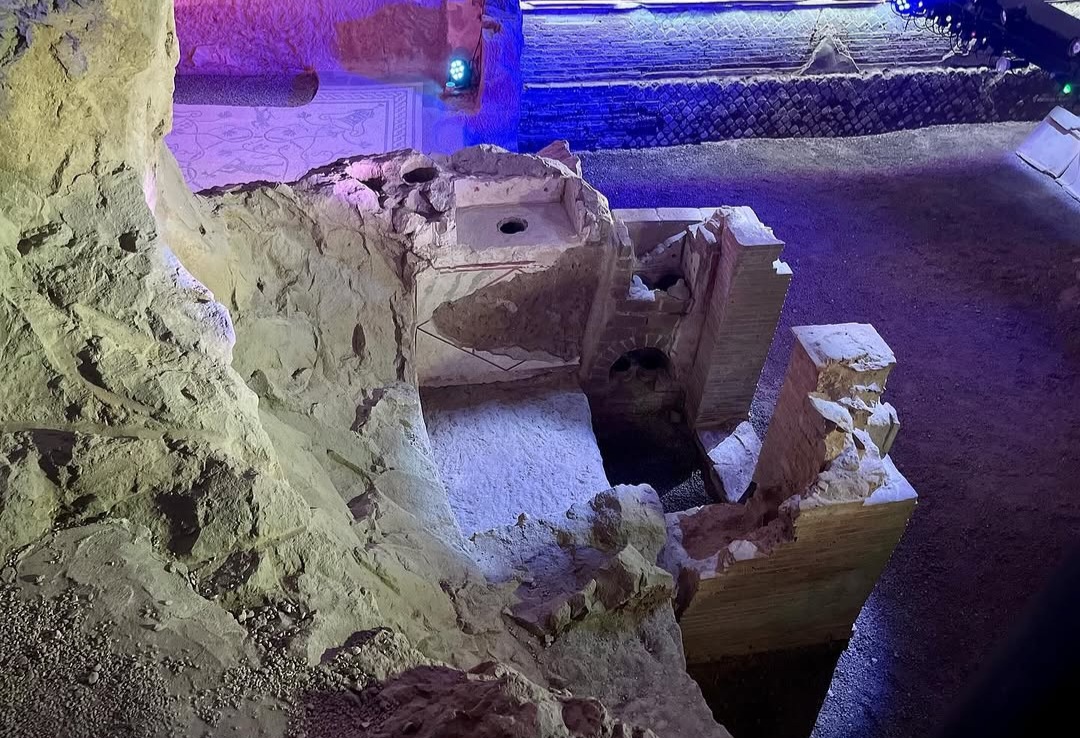
The building becomes the archaeological container
The visitor reads the surviving Roman structures while remaining conscious of the modern environment that now surrounds them.
Some remains survive outside the conventional museum.
The Roman Necropolis at Saulo demonstrates another condition: archaeological evidence preserved within a contemporary private environment.
The contrast is useful precisely because the archaeological remains cannot be understood through the visual language of a traditional archaeological park.
The surrounding architecture belongs to the modern city. The archaeological structures belong to an entirely different territorial organisation associated with ancient Rome.
Their coexistence makes visible a fundamental characteristic of urban archaeology: the modern city is not merely built near ancient Rome. In places, it physically contains it.
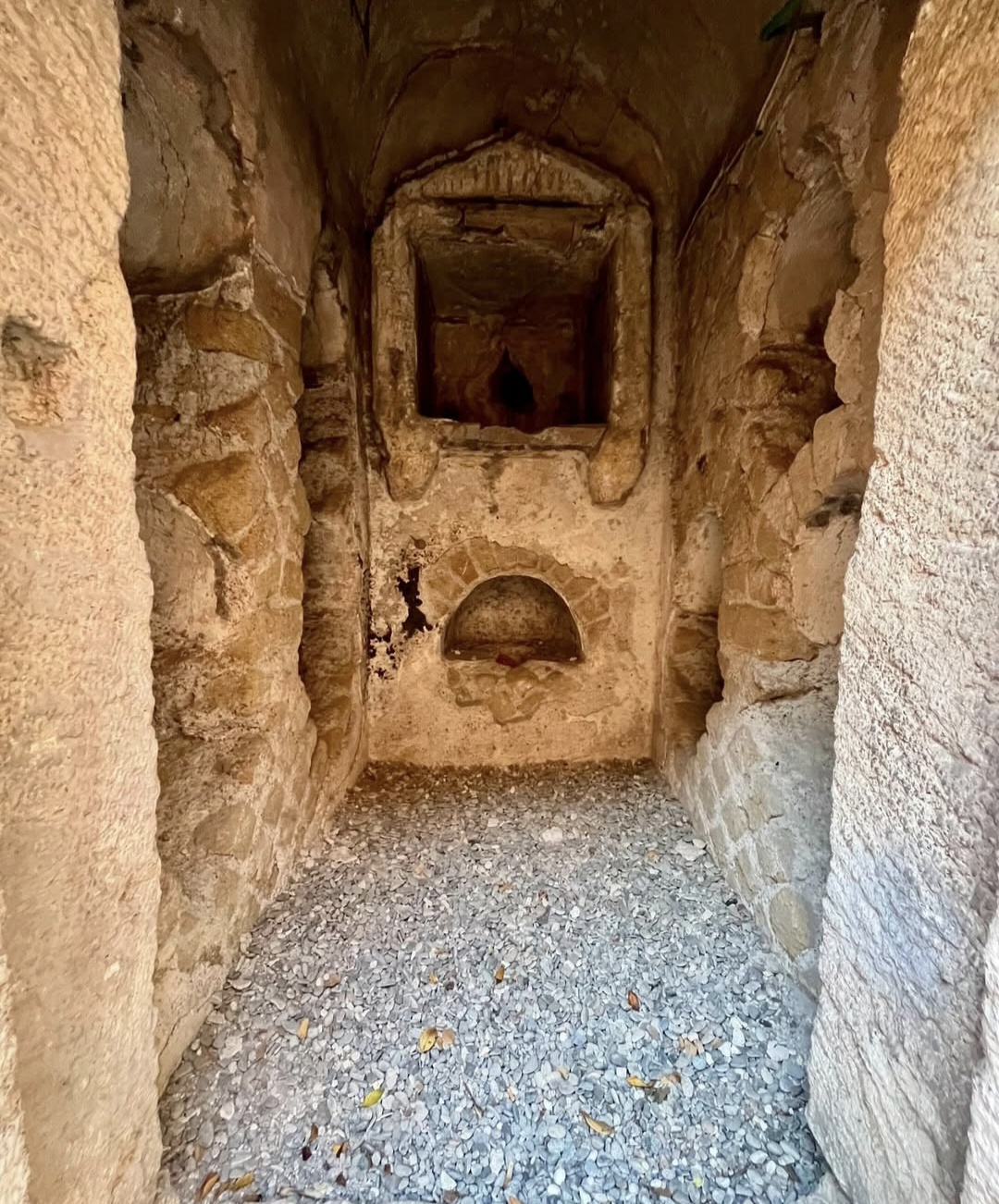 Roman Necropolis at Saulo · Contemporary Context
Modern Rome does not sit outside its archaeological past.
It is tempting to imagine ancient Rome and contemporary Rome as two separate cities occupying different elevations. The physical evidence is more complicated.
Walls can become foundations. Archaeological rooms can remain inside later buildings. Tombs can survive within properties created for completely different functions.
In these places, the boundary between archaeological site and contemporary architecture is not a line on a map. It is negotiated inside the building itself.
That coexistence is one of the defining characteristics of archaeology in a continuously inhabited city.
Three ways archaeology occupies the present city.
The Places atlas examines each archaeological site individually, including its physical setting and relationship with contemporary Rome.
Enter places where different periods occupy the same space.
A private archaeological journey can connect sites where ancient structures survive within the architecture and daily geography of contemporary Rome.
The route is developed around your interests, dates and the access genuinely available during your stay.