
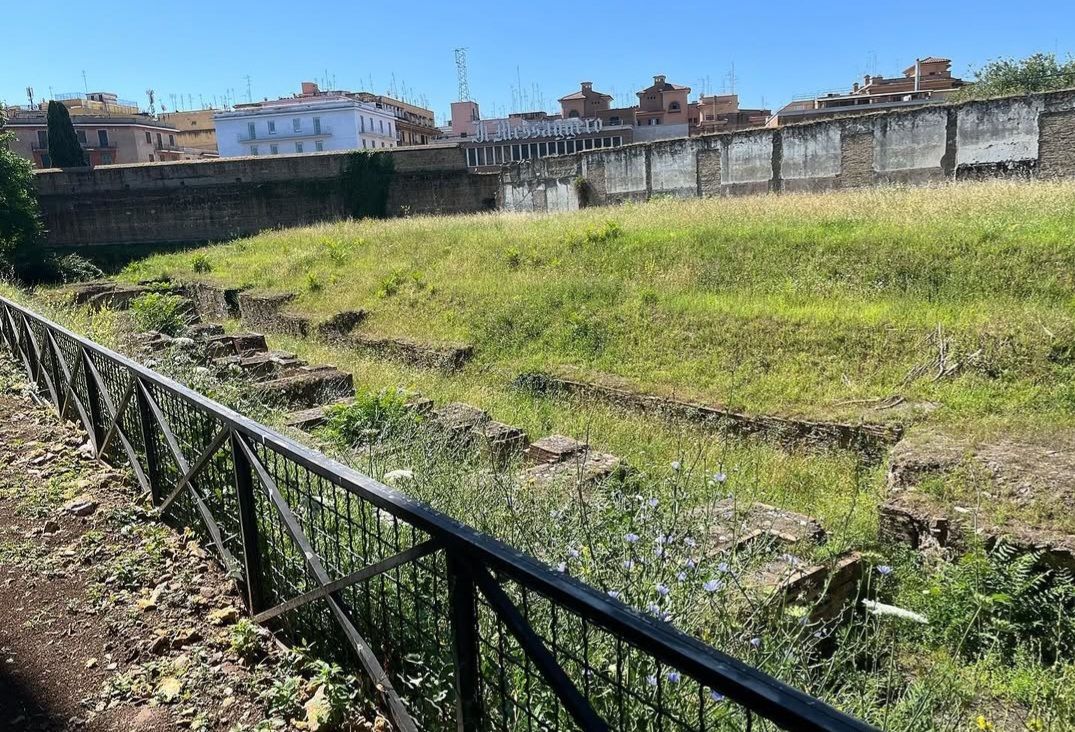
Santa Croce in Gerusalemme Archaeological Complex
Several different versions of Rome occupy the same ground.
The archaeological area around Santa Croce in Gerusalemme preserves far more than the remains of a single imperial palace.
The district developed beside major roads and aqueducts before becoming an area of wealthy residences. During the Severan period it was transformed into an enormous imperial estate incorporating residential buildings, gardens and structures for entertainment.
The construction of the Aurelian Walls altered that landscape again. Under Constantine and Helena, part of the complex was reorganised as the Sessorian imperial residence from which the later Christian history of Santa Croce developed.
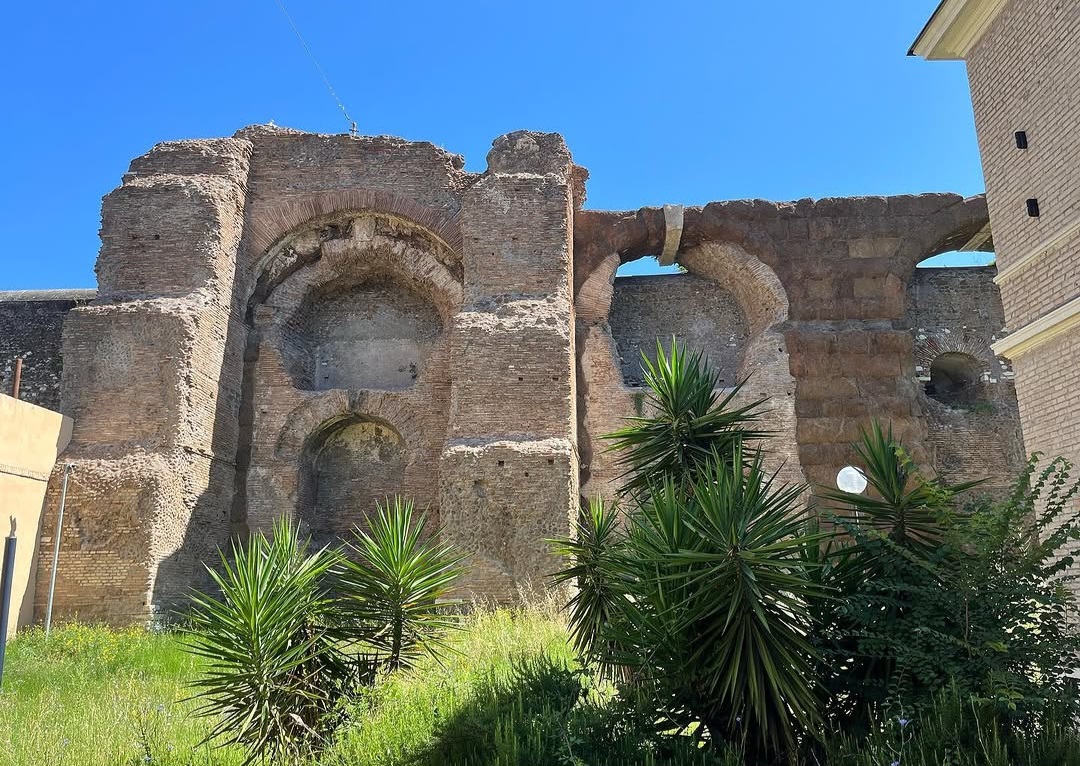
Before the imperial palace, monumental aqueducts already defined this landscape.
The area around Santa Croce stood close to one of the great convergence points of Rome's water infrastructure.
Among the surviving structures is the Aqua Claudia, completed in AD 52 and identified by institutional sources as the oldest monumental element still visible within the archaeological complex.
The aqueduct was not simply background infrastructure. Its massive arcades became part of the physical organisation of the district and were subsequently incorporated into later defensive and urban structures.
Water supply also made possible the gardens, residences and thermal installations that developed around the imperial estate.
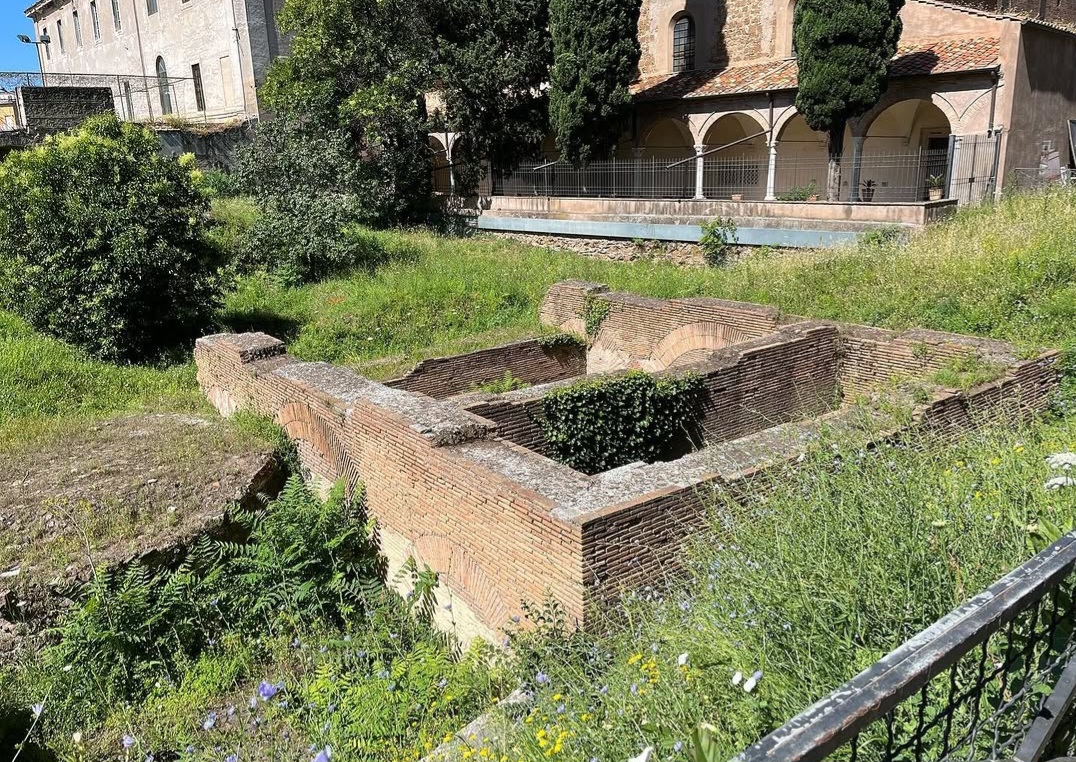
Ancient and early modern water systems occupy the same archaeological corridor.
The aqueduct architecture visible around Santa Croce is not the product of a single historical period.
The ancient Aqua Claudia formed part of the monumental Roman water system entering the city from the east and became a defining element of this sector of the Esquiline.
More than fifteen centuries later, the Acquedotto Felice, constructed under Pope Sixtus V, reused portions of the ancient aqueduct corridor and structures.
The result is a particularly clear example of infrastructure being repeatedly adapted rather than simply abandoned.
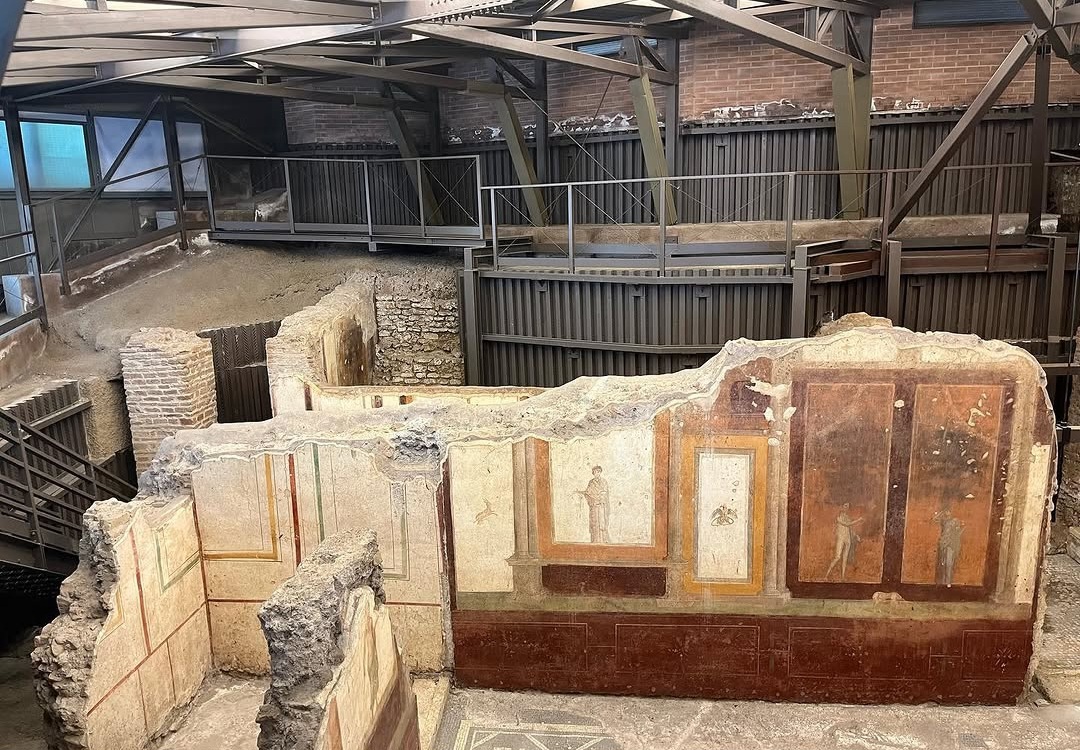
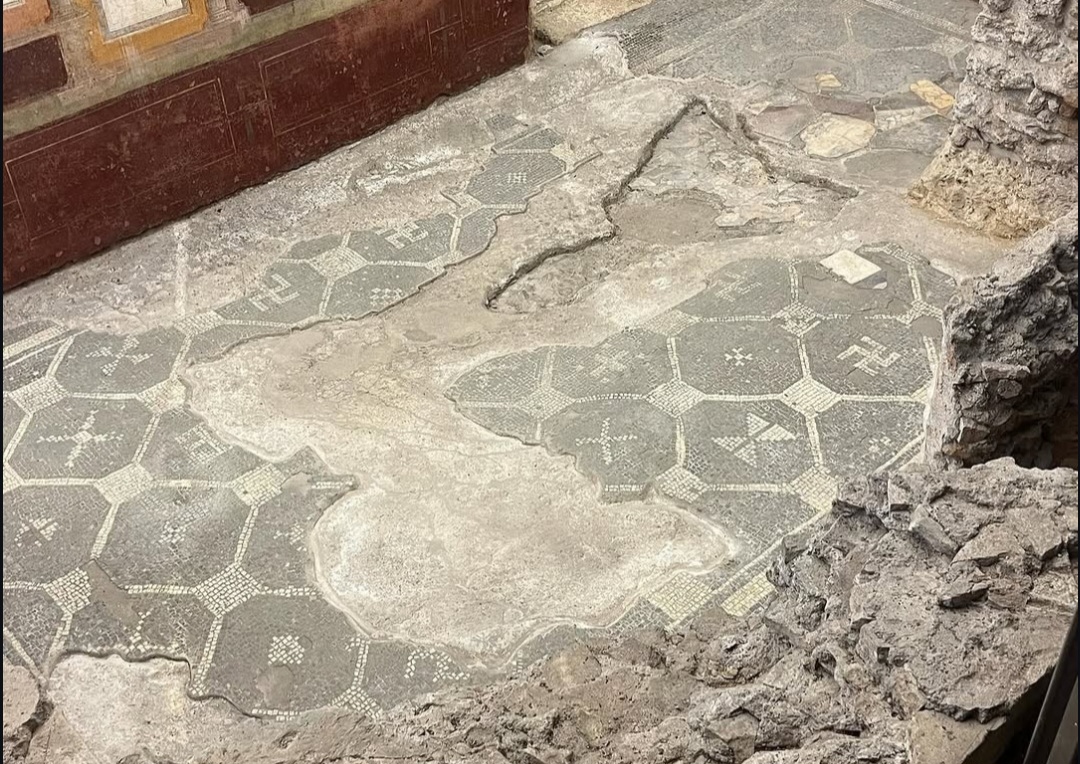
Elite residences developed directly beside Rome's water infrastructure.
Before the creation of the imperial complex, this sector of Rome contained substantial private residences.
Archaeological investigations have identified domestic spaces close to the Aqua Claudia, including reception rooms decorated with painted plaster and mosaics and smaller rooms associated with more private areas.
These buildings demonstrate that the aqueduct and the houses were parts of the same evolving urban landscape rather than isolated monuments.
The Severans converted the district into a court outside the Palatine.
During the third century AD the area became part of the imperial properties of the Severan dynasty.
Existing residences and gardens were incorporated into a much larger complex traditionally associated with the Horti Variani and the imperial residence known as Ad Spem Veterem.
Its components included monumental residential buildings, gardens, the Circus Varianus, the Amphitheatrum Castrense and thermal facilities.
This was therefore not simply a villa. It was an extensive imperial landscape capable of accommodating the emperor, court and the activities surrounding them.
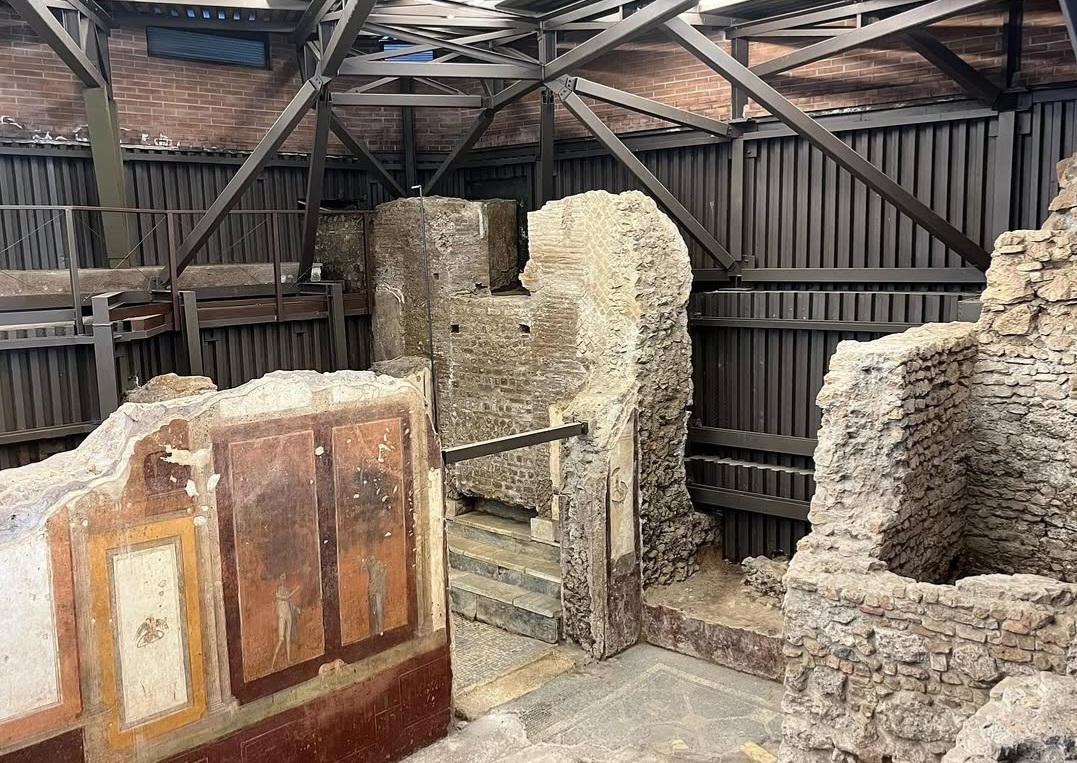
Here an aqueduct became infrastructure, architecture, boundary and eventually part of the city's defences.
Santa Croce preserves an unusually clear record of structures acquiring new functions as the surrounding city changed.
The construction of Rome's new defensive circuit cut across the imperial estate.
Between AD 271 and 275, the construction of the Aurelian Walls radically changed the physical organisation of this area.
Existing monumental structures were incorporated wherever their position made them useful to the new defensive circuit.
The Amphitheatrum Castrense became part of the fortifications, while sections of the aqueduct infrastructure were absorbed into the system of walls.
A landscape designed around residence and imperial leisure was therefore physically divided by a military boundary.
Constantine and Helena gave the imperial complex another life.
During the Constantinian period the surviving imperial residence was extensively modified.
The complex became associated particularly with Helena, mother of Constantine, who lived within the Sessorian residence during the fourth century.
Monumental halls and residential structures continued to be used while one part of the palace was transformed for Christian worship.
That transformation ultimately created the architectural and religious nucleus from which the Basilica of Santa Croce in Gerusalemme developed.
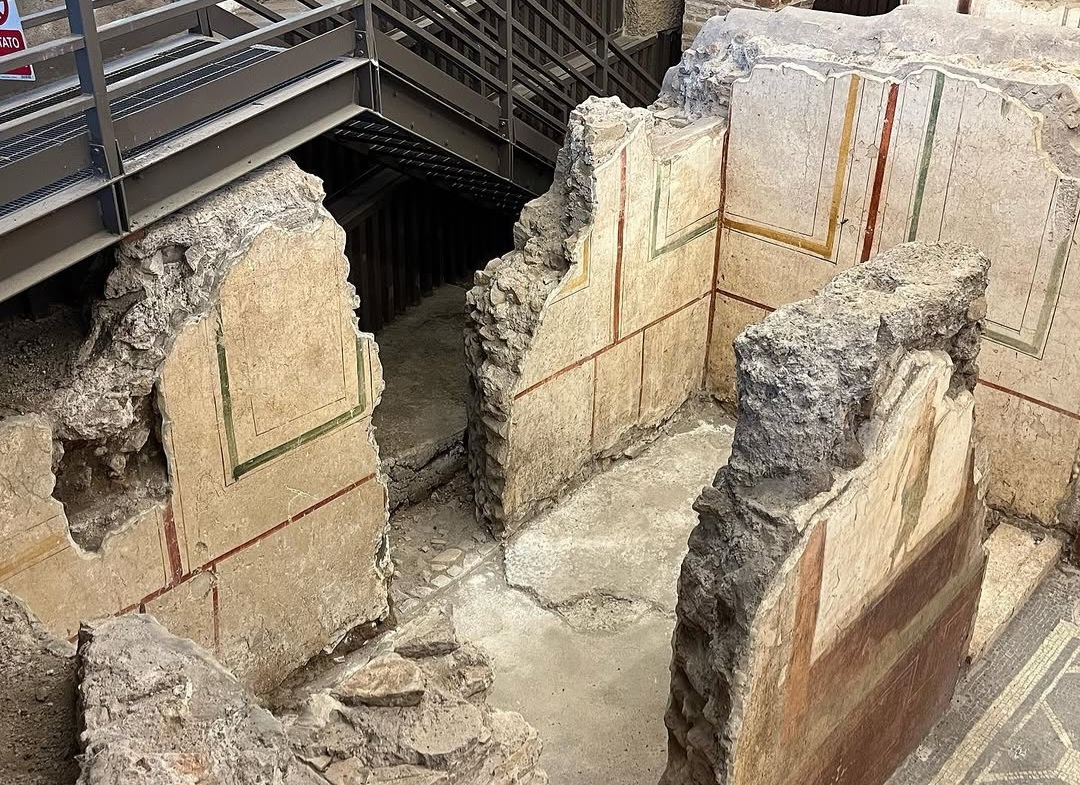
An archaeological complex currently undergoing restoration.
The archaeological area is managed by the Italian Ministry of Culture and is distinct from ordinary access to the Basilica of Santa Croce in Gerusalemme.
In 2026 the site is the subject of a substantial restoration programme. The Ministry has organised special archaeological openings during the works, including guided visits for the European Archaeology Days in June 2026.
Regular access should therefore not be assumed from older published timetables. Current openings and reservation arrangements should be verified before visiting.
Sources
Alessandro Tanzilli
Photography documenting the archaeological complex of Santa Croce in Gerusalemme on this page is by Alessandro Tanzilli. @alessandrotanz_
Design Your Journey
Underground Rome creates private archaeological journeys selected around your interests, available access and time in the city.
Design Your Journey →Underground Rome is a specialist project by Rome Private Experience .