Places · River Infrastructure · Testaccio
Emporium · Ancient River Port of Rome
On the left bank of the Tiber at Testaccio, surviving structures of Rome's great commercial river district preserve the physical infrastructure through which Mediterranean goods entered the city.
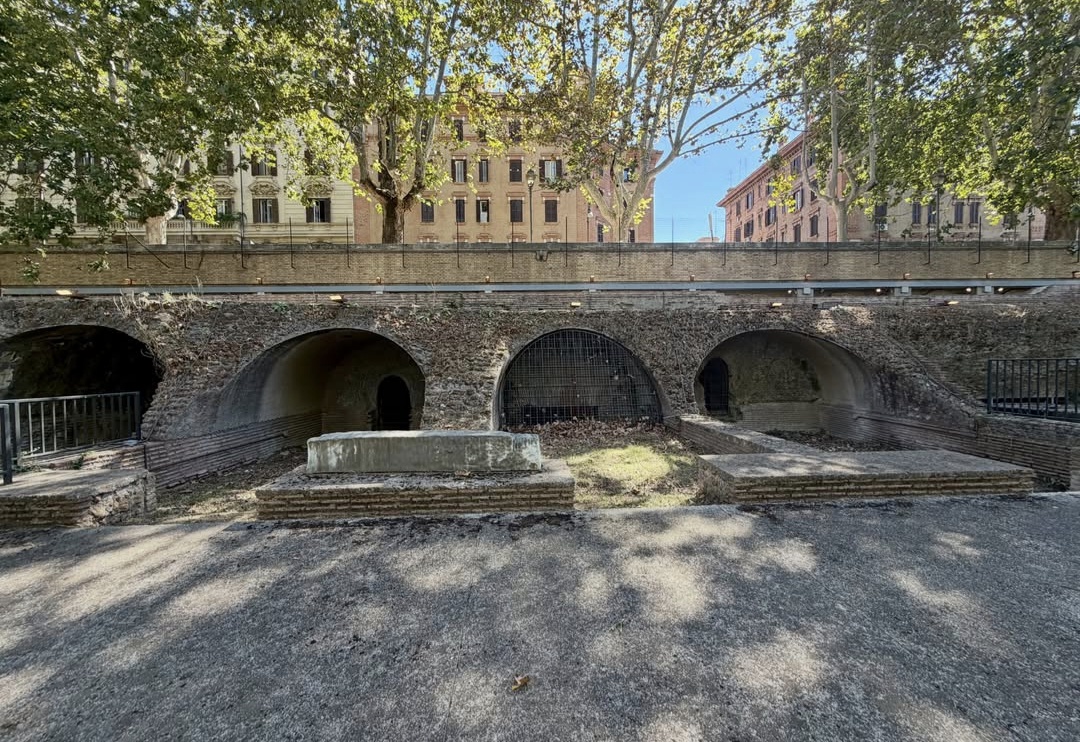
Photography © Alessandro Tanzilli · @alessandrotanz_
The Commercial Riverfront
Where the Tiber supplied a growing city
As Rome expanded, the older river facilities around the Forum Boarium were no longer sufficient for the volume of goods required by the city. From the Republican period, commercial activity shifted towards the plain below the Aventine, where a much larger port and storage district developed along the Tiber.
This was the Emporium: not simply a landing point, but part of an extensive logistical landscape of quays, warehouses, service areas and routes for moving commodities from the river into Rome.
The structures surviving at Lungotevere Testaccio belong to the monumental development of this riverfront and preserve an unusually direct connection between archaeology and the practical mechanisms that sustained the ancient metropolis.
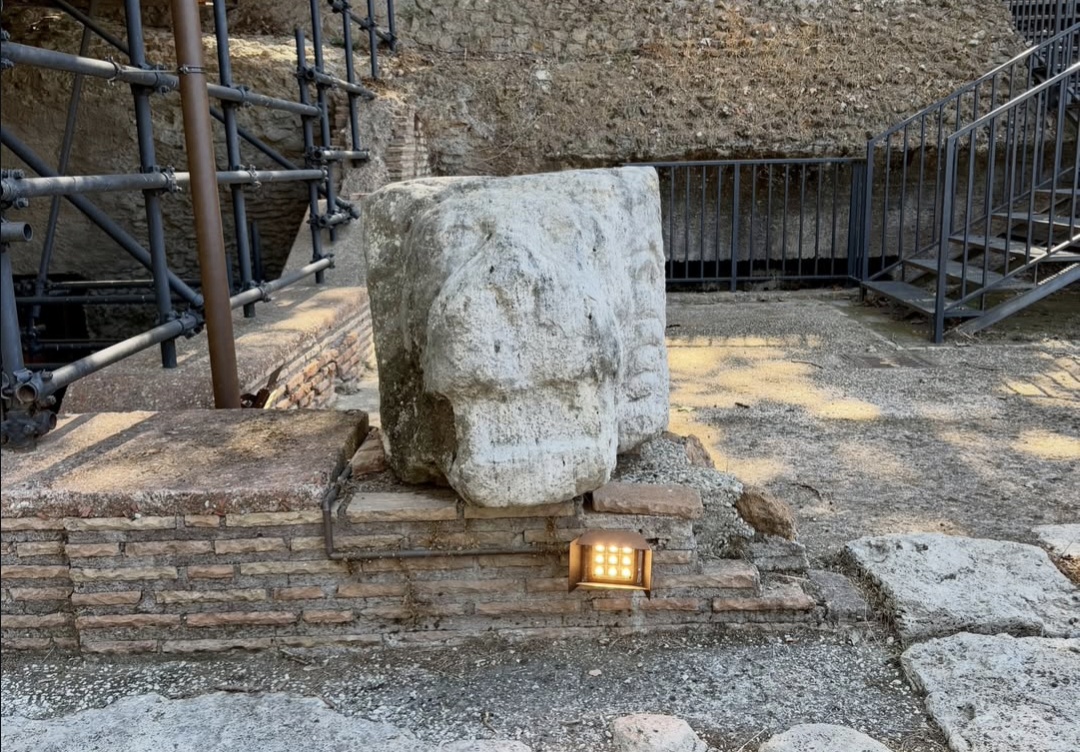
Surviving architecture along the ancient commercial riverfront at Testaccio.
Movement of Goods
From the Mediterranean to Rome
Cargo arriving from across the Mediterranean first reached the maritime ports at Ostia and, later, Portus. Goods could then continue upriver towards Rome, where the Testaccio commercial district provided the infrastructure needed for unloading, storage and distribution.
Grain, wine, fish products and olive oil were among the commodities handled within this wider system. The port therefore belonged to a chain extending far beyond the city itself: sea routes, maritime harbours, river transport, warehouses and urban markets were all parts of the same supply network.
Archaeological Fabric
Architecture built for movement and storage
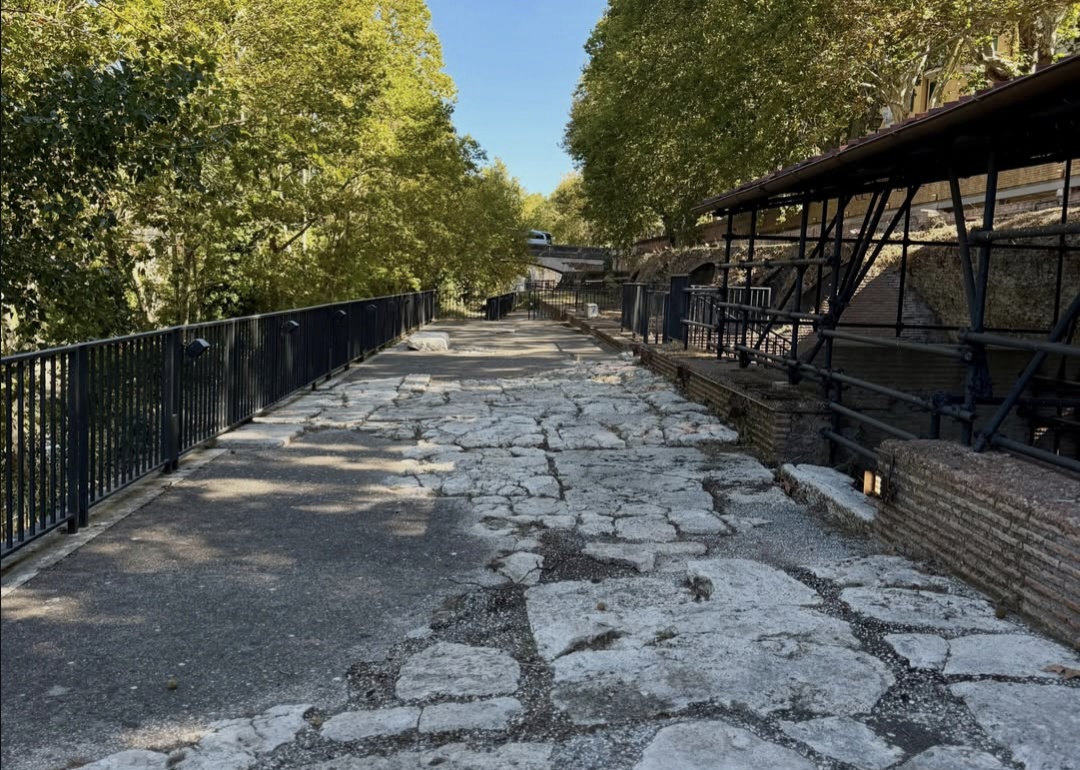
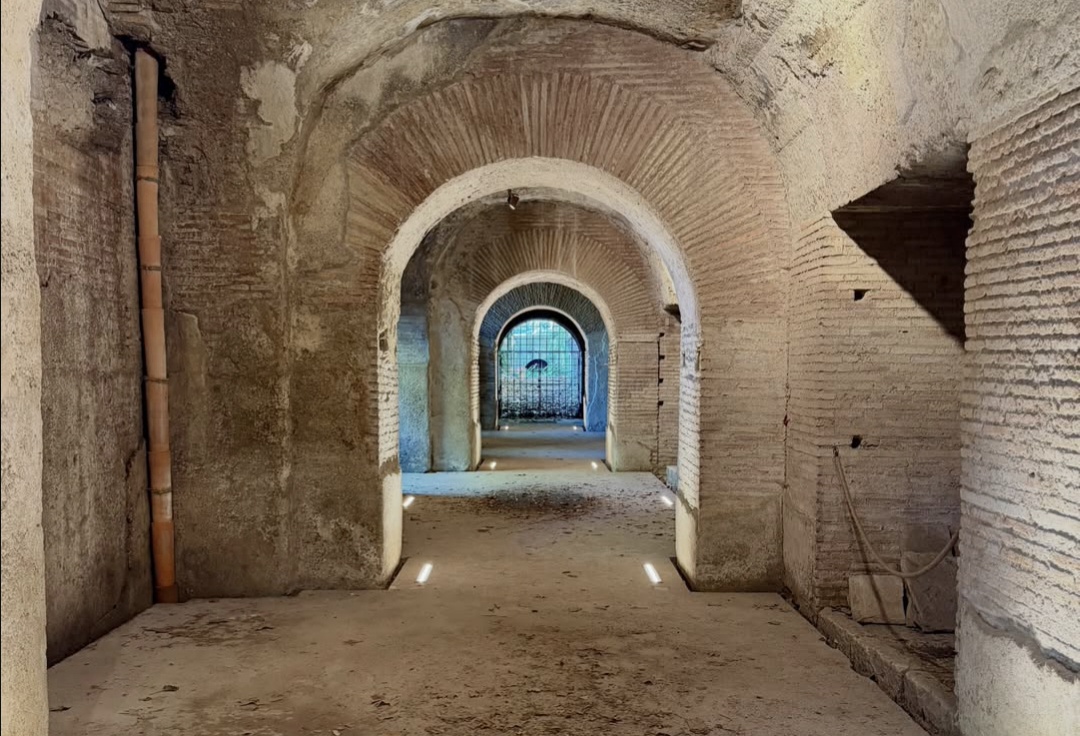
The archaeological remains belong to a working landscape shaped by transport, storage and the movement of goods along the Tiber. Photography © Alessandro Tanzilli · @alessandrotanz_
The River Edge
A quay engineered for commerce
One of the defining elements of the site is the riverfront itself. Ancient structures at Testaccio included a long quay associated with paved surfaces, storage spaces and circulation areas designed around the continuous transfer of cargo.
The visible archaeological remains include travertine paving and structures connected with rows of storage rooms and a covered passage. They allow the ancient riverbank to be read not as a scenic boundary, but as an engineered interface between water transport and the city.
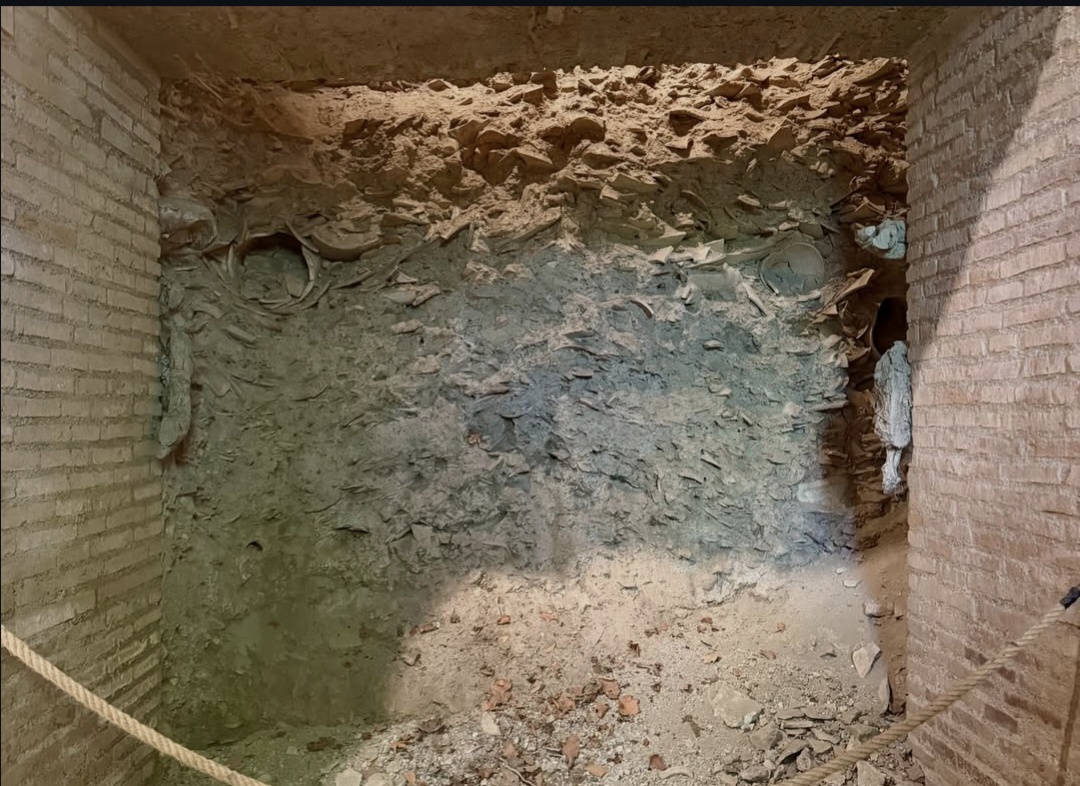
Archaeological evidence survives beside the modern Tiber embankment. Photography © Alessandro Tanzilli · @alessandrotanz_
An Archaeological System
The port did not stand alone
The Emporium formed part of a much broader commercial landscape. Large storage buildings occupied the Testaccio plain, including the Porticus Aemilia and other horrea associated with the handling and conservation of commodities.
Nearby Monte Testaccio records another stage in the same economic process. Between the Imperial centuries, vast quantities of discarded transport amphorae — particularly containers used for olive oil — were systematically broken and accumulated there.
Port, warehouses and amphora mound can therefore be read together as different physical consequences of supplying ancient Rome.
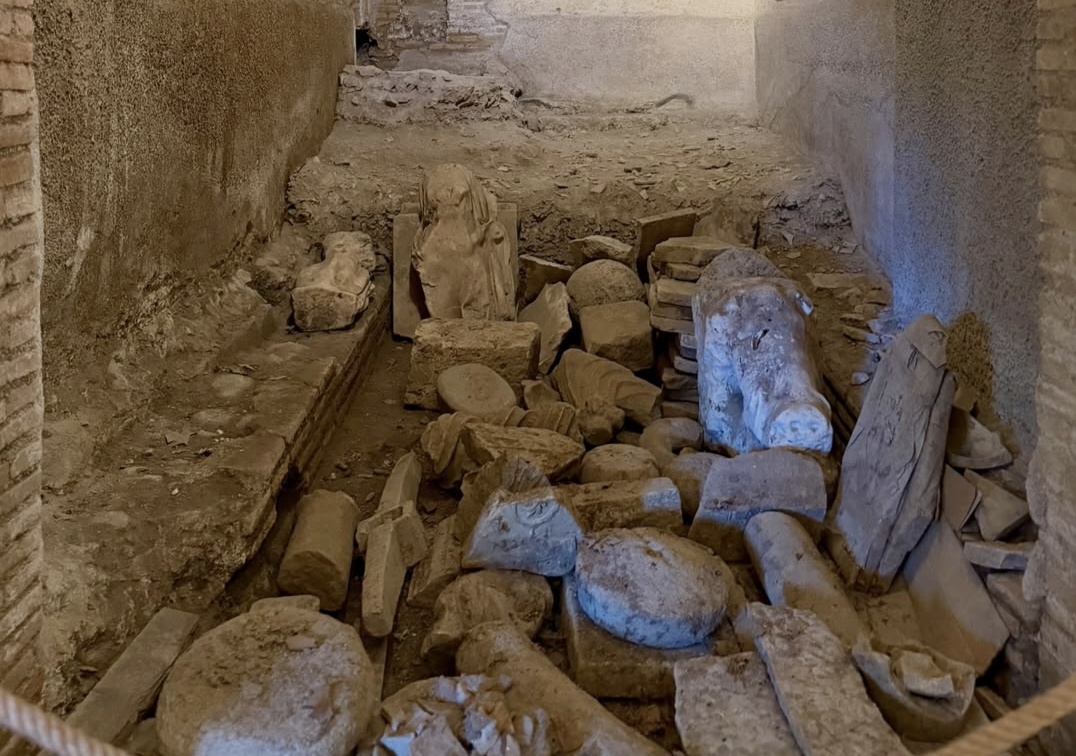
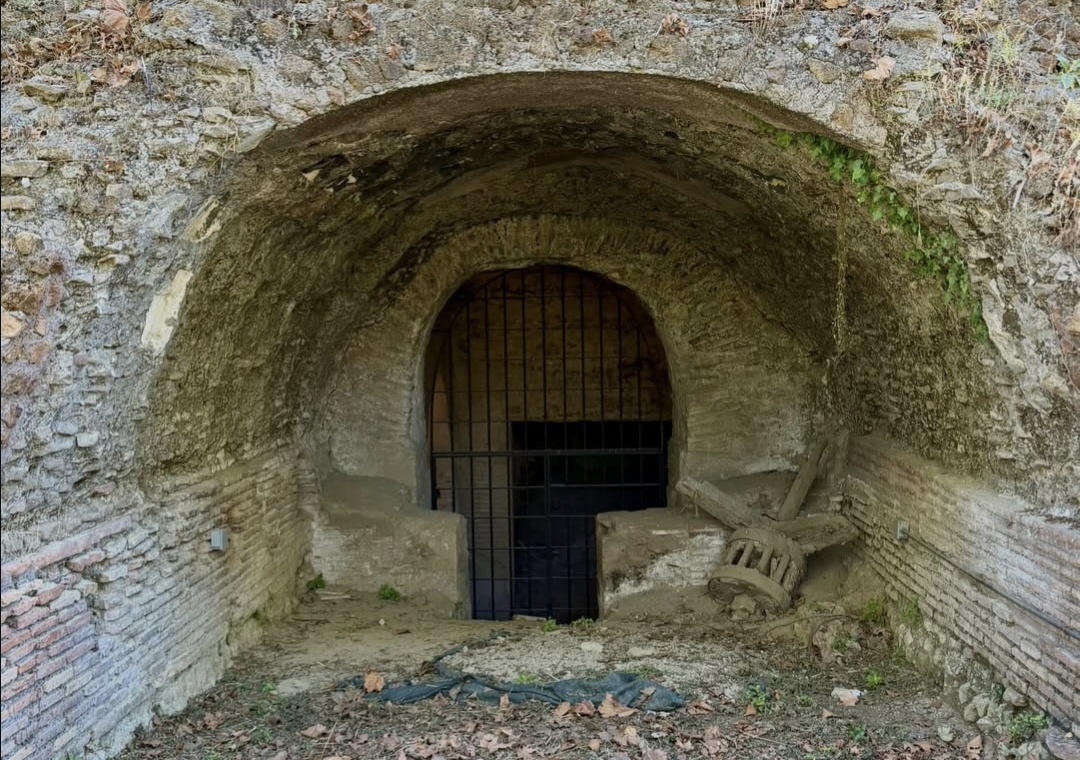
Details of the surviving port structures at Testaccio. Photography © Alessandro Tanzilli · @alessandrotanz_
Changing Ground
From commercial infrastructure to archaeological site
The commercial district changed as Rome's transport networks and patterns of supply evolved. The Testaccio riverfront eventually lost its original function, and parts of the port structures were buried by later deposits and changes in ground level.
The area was subsequently used in different ways, including for burial during the medieval period. Archaeological remains of the ancient port returned to attention much later, particularly as the modern river embankments transformed this stretch of the Tiber from the late nineteenth century onwards.
What survives today is therefore only part of a much larger ancient landscape whose scale can be reconstructed through archaeology, topography and the related sites distributed across Testaccio.
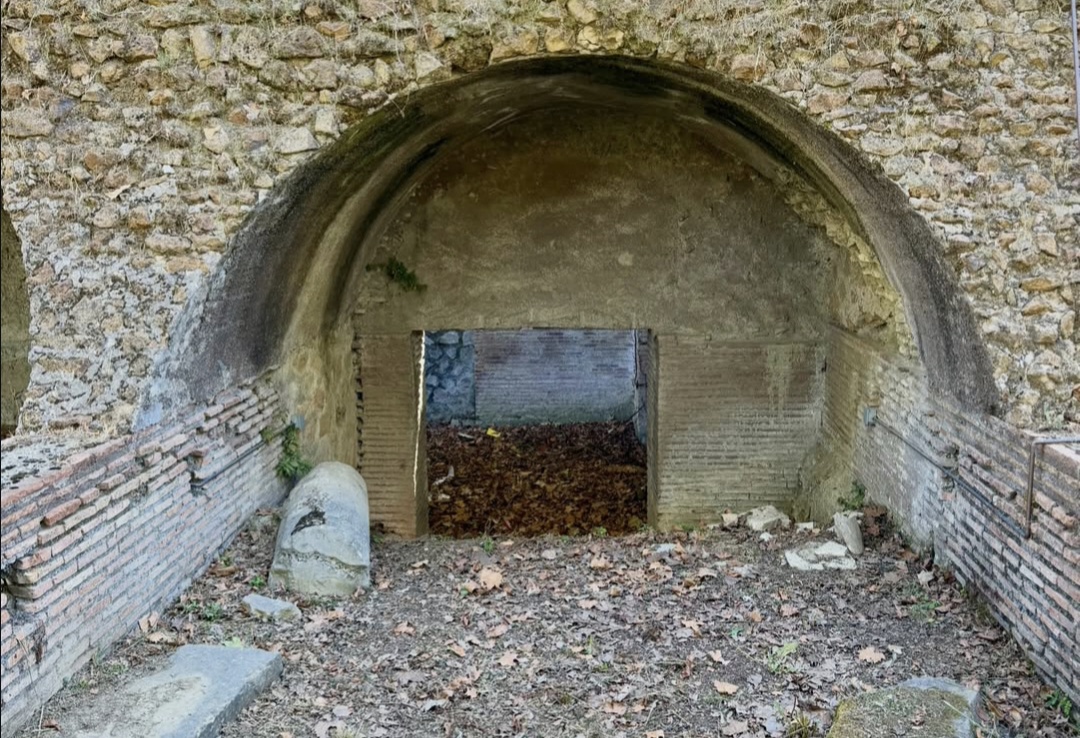
The ancient commercial riverfront survives within the modern landscape of Testaccio. Photography © Alessandro Tanzilli · @alessandrotanz_
Visiting the Site
Special AccessAccess is not continuous
The archaeological area of the Emporium is not presented as a continuously open monument. Access may be available through special openings, organised visits or specific programmes.
Conditions, dates and booking arrangements can change. Current access should therefore always be checked before planning a visit.
Location:
Lungotevere Testaccio, Rome
Continue Through the Atlas
Read Testaccio as a connected archaeological landscape
The Emporium makes most sense when considered together with the storage architecture, transport systems and material traces generated by Rome's immense demand for imported goods.
Research Notes
Sources & further reading
This page describes the Emporium within the wider archaeological development of the Testaccio commercial district. Access information should always be checked against current institutional information.
Underground Rome · Private Journeys
Use archaeology as the starting point.
Tell us your date, interests and the sites you want to understand. We research the available access and build a private archaeological journey around them.